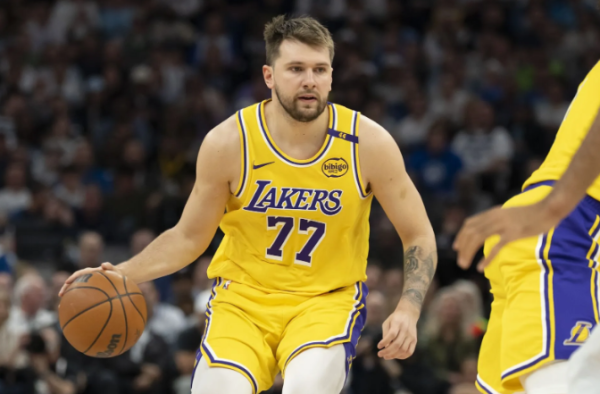
The Lakers didn’t tweak around the edges — they rebuilt their identity around a new star spine. With Luka Dončić signing a multi-year extension, plus the additions of DeAndre Ayton and Marcus Smart, L.A. now looks like a team designed to win in May and June, not just survive the grind. This article breaks down how the new roster fills old holes, how Dončić and LeBron James can coexist at a championship level, what realistic outcome paths look like for the 2025–26 season, and which final moves could still swing their 2026 title odds.
Offseason Reset and the New Core (Dončić Extension, Ayton, Smart)
The headline move is Luka Dončić committing to Los Angeles on a three-year, $165 million maximum extension that includes a player option in the third year. He chose a 2-plus-1 structure instead of a four-year, $229 million path, a decision that keeps flexibility toward 2028–29 while putting immediate pressure on the franchise to contend right now. That contract timing syncs Dončić’s prime with the Lakers’ current urgency, particularly with LeBron James still in the mix. Dončić didn’t just sign; he helped shape the roster around him by recruiting DeAndre Ayton and Marcus Smart. This wasn’t a star picking comfort over competitiveness. It was a clear statement: build a balanced contender immediately, and I’ll meet you there.
How Dončić and LeBron Fit Under New Leadership
The biggest basketball question isn’t talent — it’s chemistry. Dončić and LeBron are both heliocentric creators, but they’re also complementary in ways that matter in playoff settings. Under new leadership, the offense is leaning into layered pick-and-rolls, early-clock attacks, and mismatch hunting that allows either player to initiate without the other becoming a statue. Evidence of viability already exists: in a key road comeback win in Philadelphia, Dončić posted a 31-point, 15-rebound, 11-assist triple-double, while LeBron added 29 points, 7 rebounds, and 6 assists in a 112–108 finish. That kind of shared dominance is the prototype for 2026 — two engines, one attack, taking turns flattening defenses.
Frontcourt Repair — Ayton as the Rim Anchor
The Lakers needed a true paint presence, not another band-aid big. Ayton arrives as a structural fix. His role is clear: protect the rim, finish lobs, punish smaller defenders, and stabilize the interior when the stars rest. The signing hits an old weakness dead-on — reliable size that holds up across 82 games and into the West playoffs. Offensively, Ayton gives Dončić a vertical partner who can collapse defenses without needing post-ups to be useful. Defensively, he’s supposed to shrink the lane so perimeter defenders can pressure higher. Financially, his $8,104,000 salary also matters because it leaves space open for later tweaks without locking L.A. into a rigid cap maze.
Marcus Smart and the Identity of the Perimeter Defense
Smart’s addition is about reconnecting L.A. to a defensive personality. He guards the point of attack, organizes coverages, and brings playoff-level edge that a lot of modern teams lack. With Smart on the floor, the Lakers can chase elite guards without constant scrambling help, and that’s crucial in a conference where star backcourts decide series. He also becomes the nightly assignment sponge, letting Dončić preserve energy for offense and letting LeBron avoid the heaviest perimeter burden. Smart may not be the loudest weapon in the box score, but he’s the kind of player who changes how opponents feel walking into a series.
Bench Depth and the “Second Wave” Problem Finally Solved
Recent Laker seasons had a recurring issue: the game would wobble the moment the stars sat. This roster is built differently. The second unit now has real two-way minutes and less “hope and pray” spacing. That difference already showed up in the early season results: the Lakers opened 13–4, tied for the second-best record in the West at that stage, and later surged to 15–4 overall with Dončić and Austin Reaves driving momentum. Those numbers matter because they reflect depth carrying games, not just stars rescuing them. When a contender can win non-star minutes, it stops bleeding in the playoffs.
Depth Chart Reality — Who Starts, Who Closes
The Lakers’ projected starting group centers on Dončić at point guard with Reaves alongside him, LeBron in a flexible forward role, a matchup-dependent forward pairing involving Rui Hachimura and Jarred Vanderbilt, and Ayton at center. The bench rotation layers in Gabe Vincent, Smart in staggered minutes, Dalton Knecht as a shooter/scorer, Jake LaRavia as a connector wing, Maxi Kleber as a stretch big, and Jaxson Hayes as an athletic backup center on a $3,449,323 deal. This is a playoff-style depth chart because closing lineups can shift based on need: defense with Smart and Vanderbilt, shooting with Knecht, or size with Kleber-Ayton pairings.
How the Revamped Roster Fills Old Gaps
The offseason moves weren’t random. They were targeted repairs. Ayton addresses paint protection and rebounding stability. Smart answers the need for a veteran perimeter stopper and defensive organizer. The deeper bench reduces the old dependence on high-minute star heroics. The roster now has more balance across the three big playoff currencies: rim security, point-of-attack defense, and bench survival. In short, the Lakers didn’t just add talent; they added solutions to specific problems that previously ended their seasons.
Where the Lakers Sit in the West Power Hierarchy
The West still runs through heavyweights, meaning L.A. isn’t strolling into favorite status. But the Lakers are no longer a “maybe if everything breaks right” team. They belong in the top cluster of threats that can win multiple rounds with health. Their ceiling is tied directly to Dončić’s superstar carry power plus LeBron’s ability to remain a high-impact secondary creator. If both are upright in April, L.A.’s offense alone guarantees a terrifying matchup. The question is whether the defense and continuity keep them in that top tier for four rounds.
Projection Scenarios for the 2025–26 Season
Best-case scenario: health cooperates, Ayton stays engaged, Smart sets a defensive tone nightly, and the Lakers finish top-2 in the West with a clear Finals path. Base case: some injuries and learning curves keep them in the 3–5 seed range, still dangerous but forced into tougher early series. Downside scenario: LeBron’s age curve bites harder, Ayton’s motor fluctuates, and spacing tightens, pushing L.A. toward play-in chaos. According to recent NBA projections, forecast models that weigh star impact and depth tend to place the Lakers among the top four West contenders, but with less margin than the conference’s most stable teams.
Remaining Moves That Could Tip the Balance
Even with this roster, the front office isn’t done watching the market. Dončić could become eligible in 2027 for another massive extension — four years, $323 million — or later a five-year deal around $418 million that could reach an $80 million season and nearly $1 million per game, with a final year near $95 million. Those numbers underline how the team must stay in title-chasing mode for the long haul. In the short term, the two clear upgrade zones are an additional bruising center for specific matchups and one more high-volume shooter to punish double teams. A deadline move in either lane could push the Lakers from “contender” to “front-row favorite.”
What to Watch on the Road to 2026
This season’s most important story is sustainability. Ayton’s consistency over months matters more than any single hot week. Smart’s ability to stay elite without wearing down is a playoff swing factor. LeBron’s health and role acceptance — especially as a second engine rather than a nightly solo act — is the emotional spine of the run. If those pieces hold, the Lakers have enough offensive firepower to beat anyone and enough defensive structure to survive the West. The roster finally mirrors Dončić’s “no-waiting” mindset, and if the fit continues to sharpen, 2026 won’t be a dream year — it’ll be the expectation.