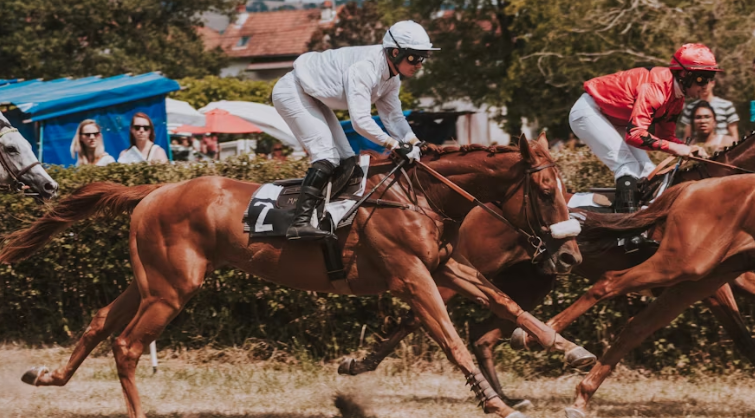
The Triple Crown is not just a sequence of races. It unfolds as a progression where each result shapes how the next one is viewed. Bettors who follow it closely rarely treat the Belmont Stakes as an isolated event. Instead, it becomes the final piece in a larger pattern that has been forming since early May.
By the time the Belmont arrives, expectations have already shifted more than once. The Derby introduces the field, the Preakness refines it, and the Belmont asks a different question altogether. That layered build-up is what makes the final leg so important from a betting perspective.
How the Kentucky Derby Shapes Early Betting Narratives
The Kentucky Derby is where most betting narratives begin. With the largest field in the Triple Crown, it produces results that can be difficult to interpret at first. A strong finish can indicate genuine ability, but it may also be influenced by a well-timed run through the field.
Bettors often rely on the Derby to identify early contenders, though that approach comes with limitations. The crowded conditions can distort performance, especially for horses that struggle to find position. A runner that finishes mid-pack may have faced more obstacles than the result suggests.
The Derby also tends to elevate certain horses into clear favorites for the next leg. Public attention shifts quickly, and early betting often reflects those impressions rather than deeper analysis. This creates a starting point, though it is not always stable.
As a result, the Derby sets expectations without fully developing them. It introduces the field, but it does not define it. Bettors who recognize that distinction are better prepared to adjust their approach as the series continues.
What the Preakness Reveals About Form and Fatigue
The Preakness Stakes arrives with far less time between races, which makes it a different kind of test. Derby runners arrive off strong recent performances, but the race itself can leave lingering effects.
This short turnaround often exposes differences in recovery times. Some horses maintain their level and even improve, while others show signs of fatigue. Bettors begin to see which performances were sustainable and which may have been situational.
The smaller field also provides a clearer view of running styles. Without the congestion of the Derby, pace becomes easier to read, and positioning tends to reflect ability more directly. This helps refine earlier assumptions.
By the end of the Preakness, the field is better understood. Bettors have seen how contenders respond under pressure and how they handle quick transitions. That clarity becomes essential when looking ahead to the Belmont Stakes.
Why the Belmont Stakes Requires a Different Betting Approach
The Belmont Stakes stands apart because of its distance and timing. It is longer than the other two races, and it follows a sequence that has already tested the field in different ways. This combination changes how the race must be evaluated.
Stamina becomes the central factor. Horses that performed well over shorter distances may not maintain that level over a longer stretch. Bettors need to look for signs of endurance rather than relying only on speed or early positioning.
There is also a shift in field composition. Not all Derby or Preakness runners return, and fresh entrants often appear. While these horses may lack exposure to top competition, they arrive without the fatigue of earlier races.
This creates a more complex betting environment. The Belmont Stakes is not about confirming earlier results. It is about identifying which horses are best suited to a race that demands patience and sustained effort.
How the Triple Crown Sequence Changes Betting Strategy
Following the Triple Crown as a sequence encourages a different betting mindset. Instead of evaluating each race independently, bettors begin to connect performances across the series. This approach allows for adjustments over time. A horse that struggled in the Derby may show improvement in the Preakness, while a strong Derby performer may begin to decline. Recognizing these patterns helps refine selections.
There is also a shift in how risk is managed. Early in the series, bettors may spread selections more broadly due to uncertainty. As the races progress, that approach often becomes more focused, reflecting a clearer understanding of the field.
By the time the Belmont Stakes arrive, the landscape has shifted. It is no longer based on initial impressions, but on a combination of observed performance and how each horse has responded to the demands of the series.
How to Approach Belmont Stakes Betting Within the Triple Crown
Approaching the Belmont Stakes means taking into account everything learned from the first two races. The focus shifts toward identifying which horses can handle the distance while maintaining form.
Bettors often narrow their attention at this stage. With more information available, the field can be evaluated with greater precision. This does not remove uncertainty, it just allows for a more structured approach. Many bettors turn to a structured belmont stakes betting guide during this stage, using it to organize insights gathered across the series and apply them to a race that requires a different perspective.
The key is balance. Form, stamina, and race conditions all need to be weighed together rather than viewed in isolation. The Belmont Stakes tend to reward those who can step back and interpret the broader picture, instead of relying too heavily on any single factor.
Where the Triple Crown Betting Story Comes Together
By the time the Belmont Stakes begin, the broader story of the Triple Crown has already taken shape. Each race has added context, refining how the field is understood. For bettors, this is where preparation meets outcome. The ability to adapt across the series often proves more valuable than any single insight. It reflects a process rather than a moment.
The Belmont Stakes does not simply conclude the Triple Crown. It brings together everything that has come before, offering a final test not only for the horses but for how the earlier races have been interpreted. Performances in the first two legs, race conditions, and subtle patterns all come into sharper focus, shaping expectations for what unfolds in the final stretch.