by Alessandra Haddick
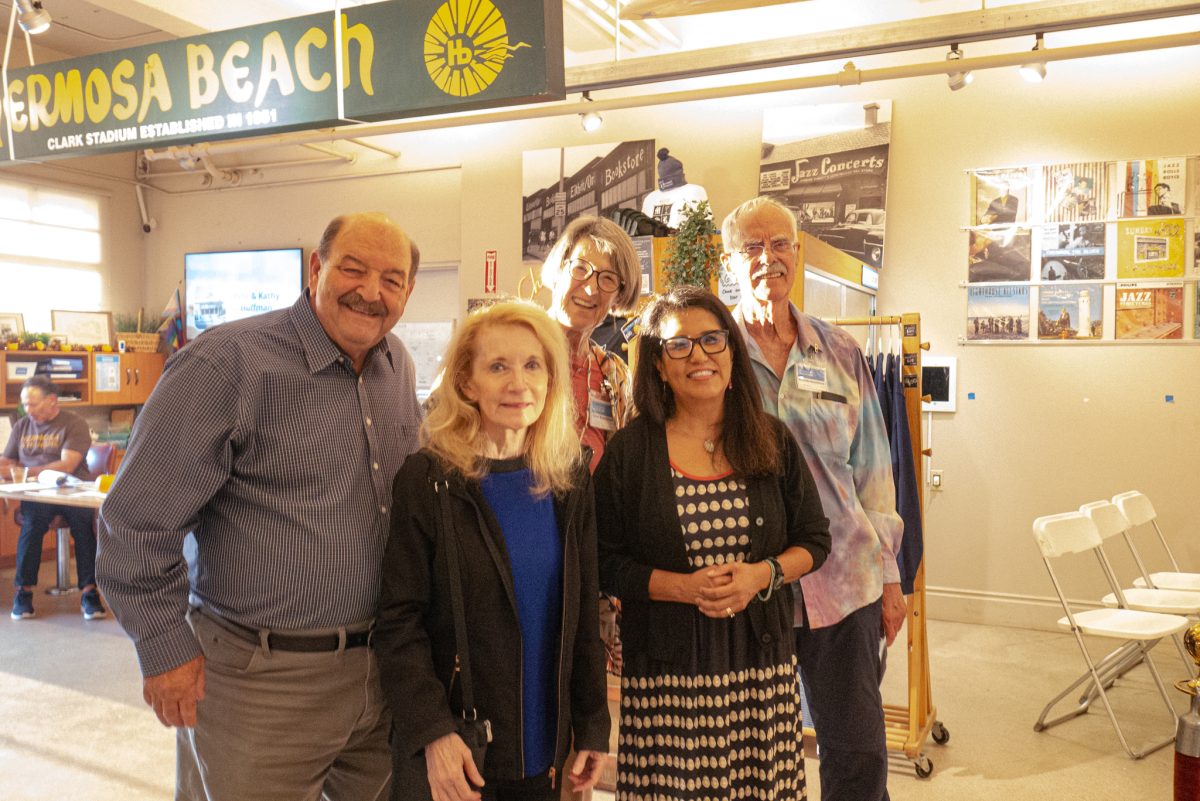
Each year a Tongva tribe representative talks to Hermosa Beach fourth graders at the Hermosa Beach museum.
Earlier this month, for the first time, the museum invited a Gabrieleno Tongva tribe member to address an adult audience.
The Saturday, October 11, talk by Kimberly Morales Johnson, Tribal Secretary of the San Gabriel Band of Mission Indians, recounted the local tribe’s history and current challenges. Among the challenges is its inability to receive federal recognition, putting it at disadvantage against tribes that have received recognition.
Johnson is a PhD candidate in Native American studies at UC Davis. She noted that Native Americans are commonly characterized in old textbooks as “primitive savages” who “did not know the value of land.”
She said her inspiration to become a teacher stems from wanting “to teach the native kids when they´re young that we were a thriving people with a civilization,” and that “we deserve respect just like everybody else.”
Gabrieleno Tongva life is characterized by the shoreline and waterways. Villages sprawled along the San Pedro cliffs and many settled on Catalina Island.
“When you go outside Avalon, on Catalina Island, you cannot walk 10 feet without finding an artifact from our people,” Johnson said.
Johnson said that due to climate change, many artifacts have been uncovered along the coast. After experiencing a series of misfortune, such as car accidents, and heart attacks, many visitors returned the artifacts they had taken from the island, Johnson said.
Among the efforts underway by Gabrieleno Tongvas is to provide a proper burial for Monarch, the grizzly bear captured in 1889, and kept in captivity for 22 years. Its taxidermied remains are now on display at the California Academy of Sciences.
“For us, he’s a relative. He saw things that I would never want to see, and I believe that he needs to be back in his homeland and put to rest. Just like our ancestors,” Johnson said.
Johnson is also working with the Los Angeles Unified School District to implement a resolution passed last November “acknowledging some of the past hurts and creating a forthcoming land acknowledgment … with the tribes and supporting teaching students the history of native tribes.”
Johnson said an understanding of Native American tribes, such as the Tongva, is a critical step in fostering respect for the first people to live in Southern California. ER