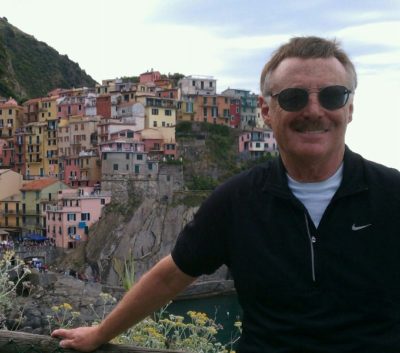

For the past several decades, Dr. Arnold Bayer has researched, shapeshifting bacteria in an effort to penetrate their defenses and render them harmless.
In the course of his work, the Rancho Palos Verdes resident has earned world renown for furthering our understanding of Staph infections and other bacterial diseases. He is the co-author of hundreds of scientific papers and book chapters, and lectures around the world.
LA BioMed CEO Dr. David Meyer used the word “massive” to describe Meyer’s medical contributions at a dinner this month honoring Meyer and two of his colleagues as “Legends” in their fields.
Much of Bayer’s work focuses on the Staph bacterium MRSA, which are infamous for getting inside hospital patients’ bloodstreams following surgery. Staph also attacks people in the general population, causing skin abscesses, and systemic infections such as pneumonia, and even death.
The incidence of hospital staph infections has decreased in recent years, but Bayer said the bacteria continue to change their defenses, forcing fresh research offensives.
“It’s like plugging one hole in the dyke, and another one springs up,” he said.
Microbial Darwinism
Even when bacteria have no antibiotics to make them tougher, they still morph into stronger and stronger versions of themselves, Bayer said.
He pointed to research on bacteria harvested from a cave that was opened in New Mexico, after it had been sealed shut by a huge rock at least four million years ago.
“The bacteria had not seen the light of day for millions of years, and they were already resistant to antibiotics we have today,” Bayer said. “How can that be? The theory is that to survive, they had to compete with one another. Bug ‘A’ developed its own antibiotics to kill bug ‘B.’.”
The competition could in some way mirror bacteria’s struggle against human-made antibiotics.
“These bacteria are way ahead of us,” Bayer said.
‘Bench to bedside’
Bayer and his colleagues at LA BioMed, located on the Harbor-UCLA Medical Center campus in Torrance, carry on a “bench to bedside” research. The researchers peer through advanced microscopes and into test tubes, pore over experimental models, and study infected human blood samples and biopsied tissues.
“My laboratory studies MRSA from a couple of perspectives…how the bug is able to adapt to antibiotics by becoming resistant to them and, in turn, how our bodies fight them off,” he said.
Bayer is digging into the workings of platelets, the cells that help blood clot, stemming excessive bleeding. Bayer said it has become clear platelets play a part in fighting off harmful bacteria.
“Platelets are like little storage reservoirs of [natural] antibiotics, releasing them to kill bacteria,” he said.
The study of platelet-derived antibiotics could result in the development of new artificial antibiotic treatments, he said. He is performing these studies in close collaboration with Professor Michael Yeaman, chief of molecular medicine at LA BioMed.
Bayer has served as Associate Program Director of Infectious Disease, Vice-Chair of Academic Affairs and Acting Chief of the Division of Infectious Diseases at Harbor-UCLA Medical Center.
His research has been funded by the National Institutes of Health since 1996.
Bayer has served on the NIAID National Association for Research in Staphylococcus aureus, is a charter committee member of the International Consortium for the Study of Infective Endocarditis, and Councilor in the International Society for Cardiovascular Infectious Diseases.
When he’s not doing research, or teaching interns, medical students and Fellows, he enjoys country music, Los Angeles Kings hockey, and hiking and downhill skiing. He and his wife Enid have two grown children, Alex and Alicia, and a 1-year-old grandchild.
Additional Legends
Also honored as 2017 Legends at the LA BioMed dinner on November 1 at the Torrance Marriott were Dr. Rodney White and Dr. Paul C. Fu.
Meyer said that vascular surgeon White’s “surgical skills and innovations have saved thousands of lives.”
“White developed stents that have prevented numerous deaths from aortic aneurysms,” Meyer said. In addition, while he was a medical student, White developed the use of a porous ceramic, made from ocean coral, as an artificial bone graft.
Fu developed the standard cholesterol test – measuring total serum cholesterol – that has been in wide use for decades. He also has contributed to research in areas ranging from liver disease to bipolar disorder.