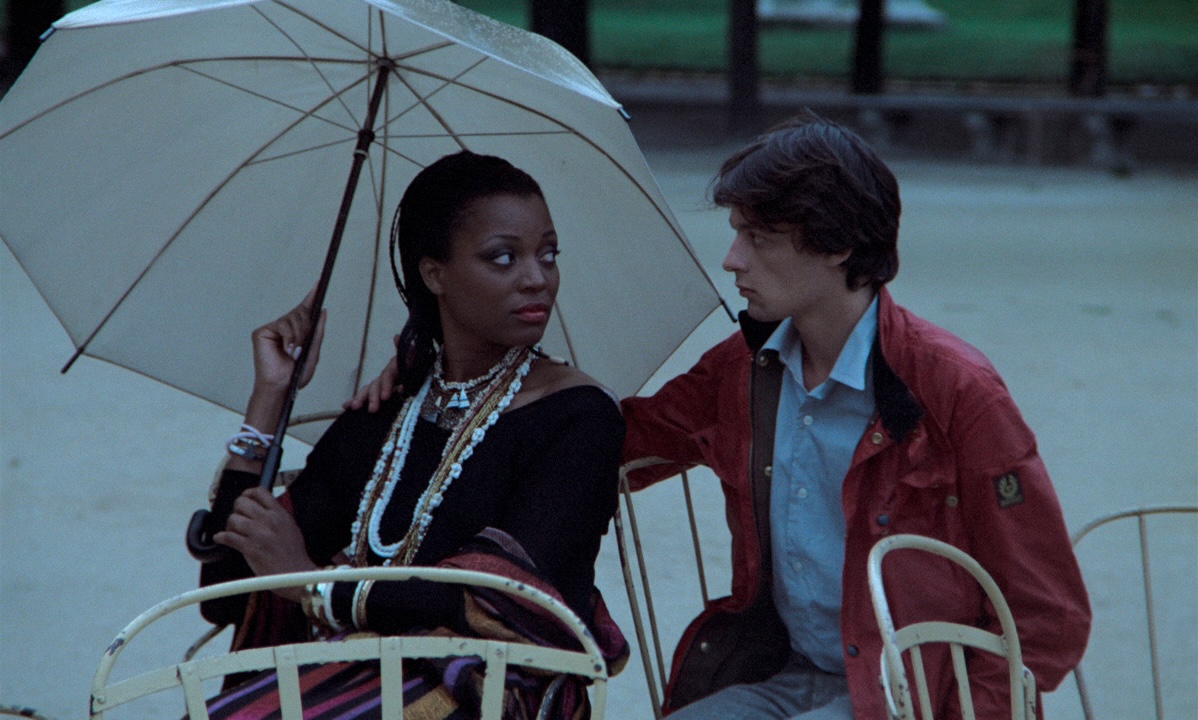
“Diva,” the very definition of avant garde in 1981, has been given a new 4K restoration and remains avant garde all these years later. Directed by Jean-Jacques Beineix in his feature debut, and based on Daniel Odier’s novel of the same name and adapted for the screen by Beineix and Jean Van Hamme, “Diva” is everything and nothing at the same time. With a convoluted plot, it features interesting performances, unlikely intersections, and characters that are both “types” and enigmatic. Framed against the streets and monuments of Paris, this is a quintessentially French movie that harkens back to the New Wave movies of the 1960s. The plot is convoluted, although broken down to its barest elements it seems simple enough.
Jules, 20-something, is a postman on a moped (the past century’s equivalent of an e-bike), delivering mail throughout his central district of Paris. It is a job that allows him the time to indulge in his true passion—opera, or more specifically Cynthia Hawkins, soprano extraordinaire. Cynthia, sought after around the world, is legendary not just for her voice but also for her refusal to allow recordings of her performances. Jules has surreptitiously recorded her last performance at the Opera Garnier in Paris. Using only the highest quality equipment, he has captured her essence. Not content just with his bootleg, he endeavors to meet his idol, procuring her autograph backstage and, when no one is looking, stealing the gown she wore that evening. Jules considers himself a super fan, others would see him as a stalker.
Complicating matters, he has been spied in the theater by two Taiwanese gangsters who desperately want those tapes. They are worth a fortune on the black market. Just as Jules is leaving the theater, a disheveled young woman, Nadia, is being hunted down by two thugs. She was to meet with a detective and her informant at the cafe across the street. Instead, they witness her murder. Just prior to her death, however, she drops a tape into Jules’ satchel. Unaware of what has been happening, Jules nonchalantly boards his bike and heads home.
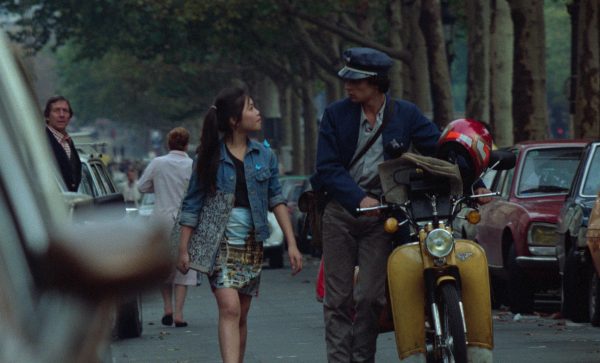
He soon encounters a young, pretty and very flighty girl named Alba. Listening to the tape together, she is entranced and insists that they play it for her lover-benefactor, the erstwhile philosopher Gorodish. Although most of what he says and does is gibberish, like many contemporary French philosophers, he also has a keen eye for a money making proposition. Gorodish may espouse communal doctrines, but he knows a deal when he sees one.
Returning to the murder, Nadia was killed by the Caribbean and the Priest at the behest of their boss. The tape she put in Jules’ satchel contained evidence about the head of a drug and prostitution ring, something Paula, the detective, is trying to solve. Now, Jules is being trailed by two different groups, the Taiwanese who want the recording and the thugs and their boss, who need the evidence back.
Jules, still oblivious to the machinations he has stimulated, goes about his rounds, making Paris, the city of Lights, a knowing participant in his travels. When Jules wakes to the dangers he has placed himself and others in, both deliberately and inadvertently, he tries to right the situation.
Cinematographer Philippe Rousselot’s camera makes love to the city before our eyes, lights sparkling, buildings reflected off wet pavement, the bridges separating the left from the right banks shimmering as car lights capture the landmarks on either side.
But this isn’t about the mystery of who does what. The players and villains are exposed almost immediately. The solutions, the chases, the betrayals, the saviors—they all intermingle until this froth is overwrought and about to explode over the soft edges. It’s both consequential and unimportant because, at the root, “Diva”is about the look. This is definitely not “form follows function” but rather more is never enough. It’s hard to keep track of who is doing what to whom. The borders of right and wrong are as blurred as the reasoning behind them. It doesn’t matter. “Diva” doesn’t follow a clear path; it is the very definition of chaos but a chaos that is highly entertaining. Don’t search for inner meaning, there is none. Go with the flow, although it is a flow that more closely resembles the spikes on an EKG recording.
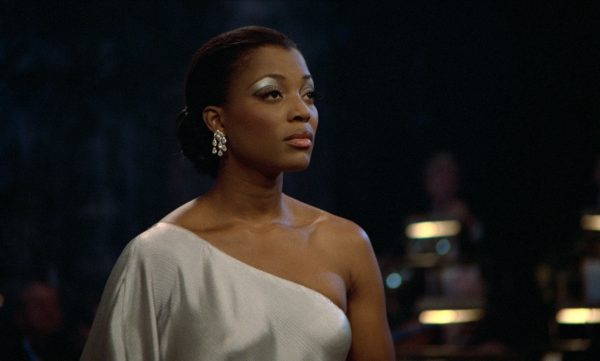
Although the cast is pitch perfect, led by the ingenuous Jules, played by Frédéric Andréi, few of the actors achieved fame or leading roles. Some of them, Richard Bohringer (Gorodish), Gérard Bohringer (The Caribbean), and especially Dominique Pinon (The Priest) with his razor-sharp jawline, went on to supporting and character roles. Wilhelmina Fernandez (Cynthia Hawkins) was not an actress, she was a bona fide international opera star with the kind of eye-catching presence that captivated. She is the true shining light and star of the film, ostensibly its raison d’etre (justification).
“Diva” was as much about acting as it was about plot, neither of which are significant features. This movie is the very embodiment of style over substance and succeeds wildly. It is advised that you let “Diva” sweep over you, like the tsunami of action that it is. Don’t try to keep up, you’ll drown.
In French with English subtitles.
Opening August 29 at the Laemmle Royal.