by Mark McDermott
After more than two years of study and debate, the Manhattan Beach City Council unanimously approved a no frills outdoor dining program Tuesday night. The council adopted a simple regulatory approach that will allow expanding dining outside restaurants but require no new infrastructure.
The new ordinance codifies rules for outdoor dining while adding enforcement mechanisms and operational standards that address concerns raised by downtown residents during the pandemic-era temporary outdoor dining program. It met absolutely no opposition.
The lack of opposition marked a stark contrast to the contentious process that began in 2021, when the city set out to create a permanent outdoor dining program following the wildly popular but controversial temporary program launched during COVID-19 shutdowns.
Councilperson Nina Tarnay said the regulatory approach represented city staff and her colleagues’ efforts find consensus and compromise.
“I know it’s been a long process, and there’s been a lot of iterations of the public demand, what residents had to deal with during the shutdown,” she said. “You’ve all been able to really listen to our residents, listen to our businesses, and really strike a balance that will work for our city.”
Between the outdoor dining task force, council, and the Planning Commission, over 20 meetings were conducted on the matter.
“We’re finally reaching the end of this journey with two plus years of work behind us,” said Jaehee Yoon, the city’s senior planner who managed the project. “I’d like to thank everyone that’s been involved throughout the process for their patience and input.”
The new regulations represent a significant scaling back from the city’s original vision. In February 2024, the Council was presented with an ambitious plan that included expanding sidewalks by four to eight feet and reconfiguring parking in downtown and North Manhattan Beach.
But when cost estimates arrived in April 2024, they proved prohibitive: $7.5 million to $12 million for expanded sidewalks and dining areas, plus another $8 million to redo the city’s signature blue tile inlays. The total project could have reached $20 million.
“I want to know what this is going to cost and how we are going to pay for it,” former Councilmember Steve Napolitano said at the time. “Because the rest is just an academic exercise.”
The city’s finance department suggested paying for the program through 20-year bonds with annual debt service of up to $1 million, funded through outdoor dining permit fees, increased parking meter rates and fines, or possibly a sales tax increase. The Council balked at the price tag, particularly given other infrastructure needs like a new Begg Pool and concerns about the impact of what staff estimated could be a two-year construction period on downtown businesses.
In October 2024, the Council rejected a scaled-down pilot program that would have used modular sidewalk extensions in front of three restaurants on Manhattan Avenue at an estimated cost of $136,605. Council members cited competing infrastructure priorities, particularly the emergency demolition of Parking Lot 3.
By March 2025, the Council had officially abandoned all infrastructure improvements for outdoor dining and directed staff to focus solely on updating regulations for outdoor dining as it currently exists. Any larger public improvements have been deferred, but this week’s staff report noted that sidewalk widening and public “flex space” infrastructure have been added to the five-year Capital Improvement Program.
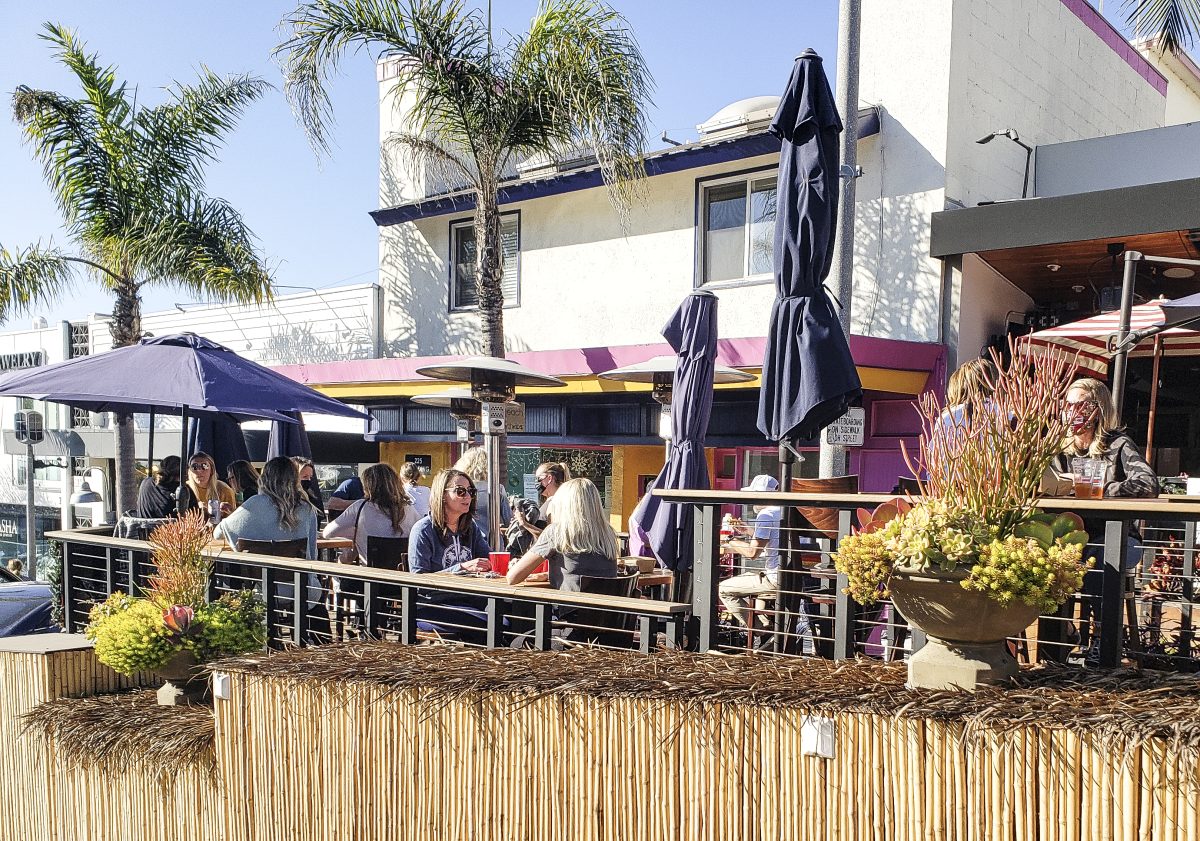
The ordinance approved Tuesday establishes clear operational standards that had been missing since the end of the temporary program in February 2023. Key provisions include increasing the required unobstructed sidewalk width from 48 to 60 inches to improve pedestrian clearance; allowing umbrellas and heaters in sidewalk dining areas, which were previously prohibited; limiting outdoor dining operations to 10 p.m., with exceptions for ground-floor establishments at least 150 feet from residential uses; new restrictions on commercial vehicle loading in residential areas, addressing noise and access complaints from residents, and permitting alcohol service in outdoor dining areas with a Use Permit, despite a state law that allows it without discretionary review until January 2029.
The regulations also establish a “three strikes” enforcement mechanism where permits would be revoked after three violations within a year. Violations include exceeding permitted hours, not maintaining required pedestrian clearance, or placing tables and chairs beyond approved areas. Businesses whose permits are revoked cannot reapply for one full year.
The alcohol provision drew some discussion. The 15-member Outdoor Dining Task Force had recommended streamlining the permit process to avoid requiring Use Permits, consistent with state relief measures. But the Parking and Public Improvements Commission requested the more stringent discretionary review, and the Planning Commission upheld that recommendation, as did the council.
The Council also established a tiered fee structure for sidewalk dining that varies by location and alcohol service.
Councilmember Steve Charelian proposed a structure that charges North End businesses less than downtown establishments. The approved rates will charge North Manhattan Beach establishments $4 per square foot without alcohol, and $4.50 with alcohol. Downtown restaurants will be charged $5 and $5.50, respectively.
“The foot traffic and North End businesses don’t do as well as downtown businesses due to parking,” Charelian said, in proposing this tiered approach.
The new regulations also address second-floor outdoor dining, which had been governed by separate guidelines adopted in 2019. The ordinance requires that upper-floor outdoor dining areas not face residential uses, maintain a 15-foot setback, and incorporate sound attenuation measures. Music and live entertainment are prohibited on upper floors.
Mayor Pro Tem Joe Franklin praised the clarity of the new rules.
“It really outlines, with a lot of specifics, what has been missing since the Wild West days of the COVID shutdown and outdoor dining decks,” he said. “It’s definitive, it’s clear. I think anybody can read it and understand it.”
The ordinance was developed with input from the Outdoor Dining Task Force, which held 15 meetings between May 2023 and April 2025, as well as two community workshops and reviews by both the Parking and Public Improvements Commission and Planning Commission.
Because the regulations apply to areas within the California Coastal Zone, the amendments must be certified by the California Coastal Commission before taking effect. The commercial vehicle loading restrictions, which are not subject to Coastal Commission review, will take effect sooner.
“This has been part of a long journey,” said Mayor David Lesser. “Our council and the council before it sought to explore ways to facilitate more outdoor dining on our city streets. We looked at potential hardscape modifications that turned out to be prohibitively expensive, and raised various issues for the downtown and also for the North End… this at least gives tools for staff, a template, more of a process. I look forward to seeing how it’s implemented.” ER