by Mark McDermott
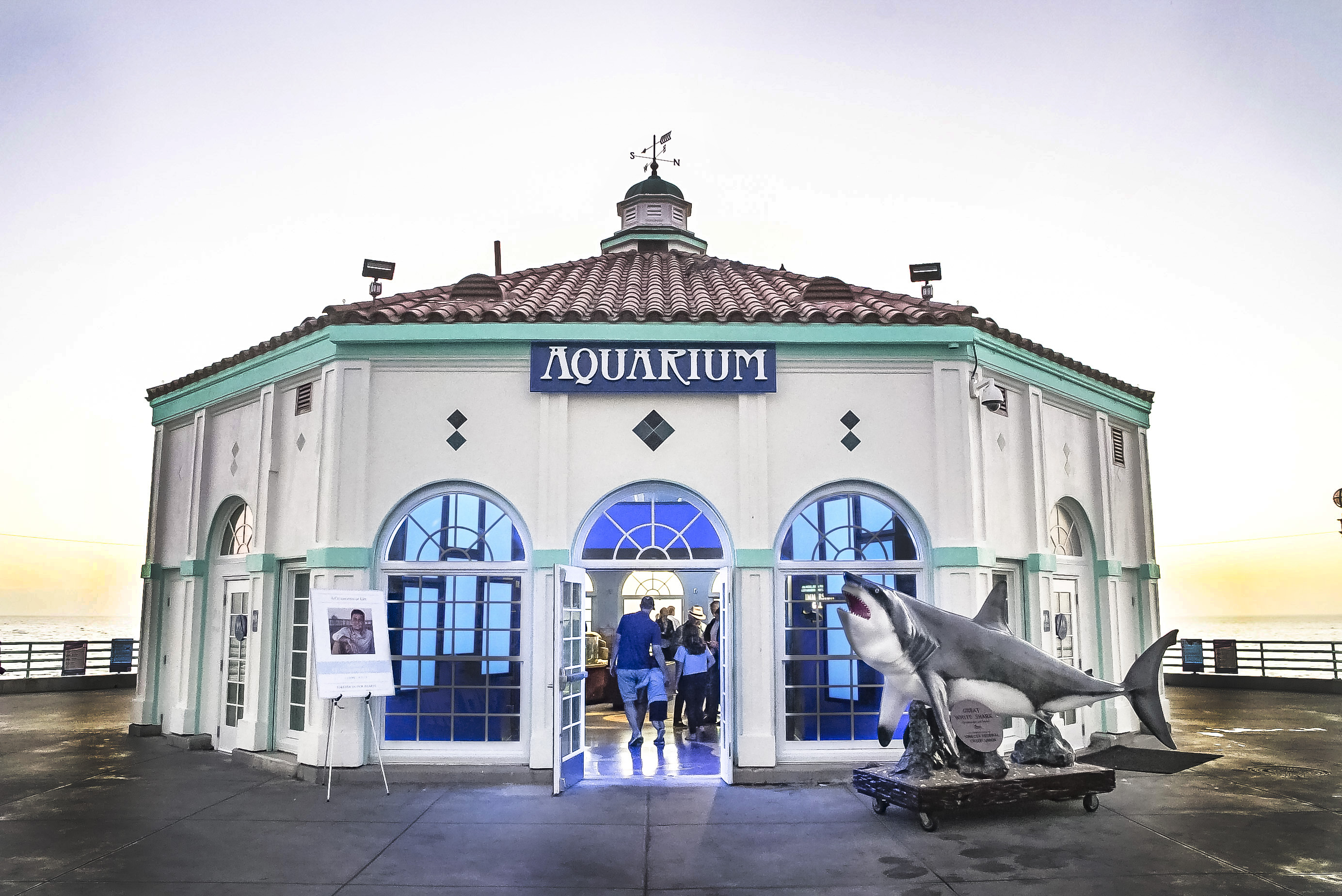
The Manhattan Beach City Council agreed to help pay for the Roundhouse Aquarium’s ongoing maintenance as part of its midyear budget deliberations on February 17, but expressed unease with a request from MBPD Chief Rachel Johnson to add a new deputy police chief position — sending the proposal back for further study before the full budget process begins in May.
Overall, the midyear budget picture was relatively robust, with increased property tax, plan check fee and sales tax revenue helping generate a projected year-end surplus of $8.8 million. But those numbers received far less attention than the two high-profile requests that dominated a long evening.
The Roundhouse Aquarium asked for and received $80,000 annually for three years to cover repairs, maintenance and equipment replacement. Chief Johnson’s request met more ambivalence, however, because the funding mechanism she proposed — drawing on two vacant officer positions to offset the deputy chief’s salary — had the appearance, to some council members, of trading boots on the street for a desk job. Council member Steve Charelian said the optics troubled him.
“It does look like you’re taking two vacant police officers, taking those salaries and adding a deputy chief,” Charelian said.
Council voted to table the deputy chief request, with direction to staff to explore what other administrative positions or resources might address the workload Johnson described, and to examine what incentives other South Bay cities are offering to attract and retain officers.
The vote on the Roundhouse was unanimous and, by the end of a long evening, almost celebratory. The $80,000 annual contribution — scaled back from an original ask of $110,000 — will be used exclusively for maintenance, repairs and equipment replacement. An annual report on how the funds are spent will be required. Staff will also explore whether the city’s pier parking fund, rather than the general fund, can serve as the funding source, a question raised both by Charelian and by Roundhouse Board President Hal Cohn.
Cohn made the case for urgency, explaining that without the annual Splash fundraising gala — which last year raised nearly a quarter million dollars through the Harrison Greenberg Foundation — the aquarium would operate in the red. Skechers, a longtime sponsor, has recently been sold to a private equity firm, creating additional uncertainty about future support.
“We want to make sure that for this community, the aquarium will be there,” Cohn said. “It will be in good shape, it will be safe, it will be clean, it will be attractive. It will be the type of iconic institution that it has been for the city for many years.”
Cohn also directed the state-city pier agreement, which he argued supports using parking revenues for maintenance of the entire state-owned pier property, including the Roundhouse. Staff agreed to review the agreement before the May budget process.
The aquarium has operated through a public-private partnership since a $5 million revitalization effort in 2018, led by the Harrison Greenberg Memorial Foundation in memory of Michael and Wendy Greenberg’s eldest son. It welcomes hundreds of thousands of visitors annually and provides free marine science education, including to students bused in from communities across Los Angeles County.
Chamber of Commerce President Jill Lamkin told council she had pulled Placer AI data showing that the Roundhouse’s top visitor destinations — before and after their pier visit — were Manhattan Beach small businesses: Shell Back, Uncle Bill’s, Rock ‘n Fish, the Strand House, Hennessy’s, Manhattan Beach Creamery.
“The people that go to the Roundhouse are supporting our business community,” Lamkin said.
Mayor David Lesser described a full-circle moment — a young man from Montebello who approached him at a scouting event and said Manhattan Beach was where he had first experienced the ocean, as a child bused to the Roundhouse. The young man had gone on to volunteer at the aquarium for years.
“It’s an important part of our community,” Lesser said.
The deputy chief request had drawn public opposition before the meeting even began. Retired MBPD Captain Tim Hageman — who served 30 years with the department before retiring in 2021, including nine years at the rank of captain — addressed council during public comment, arguing the department already had ample command structure and that residents were asking for more officers on the street, not more administration.
Hageman told council that when the department successfully sought seven additional officer positions in 2023, the staff report cited specific operational enhancements: a year-round four-officer bicycle patrol and a Crime Impact Group. The bicycle team, he said, operated for less than a year with only two officers and “no longer exists.” The Crime Impact Group was never implemented.
“Now, instead of strengthening front line staffing, this proposal would reallocate two previously approved police officer positions to create a deputy chief position,” Hageman said. “What Manhattan Beach needs most is not another layer of command, but more officers in the field — visible, proactive and engaged in keeping our community safe.”
Johnson addressed Hageman’s critique directly and at length. She acknowledged the bike patrol pilot ended, characterizing it as a deliberate test of what worked and what didn’t, and said the department ran a two-officer beach patrol six days a week throughout the summer as a highly visible alternative. She did not directly address the Crime Impact Group.
On the broader question of command structure, Johnson offered a detailed account of how the demands on her department have fundamentally changed since 2021, when a wave of state legislative mandates took effect. Senate Bill 2 expanded officer decertification oversight and internal affairs documentation. Assembly Bill 481 required annual council reauthorization of military equipment policies. The Racial Identity and Profiling Act mandated detailed stop data submitted to the Department of Justice on every vehicle and pedestrian contact. Senate Bills 1421 and 16 expanded public records disclosures of use-of-force and misconduct records, significantly increasing legal review workloads. All of it, Johnson said, requires continuous executive-level monitoring, auditing, policy development and public response.
Add to that the preparation for the FIFA World Cup and 2028 Olympics, a 24-hour media cycle demanding real-time transparency, and a community expecting immediate responses to critical incidents.
“This job isn’t what it used to be,” Johnson said. “The structure should reflect that.”
She pushed back on the framing that the deputy chief position would remove officers from patrol, arguing the opposite: that strong executive oversight keeps captains and lieutenants focused on operations, and that without it, strain trickles down to the patrol level.
“When our executive structure is as thin as it is now, the strain trickles down and patrol — they ultimately feel it,” Johnson said.
Council members were sympathetic but not ready to act. Mayor Pro Tem Joe Franklin, noting the hour was late and the matter complex, suggested tabling it for more information. Lesser said he wanted to understand what other administrative positions — short of a deputy chief — might address the workload Johnson described, and what more the city could do to fill its six open officer positions.
“I really did hear you when you said diminishing returns,” Lesser told Johnson, referring to her caution about over-relying on financial incentives. “But I’m just curious how we might get there.”
Council member Amy Howorth pushed back on the idea that the department has never needed this kind of position and therefore doesn’t now. “I know when the chief was talking about just legislative mandates alone, that really does change the amount of work that people are doing,” she said.
The deputy chief request will return as part of the full FY 2027 budget process, with additional analysis from staff.
Both discussions took place within the context of a budget presentation that revealed strong city finances.
Finance Director Libby Bretthauer presented a midyear report showing the General Fund on track to end the fiscal year with a projected surplus of $8.8 million, on total revenues of $131.4 million against expenditures of $122.6 million. The unreserved General Fund balance is projected at approximately $19.8 million at fiscal year-end.
Revenue drivers included a $1.5 million surge in plan check fees tied to high development activity — requiring the city to hire outside consultants to process the volume — along with strong Measure MMB sales tax performance that Bretthauer attributed partly to residents’ online shopping habits benefiting the city’s destination-based tax.
“Our residents’ online shopping habits are really benefiting the city when it comes to our transactions and use tax,” she said.
Expenditure increases were dominated by $8.9 million in interfund transfers — previously carried below the budget line but now shown as operating expenditures per auditor recommendations, a methodology change Bretthauer said brings greater transparency with no change to actual spending. Beyond the transfers, fire and EMS overtime tied to three department vacancies accounted for nearly $500,000 in additional spending.
One item was held over pending an actuarial study: the Insurance Fund, which currently sits $1.7 million below its required policy reserve of $8 million, after claims and litigation costs have risen faster than the city’s five-year averaging methodology can track. Council agreed to wait for a full funding analysis — already underway with an outside actuarial firm — before deciding how much to transfer from the general fund.
“Additional General Fund transfers will likely be required to meet policy reserves in future,” Bretthauer warned, signaling the issue will return during the FY 2027 budget process. ER