At some point, normal mining stops being enough. You have iron. Maybe diamonds. A stable base. That is usually when exploration starts to feel different.
You are no longer just gathering resources. You are looking for something specific.
Players often start searching how to find ancient cities in minecraft once they hear about the Deep Dark. Others search how to find villages in minecraft to secure early resources. Some focus instead on where Trial Chambers generate.
Each structure shifts the tone of the game in its own way.
Ancient Cities: Silence First, Danger After
If you want to understand how to find an ancient city in minecraft, you need to go down. Not slightly down. Deep. You won’t stumble onto an Ancient City by accident near the surface. They generate deep in the Deep Dark, well below Y-level 0, and their arrival in 1.19 alongside the Warden turned them into one of the most unforgiving places underground.
These structures are not meant to be rushed.
According to the Minecraft Wiki, Ancient Cities commonly appear beneath mountain ranges and massive cave systems at very low coordinates.
There are no visible rooftops. No obvious surface markers. You descend through caves and hope you recognize the sculk blocks before something recognizes you.
Speed does not help here. Awareness does.
Players bring wool to block vibrations. They move carefully. They listen.
It feels different from anything on the surface.

Trial Chambers: Structured Combat Underground
Trial Chambers introduced another type of underground experience.
If you are searching how to find trial chambers in minecraft, you will usually locate them between Y-level -20 and -40, inside cave systems. Unlike Ancient Cities, these spaces are built for confrontation.
They contain trial spawners and copper-themed architecture. Everything about their layout suggests preparation over improvisation.
During the 1.21 update previews, Mojang described Trial Chambers as repeatable combat challenges designed to test players in controlled encounters.
You do not sneak through them quietly. You gear up. You bring food. You repair armor.
And because they generate dynamically as players explore, they also increase chunk activity. On multiplayer servers, that matters.
When multiple players explore in different directions at once, terrain generation expands quickly. More chunks mean more background calculations.
That is why larger communities sometimes research minecraft hosting service quality options before opening exploration-heavy worlds. If infrastructure is weak, dynamic structure generation exposes it fast.
Villages: Stability on the Surface
Not every structure hides underground.
You don’t have to dig for a village. They spawn in plains, deserts, savannas, snowy biomes, and taiga — right out in the open. Spotting one early in survival can make the next few hours much easier.
Flat terrain increases visibility. High ground helps even more.
Villagers offer trading systems, crops, and iron golem protection. In multiplayer, villages often become shared hubs.
Compared to Ancient Cities, villages feel calm. Compared to Trial Chambers, they require less preparation. But their impact is long-term. Trade routes. Emerald economies. Villager breeding systems. Surface does not mean simple.
Exploration Has a Technical Side
There is something players rarely think about.
Every time someone searches how to find ancient city in minecraft or travels far looking for villages, new chunks load. Each chunk requires terrain generation, biome processing, and entity checks.
Now imagine five or ten players doing that at the same time.
The effect compounds.
Peter Drucker once said, “The best way to predict the future is to create it.” In practical server terms, that means planning ahead. Exploration-heavy communities need reliable hardware before large-scale travel begins.
Strong single-thread CPU performance, fast storage, and stable routing help maintain consistency when new terrain generates rapidly.
Without that support, even normal exploration can feel uneven.
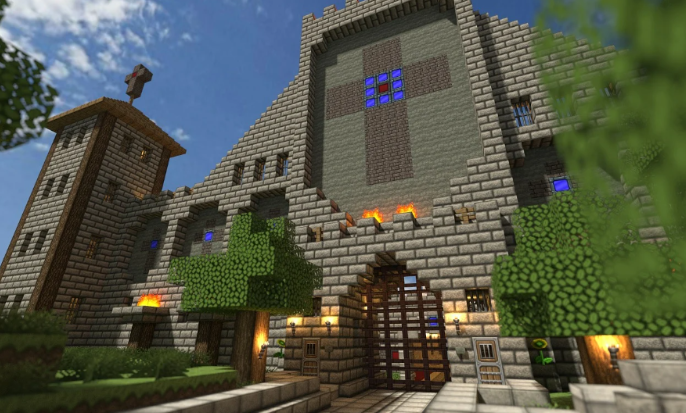
Why These Structures Matter
In the Deep Dark, hesitation can keep you alive. Inside a Trial Chamber, hesitation usually costs you.
Ancient Cities demand awareness. Trial Chambers reward preparation. Villages, by contrast, establish rhythm and long-term stability.
Some players lean toward tension and careful movement underground. Others prefer structured fights and controlled challenges. And some just want a settlement with farms, trades, and routine.
One world might revolve around emeralds and crop fields. Another might revolve around risk in near darkness. The difference shapes how you play.
Learning how to find trial chambers in minecraft or tracking down the right biome for villages is not just about coordinates. It reflects how the world generates — and how exploration influences both gameplay and performance.
Explore deliberately. Plan travel. If you manage multiplayer worlds, think about stability before encouraging long-distance searches.
Exploration adds risk. Stability keeps players coming back.