
Dolphins just want to have fun, panelists’ experiences tell them
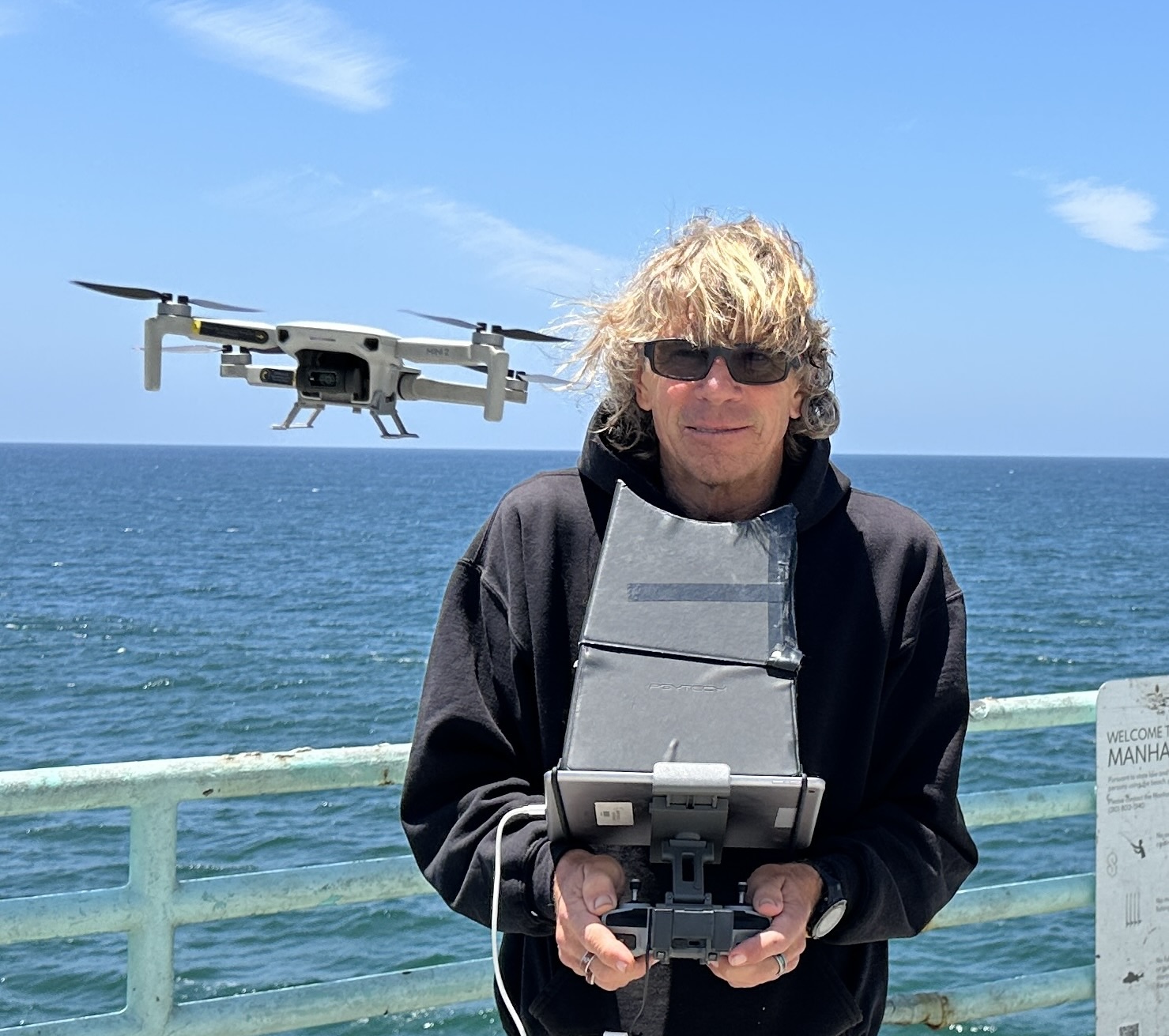
by Kevin Cody
“Why do dolphins surf?” drew a standing room only audience to the Manhattan Beach Library last Wednesday, September 17. The panel discussion was presented by the Roundhouse Aquarium’s Coastal Bottlenose Dolphin Project.
The evening began with a screening of “Why Dolphins Surf,” edited by Roundhouse Aquarium Boardmember Lynn Gross, a former television producer and former communications professor at Cal State Fullerton.
The video was shot by Coastal Bottlenose Dolphin Project founder Eric Martin, co-director of the Roundhouse Aquarium.
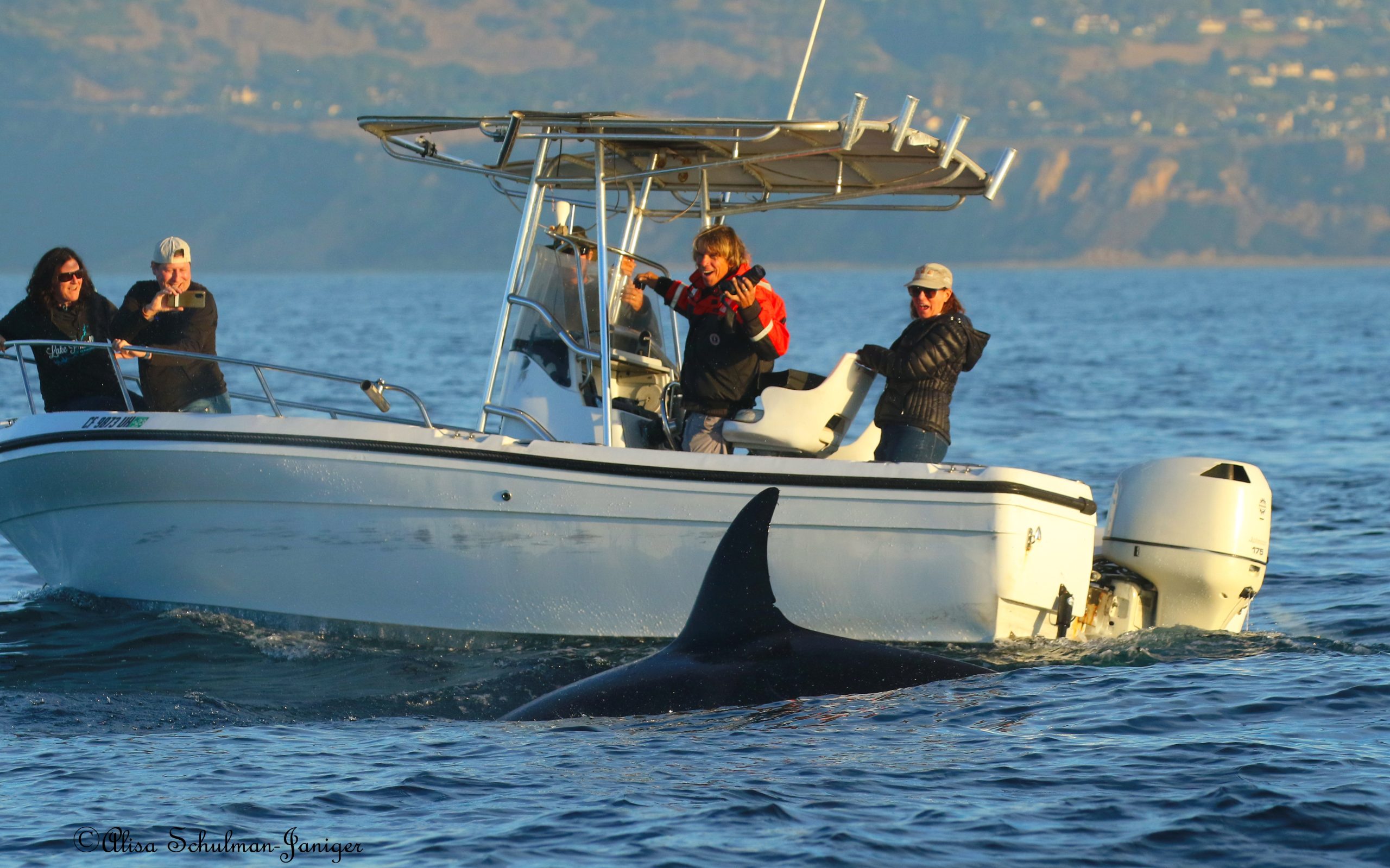
The team. Photo courtesy of the Dolphin Project
Martin began videoing dolphins in 2018 after discovering drones could record previously unseen dolphin behavior. Until then, Martin said, most dolphin research was with dolphins in captivity. That research, Martin acknowledged, made significant contributions to understanding how dolphins echo-locate, thermo-regulate, and communicate.
But little research had been done on dolphins in the ocean. The Dolphin Project is working to fill that gap, relying in large part on Martin’s drone footage of the three dolphin pods that reside in the Santa Monica Bay.
Among the Dolphin Project’s discoveries is that bottlenose dolphins live longer than previously believed. Martin said dolphins were previously thought to live about 16 years. But the Dolphin Project has identified one dolphin thought to be 75-years-old.
Following screening of the video, Roundhouse Aquarium Boardmember and former Cal State University Dominguez biology professor John Roberts told the audience the six most common theories on why dolphins surf:
- To remove parasites from their skin
- To socialize.
- To establish the pecking order.
- To practice survival skills.
- To practice riding boat bow wakes.
- For fun.
Then, despite Robert’s caution not to anthropomorphize dolphins, the three panelists, all surfers, came to the same conclusion for why dolphins surf.
“It’s fun,” said Jason Shanks, owner of the Nikau Kai Waterman Shop in downtown Manhattan Beach. “Surfing’s the high point of my day,” he added.
Martin recalled driving his 20-foot skiff off of Palos Verdes one day when Orcas began riding his bow wake. He left the wheel untended to lean over the bow, resulting in the boat turning in wide circles. The orcas, which were the length of his boat, kept bow surfing, he said, leading him also to conclude they did it for fun.
Panelist John Dorsey, a retired Loyola Marymount University science professor, said his most interesting dolphin experience was in El Porto on a recent Thanksgiving.
He and a friend were paddling out to surf when a wave came in. As they ducked-dived under the wave, they saw they were on a collision course with a dolphin. The dolphin narrowly avoided hitting them by doing what Doesey described as a “standing Island pullout,’ which refers to a surfer pulling out of a wave by burying the nose, instead of the tail, of the board.
As the dolphin buried its nose, its tail came up and flicked the watch off his friend’s wrist, Dorsey said.
It was too precise a maneuver to be anything but playful, Dorsey concluded.
Martin told his audience that it is illegal to harass marine mammals. Harassment, he said, is causing harm, or interfering with their normal behavior. People are supposed to stay at least 100 yards away from marine mammals. But if dolphins approach, the law does not require surfers to paddle.
“Just don’t try to pet them,” Martin said.
For upcoming Roundhouse Aquarium events visit RoundHouseAquarium.org. ER
Comments
Loading comments…