by Kevin Cody
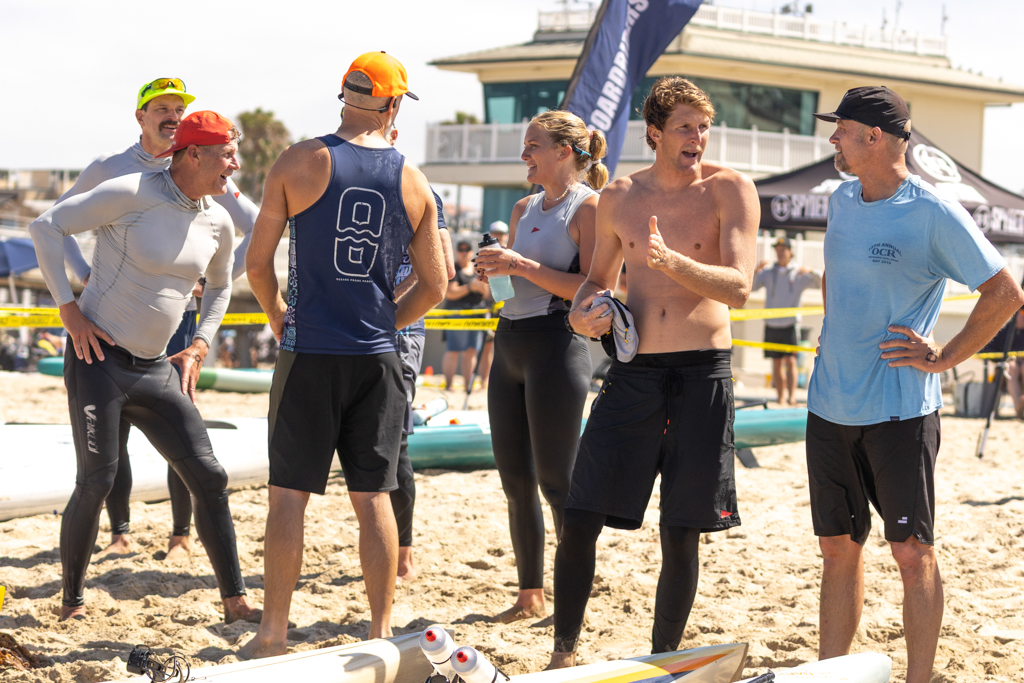
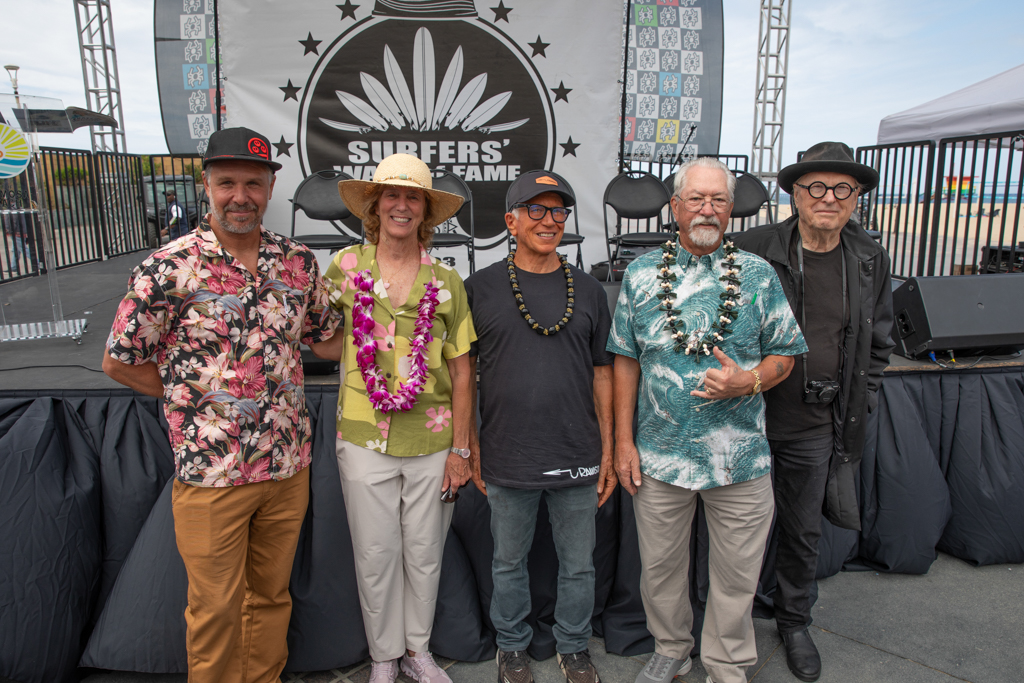
Five South Bay surfers, all mostly unknown by the local surfing community, were inducted into the Hermosa Beach Surfer Walk of Fame on Saturday, April 25.
Four of the five moved away from the South Bay.
Surfboard shaper Pat Rawson moved to Hawaii. Shaper Tyler Hatzikian moved to San Marcos. Lonnie Argabright moved to San Clemente. And artist John Van Hamersveld moved to Hollywood, San Francisco, and then Malibu, though he has now returned to Palos Verdes, where he grew up.

Inductee Laurie Wilson is the only one who stayed in the Beach Cities. But despite her shelves of contest trophies, recalled by her brother Jeffrey during his introduction of her, she is the least locally known of the inductees because her pro career was in the last ‘60s when female athletes in all sports were mostly ignored.
But despite their local obscurity their impact on the local surf community runs deep.

Hermosa Beach Mayor Mike Detoy, in his welcoming speech at the induction ceremony, credited the five with helping make surfing “a way of life,” in the South Bay, and making local waves a “proving ground” for surfing.
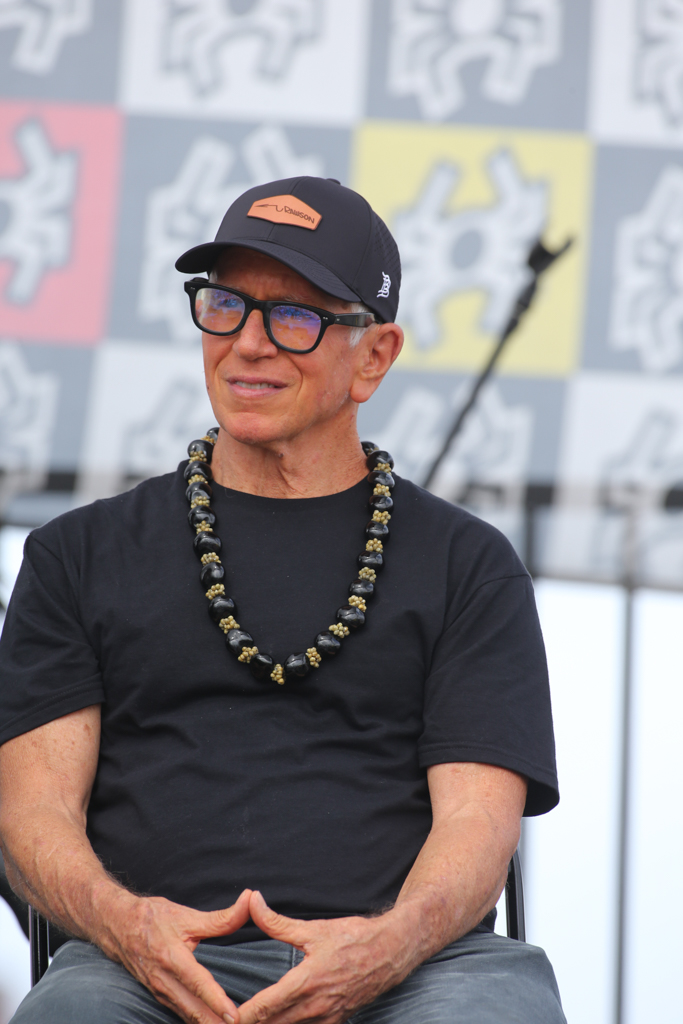
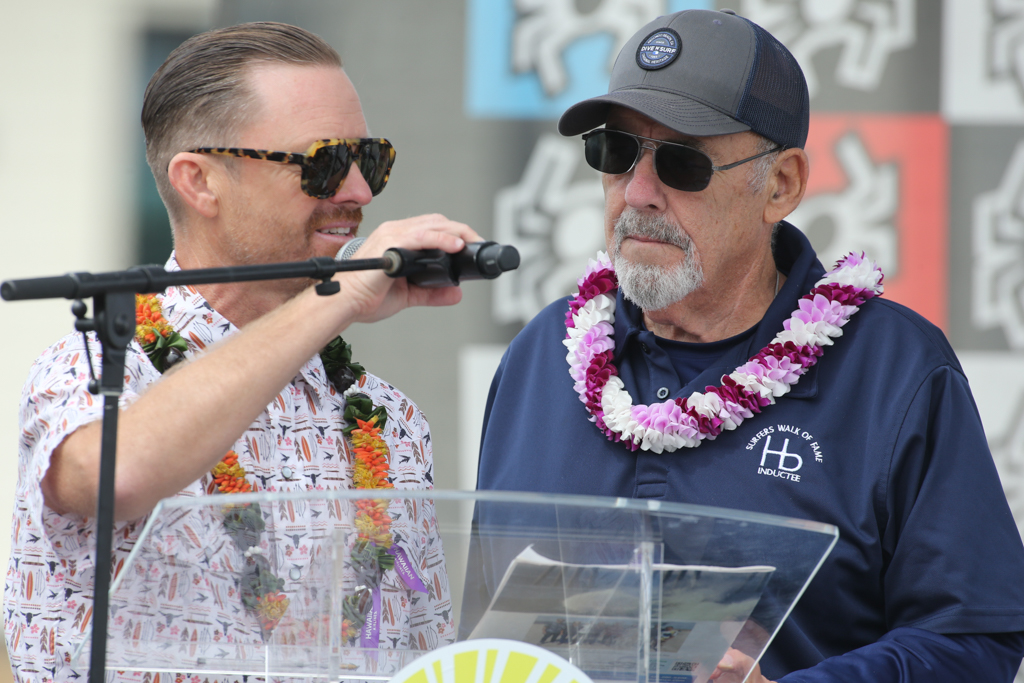
Pat Rawson, the least locally known of the 2026 inductees, is also the best globally known .
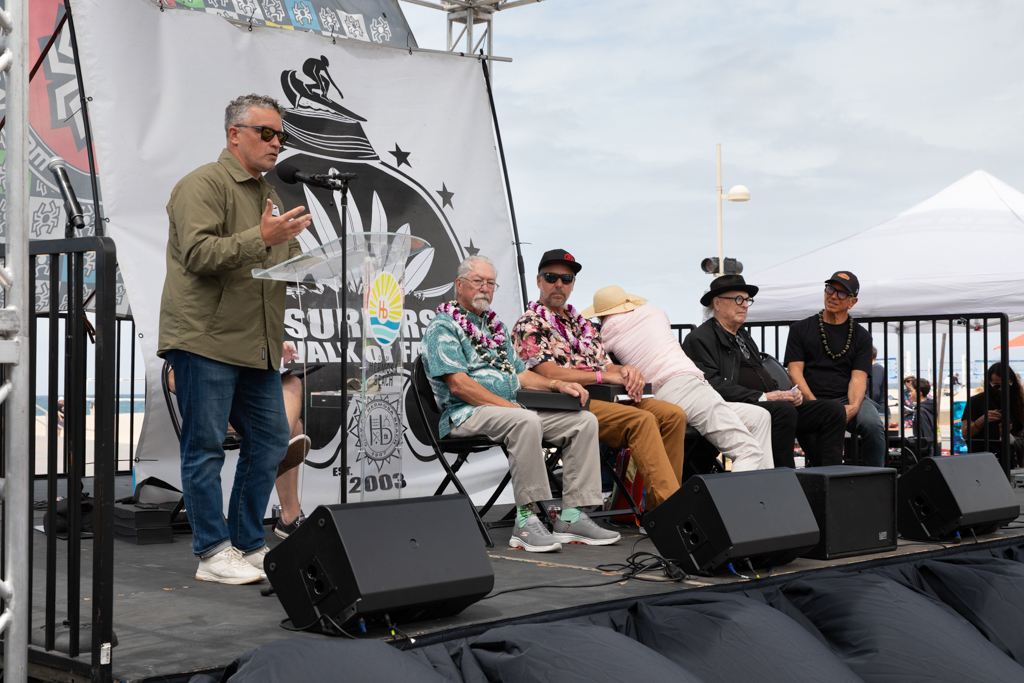
“Rawson’s induction elevates our Surfer Walk of Fame,” Hall of Fame judge and Spyder Surf co-owner Dennis Jarvis said of Rawson’s induction.
Rawson’s nephew, Charlie Nineger, who introduced Rawson at the induction ceremony, said his uncle started shaping surfboards in his family’s Playa del Rey garage in 1966, when he was 12, after hearing the buzz of a Rockwell planer coming from a neighbor’s garage. The neighbor was Mike Doyle (SWOF 2013). Two years earlier, Doyle finished second in the inaugural World Surfing Championship in Manly, Australia.

At 15, Nineger said, his uncle convinced a Westchester High classmate to drop him at LAX, where Rawson boarded a plane for Hawaii. While the plane was taxiing for takeoff, it turned around and returned to the gate. Two LAPD officers boarded the plane and removed the runaway. Rawson’s classmate, in a loss of nerve, reported Rawson’s plan to the principal.
In hindsight, the friend’s betrayal was a blessing, Nineger said, because it gave his uncle two more years to develop his surfing and board building skills.
After his runaway plan was foiled Rawson became a member of the Dewey Weber surf team, and began working after school as pinstriper for Rick Surfboards, where he absorbed the shaping ethos of shaping greats Phil Becker and Mike Eaton.
“My uncle is associated with Hawaii because that’s where he has shaped boards for almost five decades. But he grew up under the LAX flight path, in one of the homes condemned in the early ‘70s,” Nineger said.
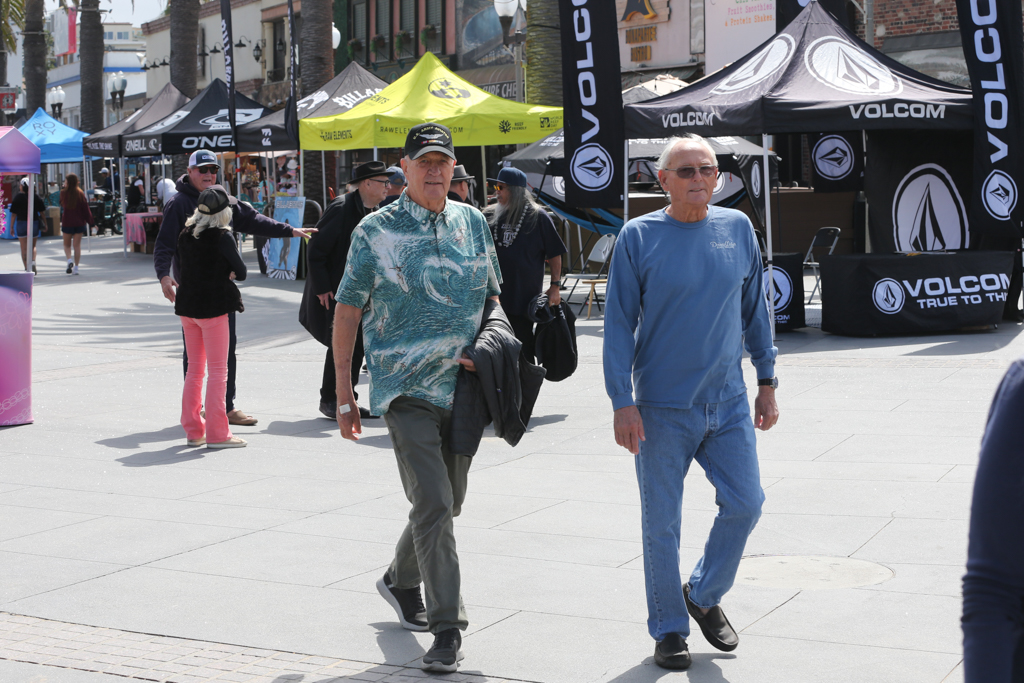
Rawson moved to Hawaii after high school, when he was 18.
In Hawaii he was mentored, and eventually assumed the mantle of big wave “gun guru” Dick Brewer.
“Every big wave rider who came through Hawaii wanted a Rawson board,” Nineger said.
The level of surfers who rode and continue to ride Rawson boards is reflected in their surf world mononyms, among them Buzzy, MR, Mr. Sunset, Carroll, Buttons, Derek and Michael, Sarlo, Sonny, Curren and Kai.
In 1982 Rawson was asked by Grubby Clark to make the plugs for Clark Foam’s new “close tolerance” surfboard blanks. They are called “close tolerance,” because they are close to the dimensions and contours of a finished board, reducing the time it takes to shape a surfboard blank from hours to under an hour.
“Those plugs are still in use today. Which means many of the boards we ride, even if the laminates don’t Rawson, have the Rawson magic hidden in them,” Nineger said

Hatzikian, at 54, the youngest of the inductees, and best known among South Bay surfers, said his first board was a 7-foot-6 Rawson with a yellow tint that had been his dad’s board.
Decades later, in 2005, Hatzikian shaped a yellow tint, single fin longboard for filmmaker Jason Baffa’s “Single Fin Yellow,” which tells the story of a board surfed around the world by six top pros.

Hatzikian’s acceptance speech was an appreciative litany of South Bay shapers who mentored him, including Hap Jacobs, John Lessing and Phil Becker, and shapers who continue to influence him, including Wayne Rich, Pat Ryan, Dennis Jarvis and Craig Richmond.
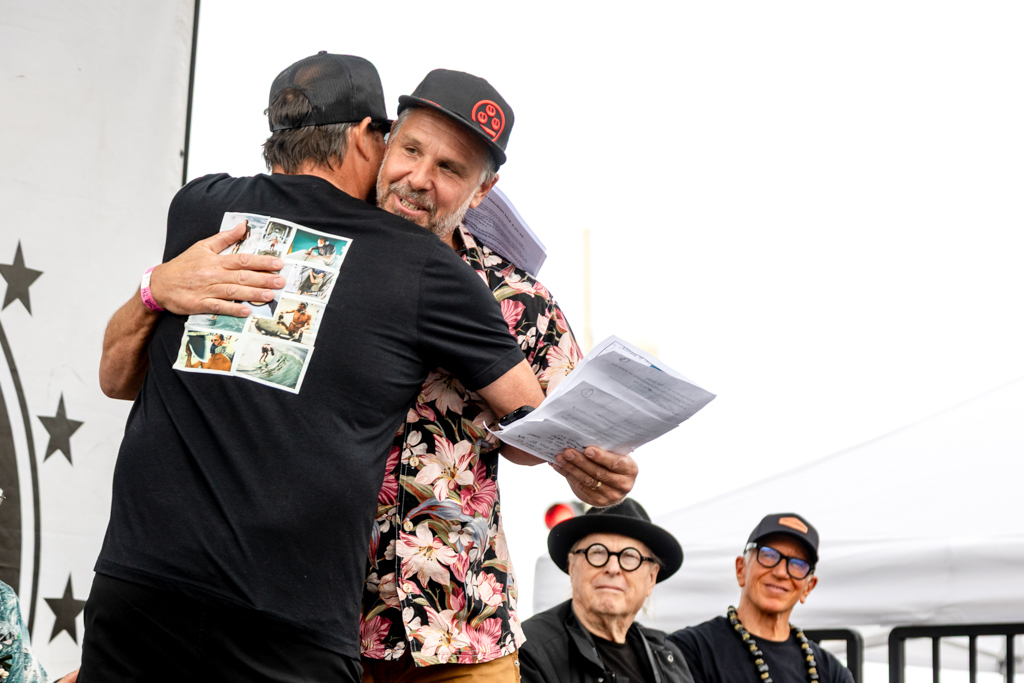
For the prominence of his single fin longboards, Hatzikian thanked the South Bay photographers whose photos of Tyler boards appear regularly in surfing, and other action sport magazines. Among those he singled out were Mike Balzer, “who shot my first Surfer Magazine photo,” Brent Broza for his award winning photos of Hatzikian on big waves at Hammerland, Brad Jacobson, for his videos, Brian McStotts, Gus McConnell and Michael McIntyre.
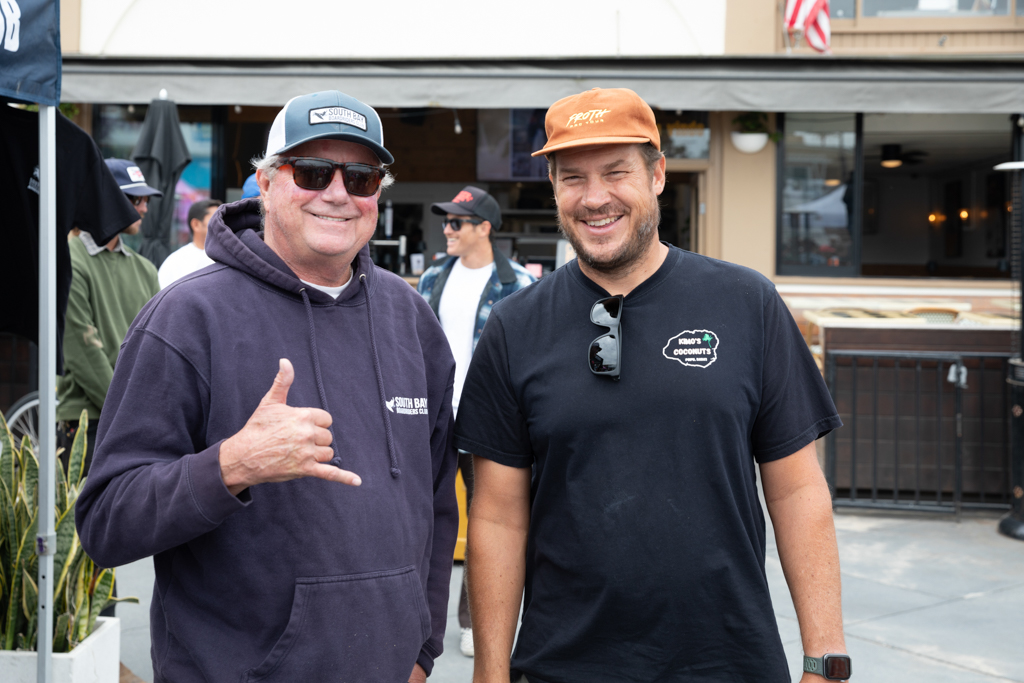
Hatzikian also thanked local surfers who inspired him, including Mike Purpus, “who put the South Bay on the surfing’s map,” and, at the top of his list, retired lifeguard, and all around waterman Tom Seth.
“Tom was the person I most wanted to impress growing up. He taught us to be tough,” Hatzikian said.
Though still recognized as a dominant presence in the lineup on big days at Hammerland, where he built his reputation as both a shaper and a surfer, Hatzikian said he is redirecting his focus to mentoring young surfers, among them Cormac O’Brien, 20, whom he described as “the South Bay’s next Mike Purpus.”
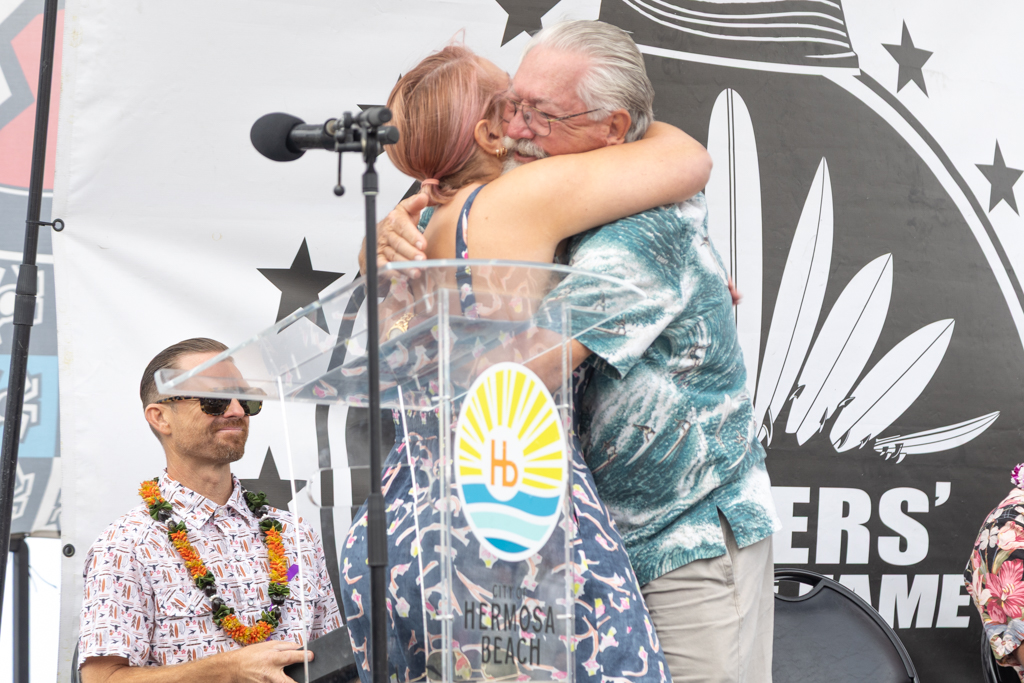
Lonnie Argabright was introduced by his daughter, Linda Buckley.
“Surfing wasn’t a hobby for my dad. It defined him,” she said.
She recalled sitting on the beach at 22nd Street when she was a child with a whistle her father told her to blow if she needed help.
She never had to blow it, in part, she said, because she was known on the beach as Lonnie’s little girl.
She recalled watching her father sit in the water for long periods without paddling.
“I called him ‘the buoy’ because he would wait until he found the wave he wanted,” she said.
Argabright, in his acceptance speech, described those waves as “spiritual moments that every surfer experiences.”

Wilson said her “love affair with the ocean” began when she was seven, before surfboard leashes, shagging boards for her older brother.
“When their boards washed in I would turn them around and push them back out. That’s when I first felt the glide, and thought, ‘I want to do this.’”
Wilson was a gifted athlete who could throw a football better and play basketball better than boys her age, her brother said.
When she began surfing she quickly earned her her place in the line-up with the boys.

“The other women were good surfers, with a graceful, cruising style. But I wanted to surf like the guys, who attacked the lip and sped down the line,” Wilson said.
She recalled going to ET Surf shaper Pat “Gumby” Ryan and telling him she couldn’t decide between a round tail and a square tail.
“He told me, ‘I know how you surf. I’ll make you a board you’ll like.’”
Because it wasn’t possible for a woman to earn a living surfing, she played professional basketball, but returned to surf competition during the longboard resurgence in the late ‘80s.
Wilson said she hopes her Hall of Fame induction will inspire the growing numbers of female surfers.

John Van Hamersveld grew up in Palos Verdes with a crew of surfers who included Phil Becker, but acknowledged he was never a competitive surfer.
He went to Art Center and Cal Arts and became, he said, “a cultural designer.”
His calling card was the poster he designed for Bruce Brown’s 1965 breakout surf film, “Endless Summer.”
Today the dayglo depiction of the film’s three surfers with boards on their heads, silhouetted by a setting sun is in the collections of the Smithsonian Institution, the Museum of Modern Art (MoMA), and the Los Angeles County Museum of Art (LACMA).
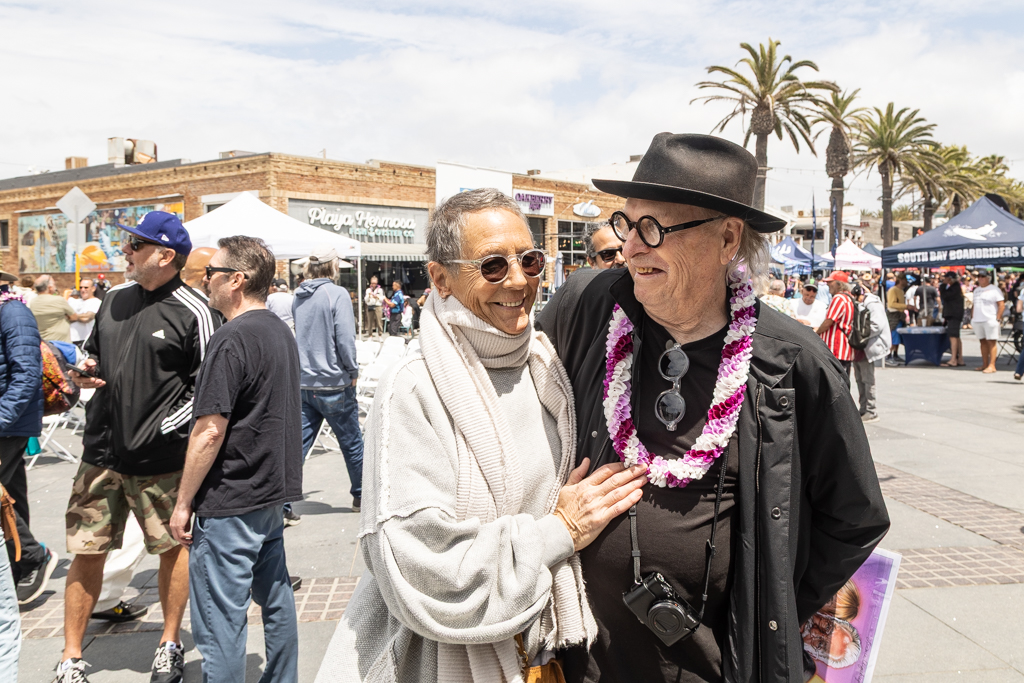
Van Hamersveld’s fame broadened when he designed over 300 album covers for Capitol Records, among them the Beatle’s Magistical Mystery Tour, the Rolling Stone’s Exile on Main Street and the Beach Boy’s Wild Honey.
In 2015, his Great Wave mural was unveiled in downtown Hermosa. Its three silhouetted surfers, against swirls of dayglo colors, represent the evolution of surfing from the kook box, to the longboard, to the shortboard era.
At 85, Van Hamersveld’s art remains informed by the blinding light, and surfing’s elusive balance between excitement and serenity.
“John shows what it feels like to get barrelled,” Jarvis said during his introduction of Van Hamersveld. ER