by Chelsea Sektnan
On a clear afternoon in Palos Verdes, when the ocean breeze drifts through the canyons and the scent of eucalyptus hangs in the air, it’s easy to forget how vulnerable to fire the Peninsula hillsides are. But the brush grows thick and dry by late summer, and locals still remember the orange skies that hovered over the Palisades and Altadena this past year.
For engineer Kevin Carney-Poderica, those memories, and a visit to fire devastated Maui sparked an idea that could change the way we fight fires.
The Palos Verdes native visited Maui just before the firestorm that destroyed Lahaina.
“It didn’t make sense,” he said. “All that water right there, and they still couldn’t stop it.”
After the Lahaina fire he shared his frustration with longtime friend and fellow Peninsula inventor Michael Holman, a machinist known for his practical ingenuity. Together, they came up with a device that lets a standard fire hydrant start fighting a fire before firefighters even arrive.
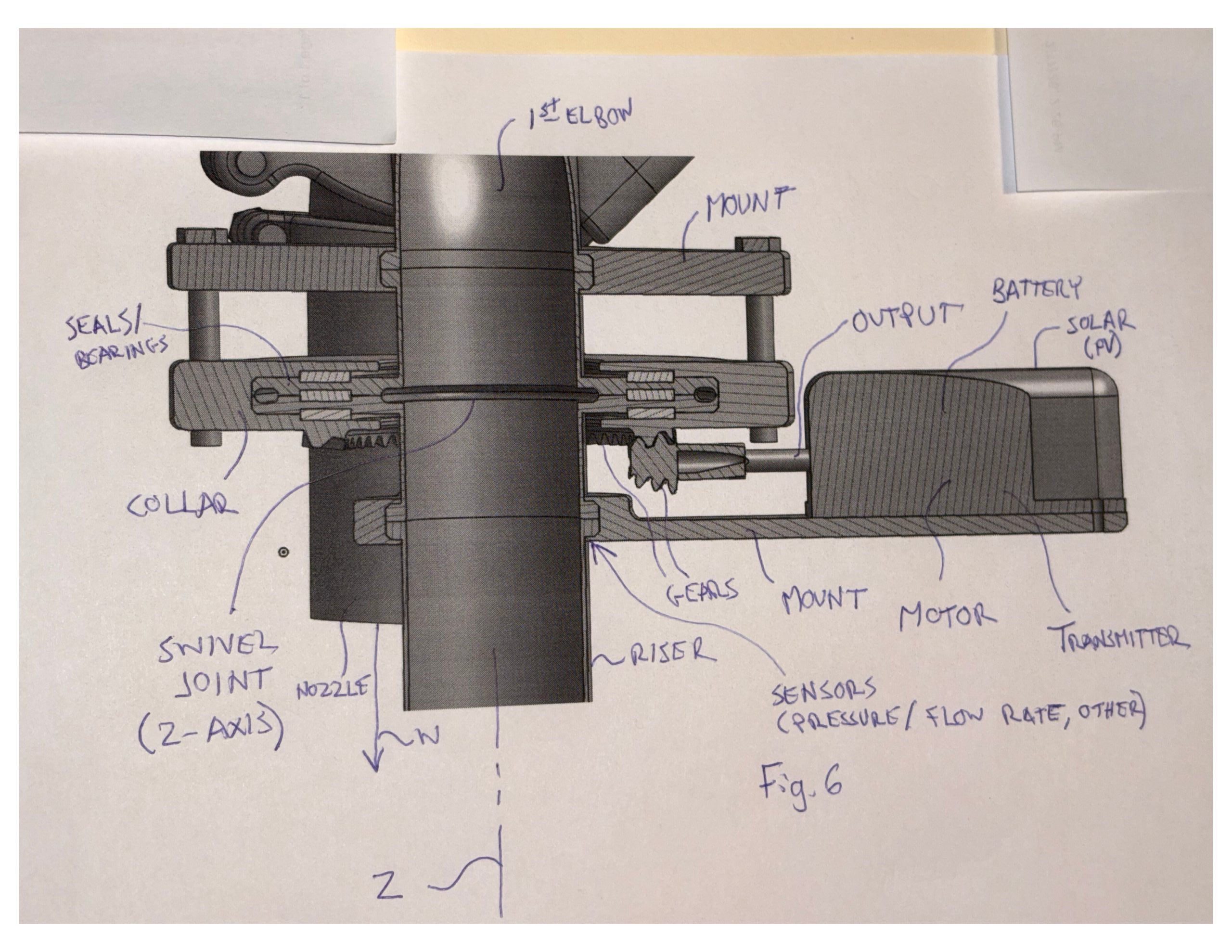
Inside their 15,000-square-foot California Sustainable Engineering workshop in Carson, Carney-Poderica and Holman have been refining the idea, machining parts, and assembling components of their system. What they’ve designed is a compact attachment that fits onto any hydrant and automatically sprays water when flames are detected nearby. It can also be activated remotely, buying precious minutes during those first chaotic moments of a fire. Each unit can spray water about 200 feet.

The pair recently filed a patent application for what they call “Fire Hydrant Attachment for Remote or Autonomous Fire Suppression.” The attachment is equipped with an autonomous servo motor that can aim the water nozzle and control the water flow. Each hydrant runs on a solar-charged battery so it can work even if the power goes out. Their goal is to give firefighters a head start by making fire hydrants “smart” enough to act on their own.
“Firefighters have to get to the fire, connect hoses, and get water flowing. Those few minutes matter. What if the hydrant could buy them that time,” Carney-Poderica said.
Road grade, access, and hydrant spacing all affect how quickly a crew can connect to hydrants and start water flowing, according to the Los Angeles Fire Department website.
The Autonomous Fire Suppression device can also test hydrants and alert cities if a hydrant isn’t working properly. Los Angeles city code requires hydrants to deliver at least 4,000 gallons per minute at 20 psi. But in older neighborhoods and hillside zones, hydrants often fail to meet that standard. The team hopes their attachment will help cities spot weak links in the system before the next emergency.
“We have all this money in infrastructure to fight fires,” Carney-Poderica said. “The issue isn’t the infrastructure — it’s how we modernize it, at an affordable cost.”
“The key to stopping these fires is responding to them immediately,” Holman said.
Carney-Poderica holds several patents, including one for a biomedical cannabis vaporizer he created for a friend undergoing cancer treatment. Holman invented the first articulating seatpost for mountain bikes. It allows on-the-fly seat adjustments, and has become a $300-million yearly industry. He’s also spent decades designing vacuum-pressure-cooling systems for aircraft manufacturing.
For both men, this project hits close to home. Holman’s property backs up to a dry hillside, and Carney-Poderica’s home in Malaga Cove sits above steep, narrow streets where fire trucks can’t easily maneuver.
“If something started across from my house,” Holman said, “the fire department couldn’t get here fast enough. The homes would be gone.”
In early 2024, they filed a provisional patent and began seeking funding to build a prototype. They presented the idea at Hess Park during a Peninsula business meeting attended by officials from all four local cities. The reaction was enthusiastic, but, as Carney-Poderica put it, “everyone wanted to know, how do we fund it?” Retrofitting costs about $10,000 per hydrant, a small price, he says, compared to the cost of even one burned-down home.
“The City of Rancho Palos Verdes is open to any technology that helps suppress or prevent fires,” City Manager Ara Michael Mihranian said.
Hydrants are located on every block. But Rancho Palos Verdes does not own or operate its fire hydrants. The hydrants and water lines are owned and maintained by Cal Water in coordination with the Los Angeles County Fire Department.
Carney-Poderica and Holman have reached out to Congressional Representative Ted Lieu and state officials for government innovation grants. “If we could start right here,” Carney-Poderica said, “we could show what local innovation really looks like — neighbors protecting neighbors.”
Their project is about service, not profits, they said.
“We’re not trying to get rich,” Carney-Poderica said. “We just want to make something that helps. Every hydrant could protect its own block. If we can make that happen, maybe we’ll never have to see another Palisades fire again.” Pen