by Linda Chase
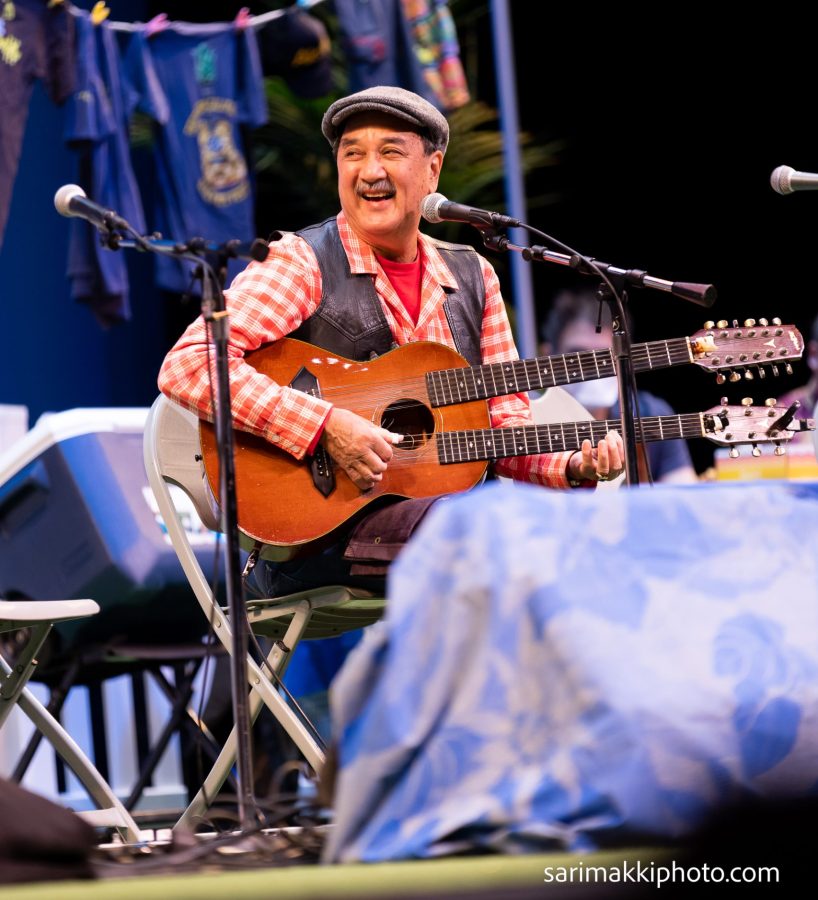
One of the first lessons George Kuo learned from his slack key mentors is don’t give up your day job. They might draw big crowds in Europe, Japan and the mainland, but that wasn’t enough to put food on the table on a regular basis when they came home.
At the time in the early 1980s, Kuo was a civil engineer with the Hawaii Board of Water Supply, But as soon as he clocked out at 3:15, he joined other water department employees to play traditional Hawaiian music.
Among his slack key mentors was Gabby Pahinui, who is considered one of the greatest Hawaiian musicians of all time.
“The work was done, everything was relaxed at these sessions,” Kuo recalled in a recent phone interview.
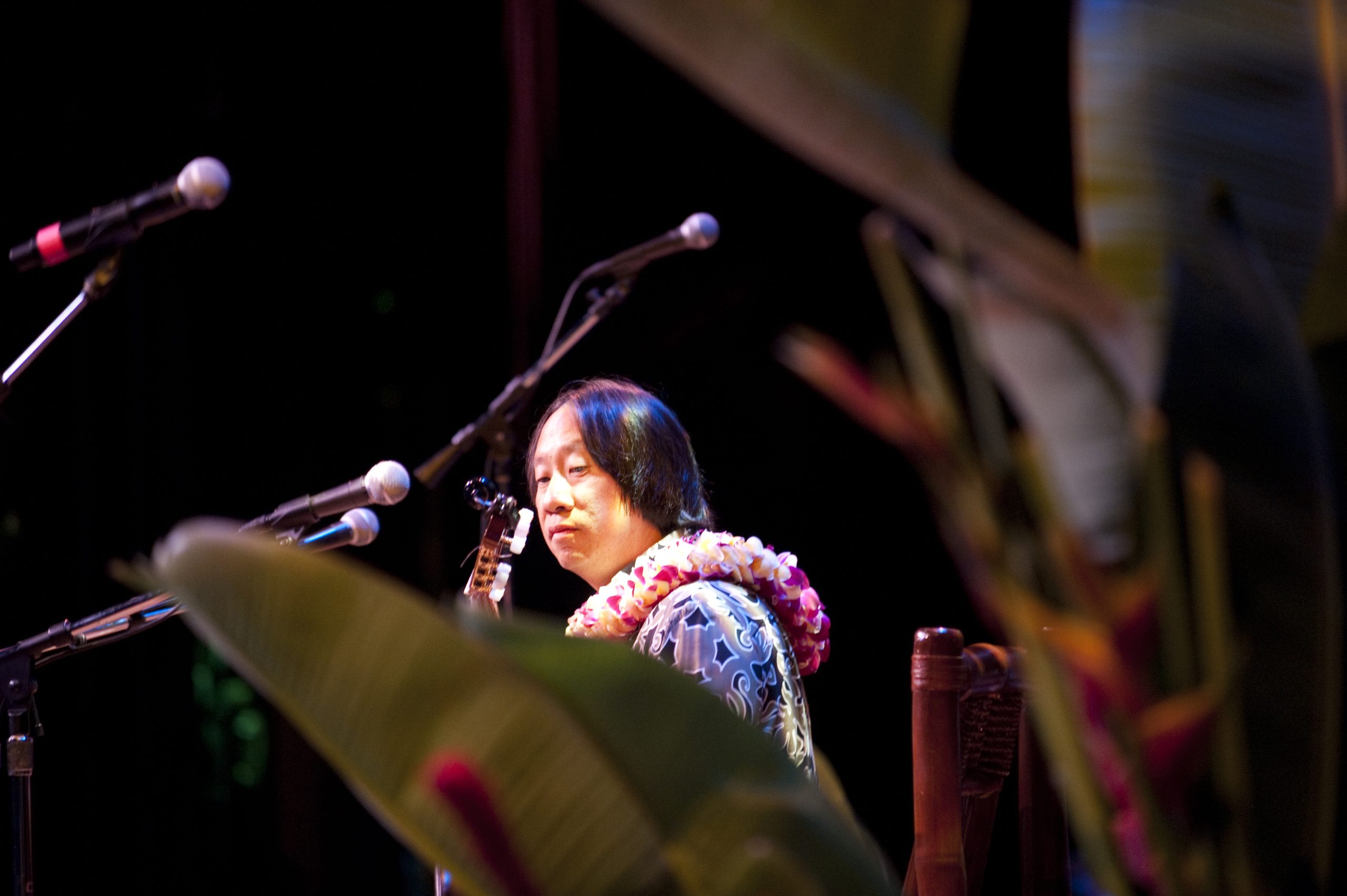
Kuo will perform at the 2026 Southern California Slack Key Festival, on Sunday, Jan. 18 at 2 p.m., Redondo Beach Performing Arts Center. He will be joined by 10-time Nā Hōkū Hanohano Award winner and Grammy Award nominee Natalie Ai, and Sonny Lim, Jeff Peterson, Jim “Kimo” West, Kamuela Kimokeo, and Anuhea Lim and others.
When Kuo first heard Pahinui popularized, he said to himself, “That’s how I want to play — the old style.”
Kuo was born in 1955, and came of age as a musician in the 1970s, just as slack key and other traditional Hawaiian art forms were experiencing a renaissance.
The slack key tradition began in the 19th century, when European sailors and Latin American vaqueros introduced guitars to Hawaii. The Hawaiians adapted the instrument to their traditional songs by “slacking” the strings, which is what they called the open tunings they invented. The earliest slack key tuning, named after a staple of the Hawaiian diet, was the Taro Patch” (G major), D-G-D-G-B-D.
Each family created its own tunings, which were zealously guarded, sometimes even from family members. Worried that the art form would die out, a core of legendary slack key artists, including Pahinui, Sonny Chillingworth, Raymond Kane, Dennis Kamakahe and others, began passing along their knowledge and expertise to the next generation. Payment for lessons might consist of freshly caught fish.
After studying conventional guitar in school, Kuo found slack key mentors, such as Antone Gabriel.
“He’s the Yoda of Slack Key,” Kuo said with a laugh as he described Gabriel’s unique style of brushing his fingers upward on the strings.
Kuo jammed with fellow musicians in garage sessions, on front porches, even at the 19th hole of golf courses. An informal gathering at the home of a slack key musician could last for days, filled with eating, drinking, talking story and playing. The gatherings created a powerful sense of ona, or well-being.
The C Mauna Loa tuning (C-G-E-G-A-E, called “Gabby’s C” because it was favored by Pahinui) became Kuo’s preferred tuning. The intervals on the higher strings help separate the melody from the bass and produce a nahenahe (sweet) sound. “You can actually make the guitar cry, I think, with this kind of tuning,” Kuo stated in the notes of one of his albums. Kuo’s simple, relaxed style emphasizes melody and feeling rather than showy riffs.
Kuo began to make a name for himself when he formed the Kipapa Rush Band with a group of friends who included Wayne Reis, a nephew of slack key legend Atta Isaacs. He won a slack key contest at the Waikiki Shell in 1979, and the following year, he put out his first album.
In 1986, Eddie Kanae asked Kuo to join the Sons of Hawaii. Formed in 1960 by Pahinui, this group had become the gold standard of slack key. Kuo joined them for tours of the mainland and Japan. “People had a hunger for this grassroots style of music,” he said. “There’s magic in the traditional style of playing.”
One of the highlights of his career came in 1993, when he performed on Garrison Keillor’s popular radio show, “A Prairie Home Companion,” with country music legends guitarist Chet Atkins and fiddler Johnny Gimble.
The Sons of Hawaii disbanded in 1996, but by then Kuo had become an established artist and was playing every Sunday afternoon at the Waikiki Beach Marriott in Marriott. “I’d go to work on Monday feeling so satisfied,” he recalls. He was still at the water department.
Today, he’s scaled back his appearances, but visitors to Honolulu can sometimes catch him playing at the upscale Eating House 1849 in the International Market Place and Nico’s on Pier 38, where the fishing boats and freighters dock.
Through recordings and live appearances, Kuo seeks to preserve the Hawaiian slack-key tradition, following the commandment Gabby Pahinui gave young guitarists: “Keep Hawaiian music in your heart.”
Nothing pleases him more than when a young person comes up to him after a performance and says, “What do you call that music? My grandfather used to play that. Can you show me how?”
2026 Southern California Slack Key Festival, Jan. 18 at 2 p.m., Redondo Beach Performing Arts Center, 1935 Manhattan Beach Blvd., Redondo Beach. Special guest: Natalie Ai. Plus George Kuo, Sonny Lim, Jeff Peterson, Jim “Kimo” West, Kamuela Kimokeo, Anuhea Lim and others. Tickets $34-$155 (the top price includes a VIP luau/meet-and-greet with the festival performers on Jan. 17 from 5 to 8 p.m. at the performing arts center). Tickets are available at Tix.com/ticket-sales/kalakoa/1723/event/1416558, or call 310-937-6607 for information.
Linda Chase is a freelance writer based in Santa Barbara. She writes on the arts, travel, lifestyle and other topics.
This feature was produced by the Journalism Arts Initiative, which is underwritten by donations from arts organizations and others interested in supporting excellence in arts journalism. ER