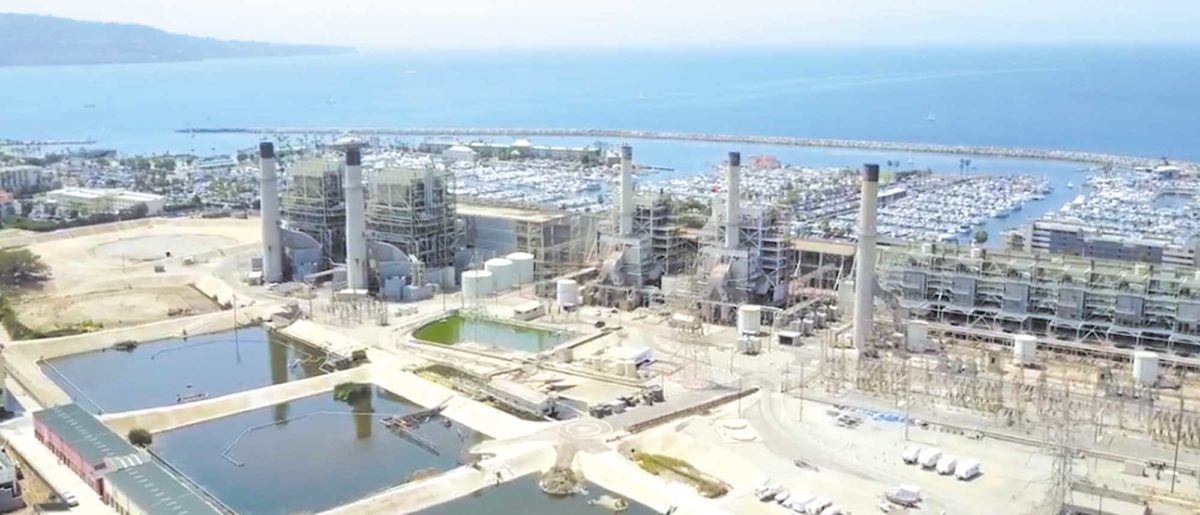
The AES Redondo power plant has finally sold, after more than a year of negotiations and at least a decade of effort to find a use for the 51-acre site beyond power generation. According to the sale documents, AES has committed to permanently retire the plant by 2023, though the City of Redondo Beach has repeatedly signaled that it wants the plant closed well before then.
On Monday, AES announced that it had closed escrow on a sale of the land to developer Leo Pustilnikov. The amount of the sale was not disclosed. The agreement includes a clause stating that up to 25 acres of the site will be preserved as privately-owned public open space, but only if the plant remains open until 2023.
“If the city doesn’t agree to an extension, or if there’s no extension, it goes away,” Pustilnikov said.
Redondo Beach Mayor Bill Brand disagrees.
“If there isn’t a plant, any change but 100 percent open space is going to require a vote of the people,” Brand said. “The sooner that thing is shut down, the happier we will be.”
AES Redondo is scheduled to sunset at the end of this year because a California law has ordered the closure of ocean-water cooled power generators. But state power regulators, concerned that the grid won’t stay reliable as plants close, have proposed to extend the closures, targeting Redondo as a potential site to stay open.
The sale agreement attempts to bake a possible extension in as a positive for the city, the developer and the power plant.
“The longer AES stays open, the more open space there is,” Pustilnikov said in an interview, adding that the City of Redondo Beach would have the option to buy at least some of the available open space.
Four acres of open space would be available after a one-year power plant operational extension, eight additional acres after two years, and 13 more — or the entire 25 possible acres — after three years.
“Part of what we’ve done in these transaction documents is to make sure we can balance the needs of the local community now and into the future,” AES president Lisa Krueger said.
Krueger said that the deal is beneficial for all parties: AES, because it continues to generate power; Pustilnikov, because he can begin assessing the property and its remediation needs; and the community, both for the deal’s open space provisions and because an extension would ensure electrical grid stability. Pustilnikov is also leasing the property back to AES as the plant continues to operate.
The agreement also states that AES will provide money to Pustilnikov for property remediation, transmission line removal and open space planning. The amount of money they will contribute is dependent on how many years the plant is in operation but is limited to a maximum of $14 million, structured similarly to the open-space provision: the longer the plant operates, the more money will be available to clean up and plan the site.
Over the last year, Redondo Beach has worked toward an agreement allowing the city to purchase 25 acres of open space at $2 million an acre, applying for state grants and creating a tax overlay district to pay for infrastructure improvements to the site.
Earlier this month, Pustilnikov rescinded that deal, instead offering Redondo Beach its 25 acres of open space in a covenant, as privately-owned and controlled open space, in exchange for the city’s support in the power plant receiving a three-year extension.
The Redondo Beach City Council voted against supporting the extension for two reasons. First, the city wants the plant closed as soon as possible.
“The minute it starts belching out black smoke again, do you think people are going to be happy that we’re waiting another three or four years?” Councilman Todd Loewenstein told Easy Reader earlier this month.
Brand argues that Redondo doesn’t need to stay open. Three other Southern California power plants, including two owned by AES, have been recommended for extension by state regulators alongside Redondo.
“The city’s experts have determined that there’s no need for Redondo to be open, even for a year,” Brand said. “We’ve been trying to get the plant permanently retired for over 10 years.”
Second, Redondo wants to own the parkland outright, rather than be granted a right to public access to privately-owned open space.
Open space, as defined by the agreement, includes parks, plazas and lawns, pedestrian areas, parking lots and recreational space.
The site is zoned for parkland, but allows for power generation. Any attempts to change the site’s zoning to allow other uses, including retail, office space, or residential development, must be approved by Redondo Beach voters, in accordance with Article 27 of the Redondo Beach City Charter. That charter amendment was approved by voters in 2008 — in response to a failed plan to redevelop the AES power plant site.
“I don’t see anything right now that’s going to cause the council to stand down from their opposition,” Brand said. “The better he works with the public, the better his chances are of getting entitlement changes.”
AES is now leading on negotiations with Redondo Beach, Pustilnikov said.
“AES and I memorialized the terms offered to the city in our agreement, which is what delayed closure,” Pustilnikov said. “That’s been finalized. If the city agrees, great. If it doesn’t, it’s all the same…maybe we’ll have some guidance Wednesday or Thursday [after the City Council’s Tuesday night meeting]. But it is what it is.”