A Pulitzer Prize-winner from a couple of seasons back, “Clybourne Park” by Bruce Norris, complements Lorraine Hansberry’s “A Raisin in the Sun,” its first act set in 1959 – the year of Hansberry’s play – and its second act 50 years later. Typically, things change and don’t change at the same time.
Race relations is a subject that never disappears because it’s always about “us” vs. “them,” or your tribe and the Other. Of course, when the matter of race relations is combined with the issue of maintaining the homogenous integrity of one’s neighborhood, then sparks fly and – voila! – we have a play.
In “Clybourne Park” the real poignancy of the story, and certainly its main thrust or catalyst, develops from the reception and subsequent rejection of a character who only appears briefly, and not until much later in the second act. This is Ken, the son of Russ and Bev, who returned home from serving his country but was then vilified for having killed civilians. This happens well before the play opens, but it’s the first domino to fall.
There are seven characters, and in the first act they seem a bit cartoonish, as if David Lynch had stepped in to tweak them a little. What’s remarkable, however, is how well the actors transition from these characters to very different ones in act two.
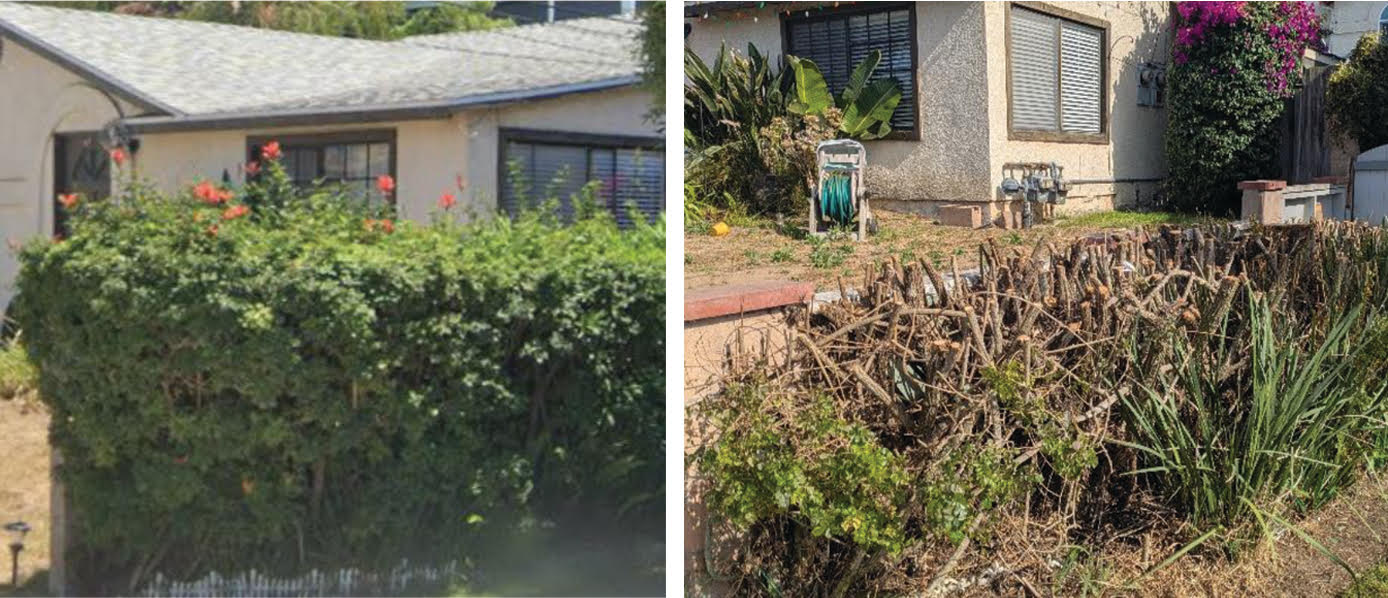
In the first half of the play, a white family is moving out of an all-white neighborhood and a black family is moving in. In the second half, a white family has purchased the same home, but with the intent of razing it before constructing a much larger structure, and this time it’s a black family that objects.
As in “God of Carnage,” a civil discussion spirals out of hand. Lindsey, one of the new owners, says she’s hurt because her ethics have been called into question.
No one’s questioning your ethics, Lena replies. What we’re questioning is your taste.
The play thus manages to be spirited and a little feisty even though it meanders a little and cushions its arguments – perhaps the better to have them well up and take us by surprise. As for what is offensive to black people and not to white people and vice versa, Norris illustrates this point with various jokes. For example, “What is long and hard on a black man?” The punch line, this time at least, is “First grade.”
With each joke, one or more of the characters – black, white, male, female, straight, gay – feigns offense and disgust, but methinks that Norris mainly wants to amuse his audience. At least he amused me and, subjectively speaking, I guess that’s all that counts.
Despite its accolades, this isn’t the kind of play that sticks around for very long in one’s memory. It’s well done from top to bottom, and I was enthralled by the script which I read before seeing it performed, but then it seems to go its own way as we go ours.
Clybourne Park, directed by Pat MacKinnon, is onstage through Sunday at the Mark Taper Forum, 135 N. Grand Ave., downtown in the Music Center. Saturday at 2:30 and 8 p.m.; Sunday at 1 and 6:30 p.m. Tickets, $20 to $70. Call (213) 628-2772 or go to CenterTheatreGroup.org.