

by Mark McDermott
Ryan James ran his final race in his own utterly distinct way.
James, a stalwart runner who graduated from Mira Costa last June, had set a goal to run a marathon but obstacles kept getting in the way. Last fall, he suffered a freak injury, a collapsed lung, in the middle of his senior Cross Country season. Then, this spring, he broke an arm after a fall from a rock climbing wall.
James came back from his collapsed lung with a vigor that flabbergasted his coaches.
“He had the collapsed lung in mid-season, which was just a complete fluke,” said Rebecca Kelley, the MCHS Girls Cross Country coach, who was not James’ head coach, but worked with him throughout his time at Costa. “It happens in some taller, skinny men, sometimes just randomly. It cut his season to shreds. And very quickly, even though he was in the hospital for I think 10 days — he literally was asking the doctor, ‘When can I run?’ — he came back at the end of the season. He wasn’t the same as if he had been uninterrupted, you can’t recover from something like that on a distance team, but he was like, ‘Well, I’m not letting this stop me.’ He was running with the boys as soon as he got clearance.”
Kelley has coached hundreds of runners, across decades, but had never witnessed anything like James’ return from this injury.
“It was one of the most unbelievable things I’ve ever seen as a coach,” she said.

His brother Aidan James, three years older than Ryan, was used to witnessing these kinds of mind-over-matter feats. He said Ryan once played basketball with stress fractures in both legs, Kobe Bryant-like, shrugging off the injury until its severity became obvious. But even Aidan was struck by the fact that when he suffered the collapsed lung, Ryan kept running.
“He ran like seven miles on a collapsed lung, whereas most people [with a collapsed lung] can’t stand,” Aidan said. “He was like, ‘Yeah, I definitely felt some irritation, but it was no big deal.’ And he got to an urgent care and they called an ambulance… Either his pain receptors were [messed up], or he just wanted to go — to go do everything.”
Hunter Johnson, MCHC Boys Cross Country coach, gave a special award to James at the season-ending banquet. He grew emotional in his remarks.
“This guy really embodies everything that it means to be a warrior, to be a fighter, to be strong,” Johnson said. “He is stubborn as hell, this kid — really, I mean — but in all the best ways.”
Johnson turned to the rest of his team.
“Guys, you know he’s going to be leaving this year,” the coach said. “Take a little bit of what he’s showing you: what’s possible. He has pushed himself beyond any limit I’ve ever seen anybody push themselves. I’m just so, so proud of this young man. He’s done so much for our program. The fight that he’s given this year, I’ve just been really blown away and inspired by this young man every single day.”
James broke his arm shortly before graduation last June. Once again, he had to cool his heels rather than preparing for a marathon. But he didn’t let the broken arm slow him down in other areas of his life. He had volunteered at the Friendship Foundation since he was 8 years old and had proven so adept at forming connections with neurodiverse kids that he’d earned paid summer internships the last few summers. But even program director Daniel Stump was shocked when James showed up one day, his arm in a cast, for summer camp work that mainly involved moving things.
“We have to move everything out of our office to a school site, so we get a big U-Haul and ask all the teams to show up and help,” Stump said. “And I was kind of like, ‘Ryan, what are you doing here? What happened?’ He’s like, ‘I had a minor accident rock climbing, blah, blah, blah, blah…’ I said, ‘Well, take it easy on yourself. And he’s still in there carrying things out with one arm.”
By the time he was able to train for a marathon, at summer’s end, it was too late. There were no local marathons. But that didn’t stop Ryan James. He figured out an alternative plan — he would design and run his own marathon. He plotted out a course, and naturally made it as challenging as possible, starting in Manhattan Beach, going up the Palos Verdes Peninsula, and then back down the hill and finishing at the Scout House back in Manhattan Beach. It was 26.2 miles exactly.
His parents, Chris James and Nancy Hesterberg-James, knew something was up as Ryan ratcheted up his training. But when he announced his intentions even they were surprised.
“He trained extra hard for four or five weeks beforehand, and he’s like, ‘I’m going to run a marathon this weekend,’” Chris recalled.
“You can’t run a marathon by yourself,” his dad told him. “You’ve got to have water and support and food.”
“Well, I don’t know. I’m going to do it,” Ryan responded.
The James were used to the headstrong ways of their son, although he was also almost always deferential to their wishes. They were acutely attuned to the parental balancing act between protecting their son and not overprotecting, something that every parent grapples with, but not with the same precariousness that factored into the James’ every waking moment. This is because Ryan had epilepsy. He suffered his first seizure when he was six months old. He had two gaps during childhood, once going seven years without a seizure, and then another two-and-a-half seizure free years, right up until this year.
“I think we really spent 18 years with this battle between his physical safety and his mental health safety,” Chris James said. “We’re just always trying to balance those two.”
The family came up with a marathon plan, not because of Ryan’s epilepsy, but because marathoners need support.
“I had checkpoints,” Chris said. “And I struggled to keep up with him, on my e-bike. Every four or five miles I’d give him a gel, or water, or whatever. He ran from here to Terranea [Resort] and back, 26.2 miles, and finished at the Scout House. Just because he wanted to do it. Not because anybody was watching….He wasn’t there to show. He was there to do it.”
Ryan wrote about his marathon on a running app that showed his route.
“Solo run, wanted to see if I could do it,” he wrote. “Hard mentally to do it when nobody is around. PV sucks for this, over 1,500 elevation gain, but it worked. 70 mile week.”
His coaches, upon hearing of his marathon, felt the odd mixture of marvel and surprise they’d experienced for four years watching Ryan navigate challenges. Out of all the routes he could have chosen locally, he took the one with the steepest hill.
“Who does that?” Kelley said.
“It’s like, ‘Yeah, you picked an easy route, Ryan…’Oh, I’ll take this incredibly hilly, challenging course,’” Johnson said. “I am surprised he didn’t run straight up a mountain or something, knowing Ryan.”
He did, in fact, hike straight up a mountain in his first-ever backpacking trip in July — crossing Forester Pass at 13,200 feet, the highest point on the Sierra’s John Muir Trail — a feat that came with added risk due to his epilepsy. His parents were not in favor of the trip, but Ryan out-argued his father, an attorney, because attaining this kind of freedom was important to him. While always mindful of his condition, he refused to let epilepsy define his life.
“He was not going to let this hold him back,” his father said. “He was going to be free, and live his life, with some risk.”
And so when Ryan was accepted to UCLA, his decision was to fully go to school, not commute from home in Manhattan Beach. He and his family were aware that his move to UCLA came with risks.
“We never even considered that he would not live in the dorm at UCLA,” Hesterberg-James said. “There was never even a question… We knew. I’ve dreaded him leaving for college for 18 years. It was this countdown for me. I remember him starting high school and thinking, ‘Okay, we’ve got four years. We’ve got four years to make him fully responsible for taking his own medicine. We’ve got four years for him to really be okay, to tell people what they need to do to help him should a seizure happen. He wore a medical ID on his Apple Watch, and he carried emergency medicine with him everywhere he went.”
“We couldn’t cage him like an animal in this house for the rest of his life,” Chris said. “That would have broken his spirit.”
Ryan wrote in one of his college entry essays, “Until we find a cure, epilepsy will remain an obstacle, but I’m learning to take responsibility for it so I can live a full life.”
His first three weeks at UCLA were like so much else in Ryan’s life, but amplified — full-throttled, intensely engaged, and over-the-moon happy. He’d installed a spikeball on the college lawn and met a bunch of new friends.
“He was running game night on the dorm floor already,” Chris James said. “He was so happy and so validated. And so seen.”
“He didn’t want to miss an opportunity,” Nancy said. “He was just putting himself out there to meet new people and do new things.”
His roommates later wrote to his parents about how happy Ryan was, and how excited he was feeling about his future.
On October 14, Ryan had a seizure in the middle of the night. He’d not experienced a seizure since June 2023. Perhaps the transition to college life, with its new pressures, and tendency toward sleep deprivation, triggered the large seizure. It took Ryan’s life. The seizure has an acronym — SUDEP, or Sudden Unexpected Death in Epilepsy.
“When that phone call came in the middle of the night, the second I saw at 4 a.m.that it was his roommate calling me, I one hundred percent knew,” Nancy said.
She knew he’d had a seizure, not that he’d passed away. He was gone before he reached the hospital.
The James family and the entire Mira Costa community had lost a shining star who seemed to have only begun his rise.
If there was any solace to be had, it was that Ryan left his life in the same way he lived, which is to say ardently, and on his own terms. He had chosen freedom, and both he and his parents knew this was a gamble — an unavoidable gamble, given Ryan’s expansive nature. He did not want to live a life of confinement.
“The gamble didn’t turn out as we had hoped,” Chris James said. “But honestly, I can tell you, the only thing that maybe might get me through this is there’s not many things I would have done differently.”
The intensity with which Ryan lived meant he packed more into his 18 years than many people do in much longer lives. Maybe the specter of epilepsy attuned him more than most to the preciousness of each moment. Ryan was so gifted in so many ways that everyone who knew him couldn’t wait to see what he would do next. Of the many unbearable aspects of his passing, this lost sense of possibility is the hardest for his family and friends to accept.
“Everyone says, ‘We’re so sorry for your loss,'” Nancy Hesterberg-James said. “And it is our loss. It’s a huge loss, and it’s awful. But what everyone should really be sorry for, what we are most sorry for, is it’s his loss. It was stolen away from him.”
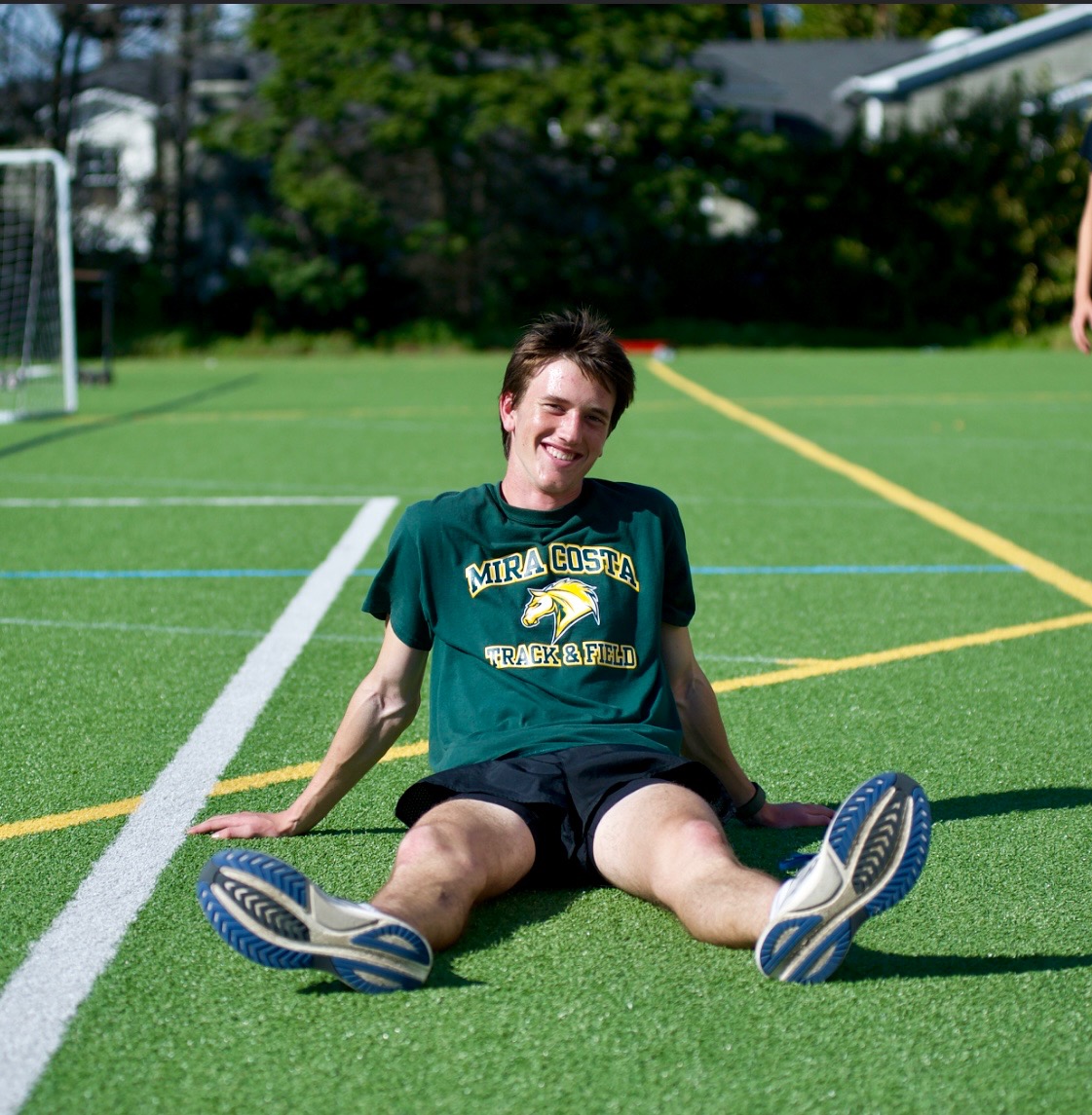
Superpowers
Many people who knew Ryan did not know that he had epilepsy. He was not shy, nor ashamed. But he once told his parents he did not want to be “a poster child for epilepsy.” It was just a fact of his life that he dealt with.
“As he would say, epilepsy affected his mom and me more than it did him,” Chris James said. “Because he said ‘The only way I was ever aware of having a seizure is [when] I would wake up and my mom was crying.’ He was like, ‘Oh, well. I must have had a seizure.'”
He experienced his first seizure at night in his crib when he was six months old. His parents were alerted by his baby monitor, found him unconscious, and called 911. Doctors told them many babies suffer what are called “febrile seizures” that are fever-related, and that it wasn’t necessarily a concern. But after he had two more seizures in the next few months, the family began their long journey into the world of neurologists. He was diagnosed with epilepsy.
“We had a neurologist, and we put him on medicine, and that becomes your next battle — finding a medicine for your child’s epilepsy,” Nancy said. “We know friends who have children with epilepsy, with whom it is not controlled at all by medicine, or it’s controlled a bit, but not as well. In the grand scheme of things, I always felt lucky because, for the most part, his medicines worked. We had a really bad experience with the first one or two of the medicines he went on, and then we found one that actually worked really well. But he still had breakthrough seizures.”
Ryan went through some bad spells with frequent seizures, but he also had long gaps between seizures, the longest a seven year stretch from before kindergarten up til fifth grade.
“We one hundred percent thought he had outgrown it, and so did the neurologist, because some kids do outgrow their epilepsy,” Nancy said.
“And so we very gradually weaned him off his medicine…It was Spring Break, and we didn’t go anywhere, because we knew it was a risk. And he had some horrible seizures, so we knew, ‘Okay, no, he has not outgrown this.’”
Epilepsy has remained stubbornly persistent as a disease, or “seizure disorder” as it is sometimes known, even as neuroscience has grown by leaps and bounds over the last decades. According to the Center for Disease Control, 2.9 million adults in the U.S., or about 1 percent of the adult population, have epilepsy, along with 470,000 children. In over half the instances, including Ryan’s, what causes epilepsy remains unknown.
Chris James makes the distinction regarding how sometimes the word epileptic is used to describe a person with his son’s condition.
“I like to say that he was a person who had epilepsy,” Chris said. “He wasn’t an epileptic, who was defined by it.”
His son was living proof of the meaningfulness of this distinction, because most of his life had nothing to do with epilepsy. From a young age, Ryan threw himself passionately into everything, especially school work and sports. He also possessed an unusual gift for analysis and process, even as a grade school kid.
His childhood best friend, Colin Freelin, remembers a conversation with Ryan when they were in third grade at Meadows Elementary.
“We were sitting out there on the black top [playground], and for some reason we were talking about solving math problems,” Freelin said. “He would get it, but I would get it done quicker than him. It was just the way his mind worked, he always had a process. And he said, ‘I may do it slower than you, but I make sure it’s correct.’ That was his process. He was very methodical. Very, very systematic.”
This approach extended to other areas of his life, even the way he played video games. He didn’t just play, but approached it systematically, and worked at it.
“It was this whole ethos he had about being hard working,” Freelin said. “He’d have these periods of time, like a year or so, where he’d be intensely focused on just one video game. He’d approach it the same way he’d approach his school work, or whatever. He’d just put hours into these games…each in a concentrated time. And then once he felt he’d done as good as he could, he’d move on to the next game.”
His brother had a similar recollection regarding the Madden NFL video game.
“The kid had a 99 [rated] overall team in Madden,” Aidan said. “He literally maxed out Madden. I think it’s .001 of players who have a 99 percent overall team. And he was like, ‘Why would I play if I am not going to be the best at it?’ And I am like, ‘Oh my god, bro.’”
His ability to focus was so outsized it became something his friends joked about. He kept his phone on “Do Not Disturb” almost all the time, in order to better focus on matters at hand. Freelin, in his phone contacts, entered “Always Doing Homework” in the space allotted for company name under Ryan’s name.
“Sometimes we’d get over to his house, me and our other friend, and we’d have to get his dad to convince him to hang out with us,” Freelin said. “He’d be so focused on school.”
He applied this same ethos to sports. Bruce Greenberg, the former MBUSD board trustee, has known the James family the entire length of Ryan’s life. He and Chris James used to coach their sons together in Manhattan Beach Youth Basketball. Ryan was never the most gifted athlete, but he was always the hardest working, Greenberg said. He possessed a rare quality even at that young age — he didn’t play the game just for himself, but for his teammates.
“His favorite player has always been Lebron James. That’s why a lot of his friends refer to RJ as King James,” Greenberg said. “He played like LeBron, as well. He was generous with the ball. He was always a guard, given his size, and he was a good ball handler and would pass the ball and make his teammates look good. But he had an awesome outside shot, so when we needed points, I could tell him to stop passing the ball and start shooting. He would listen and ring up the points we needed.”
Freelin agreed with this assessment, with one correction, regarding the King James comparison.
“We always liked to compare him to Austin Reeves,” he said. “They had a similar hair style.”
Basketball, more than most other sports, reveals a player’s character. It’s an ongoing balance between the self-derived will to make things happen, and the selflessness to make sure what happens serves the team. So it makes sense that Ryan was both very individually skilled and yet also unusually attuned to his teammates’ needs. He showed up in all of his life in this manner.
“He had that kind of thing, where you felt like he was as invested in you as he was in himself,” said Hunter Johnson, MCHS Cross Country head coach. “Which is rare at his age, or any age.”
His friends, family, and coaches describe Ryan’s “superpower” as his ability to give his undivided attention to each moment, and to each person with whom he shared a moment.
“Man, when you had his attention, you had 100% of him,” said Chris James.
His brother Aidan would be shocked when Ryan would bring up, with utter precision, something he had told him years ago.
“You would tell him something, and he would never forget that stuff,” Aidan said. “It was kind of nice. Like he would call back to stuff you told him three years ago, things you even forgot you told him. Like, ‘Damn, you were really listening to me.’ And obviously, it was the same thing with school.”
What this meant, beyond how he excelled in school and in sports, was that Ryan formed deep bonds with others.
“I would say his superpower was definitely forming relationships one on one,” said Rebecca Kelley, the MCHS Girls Cross Country coach.
Ryan began volunteering with the Friendship Foundation when he was 8. The foundation, also known as the Friendship Circle, brings together kids and young adults who have disabilities with other kids from the community in order to foster social bonds.
“One of the biggest things… 50% of what we do is volunteerism,” said Daniel Stump, the foundation’s program director. “Building our neurotypical individuals into strong leaders is just as important as working with the neurodiverse. To me, Ryan was someone who would never say no to anything. He was always — always — down to help.”
Stump trusted him so deeply he would sometimes assign him to work with young adults who were older than Ryan, and often considered much more challenging, as well as those who were most neurodivergent. “He was 18 on his birth certificate, but he was wise beyond his years,” Stump said. “…Working with individuals that some deemed to be more difficult, he would always step up and do it.”
One of the kids he formed a special bond with was named CJ.
“CJ is nonverbal,” Stump said. “He attempts to articulate his feelings and thoughts through an iPad. Ryan would always work closely with him and would be patient with him.”
His work at the Friendship Foundation meant a lot to Ryan. He proudly listed his 10 years as a volunteer and later paid intern on his Linkedin profile, which he completed just after he arrived at UCLA. In one of his college entry essays, he wrote about his experience working with neurodivergent kids. His point was not to highlight how he’d helped them, but rather how they had helped him. Especially CJ.
The essay is worth reading in its entirety, both because it provides Ryan’s perspective regarding epilepsy and the experience of a seizure, and because he offers a lesson that anyone can learn from.
“Recount a time when you faced a challenge, setback, or failure. How did it affect you, and what did you learn from the experience?” the prompt asked. Ryan wrote:
“Phone, medicine, wallet, good to go. As I do every day, I tapped my pockets and felt the essentials, knowing my 7:00 p.m. pill is always with my emergency nasal spray.
BZZZZZZZZT… The ringing in my head intensified as I woke up from the worst nap ever. My mind was spinning but I slowly became aware of doctors and nurses around me. Then there was mom. No mistaking that familiar look; I didn’t have to ask what happened. A doctor tried to joke that I broke my fall with my face… maybe that will be funny in a few days. In the meantime, I felt like I let everyone down. I was unconscious while the people I love helped me through another epileptic seizure.
I rarely talked about my epilepsy because I worried it would scare others more than me. I felt that people would constantly be afraid of another seizure, or worse, pity me. It was safer and easier — or so I thought — to keep my mouth shut. I used to have many seizures, but thanks to a few brilliant doctors, we found an almost perfect medication. I’ve also learned to carefully monitor my health. Epilepsy doesn’t care that I’m only 17; I can’t make dumb mistakes. Having the discipline to set daily medicine reminders, get enough sleep, and only swim where I can stand is not optional. I don’t know how many seizures I’ve prevented, but I do know that I’ve had just one breakthrough seizure in almost two years. Nevertheless, even though my epilepsy is now largely controlled, laying in that hospital bed I still felt different and didn’t want anyone to see me that way.
Then it hit me: I had cross country practice in two days! For the first time, I couldn’t hide my epilepsy. My face screamed its effects — broken nose, stitched eyebrow, chipped tooth, and scarred chin. I never miss practice, but was this a worthy reason? Could I lay in bed until these signs of weakness went away?
My mind flashed to CJ, my cognitively challenged buddy at Friendship Foundation’s inclusive summer camp. I wished I had his confidence, despite being ‘different’ from others. Though non- verbal, CJ’s positive personality and unique dancing never fail to put a smile on everyone’s faces. He’s not afraid to be himself; particularly as he rocks back and forth in front of the entire camp. I always cherish my time with him at Friendship Camp.
I realized that in a similar way, I can’t change my epilepsy, but I can control how much it impacts my relationships. If I was constantly afraid of being seen as different by my teammates, then they would not see me at all.
The weekend of my hospitalization, I decided to stop hiding. I had established strong relationships with some of my teammates, and knew I could trust them. When I walked into practice, I got some looks, but as I explained my weekend (and my face) the dreaded rejection and pity hardly ever came. I even learned that two teammates had struggled with seizures in the past. I was able to teach multiple teammates how to recognize a seizure and what to do. Not only am I now in less danger on runs, but I can possibly help my other teammates who have similar conditions. I’m still careful who I tell about my epilepsy, but now I’m more comfortable having these conversations with people I trust.
Like many participants at Friendship Camp who are on autistic or other cognitive spectrums, I accept that I’m on the epilepsy spectrum. Through opening up with my friends, however, I learned that we’re not so different after all. Everyone struggles with their own ‘spectrums’ of some sort. As I’m learning to accept mine, I hope to help others accept theirs so we can all rock on just like CJ.”
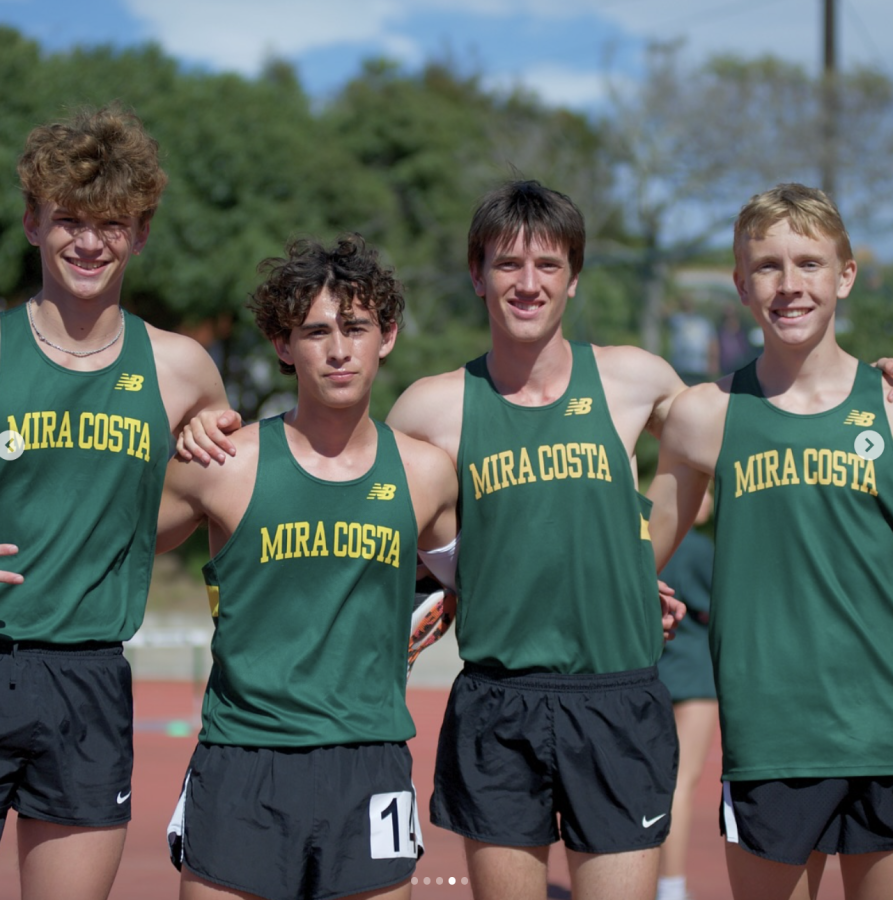
The leader
The seizure Ryan wrote about in his essay was the last one he experienced until his fatal seizure in October. It occurred in June 2023, out of the blue, when he was with his parents in Laguna Beach.
“We were right there walking down the sidewalk, and there was no indicator for Ryan,” Nancy said. “Ryan has been in ambulances and rushed to the ER several times. I used to tell people, Ryan has never had a seizure where I don’t cry because it’s so horrible to see your child going through that, every time wondering if he’s going to survive this. Or else, Ryan has always been a really bright kid, and every time I worried, ‘Oh my god, is this going to affect his brilliant brain?’ And every time, he bounced back.”
He’d had a rough sophomore year in which he’d suffered several seizures. Neurologists at the Children’s Hospital in Orange County believed Ryan had outgrown the medicine he’d been on most of his childhood, as frequently happens to teenagers with epilepsy. They switched medication, a slow, careful process that includes weaning away from the previous medication, and it seemed to help. But the seizure in Laguna was a particularly bad one. He ended up needing stitches and a root canal as a result.
“The days after a seizure when he was little, we called them the lost days, because he would just sleep like the whole next day,” Nancy said. “They described it to us when he was a baby, that it’s like your body has run a marathon and is just completely depleted. To recover, you just need to rest and sleep.”
But Ryan yet again bounced back. He showed up at an optional summer Cross Country practice a few days later, the one he wrote about in his essay. Chris James said two programs resonated deeply with his son at Mira Costa — Model UN, and Cross Country. Ryan had been in the MCHS Cross Country program since his freshman year. This is why it meant so much to him to finally share his condition with his teammates.
“The culture of the cross country team at Costa is just so healthy,” Chris said. “The coaches acknowledge the fastest runners, but what they’re really good about is that they talk as much about beating personal times and personal records…It’s about building strong young women and men who dedicate themselves to something and do their best, whether they win or not.”
Coach Johnson observed a remarkable trajectory in Ryan from his freshman to his senior year.
“He was always an athlete, and I think he ran a lot, but when he joined he had broken his leg in soccer,” Johnson said. “The first day of practice, he could barely run a mile. By the end, he was the toughest, most badass kid on the team.”
“He was literally the epitome of grit,” said Coach Rebecca Kelley. “He never skipped a step, never took a shortcut. He did everything 110%…He was a grinder.”
Ryan wasn’t the most gifted or fastest runner on the team, but by his junior year he’d willed himself into becoming a great runner. He made the varsity squad, which in a program as elite as Costa’s is a difficult thing to achieve. But his impact went far beyond his running.
Teammate Nate Williams, who ran with Ryan in Cross Country and on the track team, remembered that when he was a freshman and Ryan was a sophomore they were in the same heat together at a track meet. Williams had told Ryan he really wanted to break his personal record by running under 5:20 before the season was over. With 200 meters left, Williams saw he had a chance, and sprinted, crossing the line at 5:17. Ryan had a bad race, and came in significantly later.
“When we crossed the line, he didn’t say anything like, ‘God damn it’ or ‘Shoot, I didn’t hit my time,’” Willams recalled. “He ran up to me, hugged me, and he’s like, ‘Dude, you did it. I’m so proud of you. You put in all the work. You finally did it. I bet it feels great.'”
“Even after he’s super tired and he was so mad about his race, the first thing he thought was helping his teammate out … .He was more of a teammate than anyone here.”
Teammate Luuk Van Meurs remembers bonding with Ryan at the team’s training camp at Mammoth at the start of junior year. Both had a goal to make the top seven, which means the varsity squad.
“When he actually became varsity, he kicked me out of varsity,” Van Meurs said. “But now that I look back on it, I see that on our runs together, it was never about the top seven. I was together with a brother of mine, and I was there in the moment….And I would give anything to have that moment back again, just to run with him and not care about top seven, not care about the competition, just to hear him talking about, whatever — school, or strength, or what I should hit at the gym.”
Van Meurs said the team had a workout song they called “Sally Up, Sally Down,” that they’d chant while doing pushups.
“I’ve never seen anyone do a full three minutes of that song…and he did,” Van Meurs said. “That’s insane. I saw him, and I was like, ‘Dude, this guy is like a god. This guy was so strong.’ It amazed me.”
His brother Aidan watched with some amazement when Ryan became an unofficial strength coach for his teammates.
“It was funny, because the kid weighed 140 pounds, but he was the lifting coach for the Cross Country team,” Aidan said. “He made do with what he could and showed them how to actually bench a little bit…Even when he was down, like when he had the collapsed lung, or he had a broken arm and couldn’t do a whole lot, he was still out there trying to help the team get better.”
Teammate Collin Tarnay recalled running his worst race ever on a miserable 90 degree day. He collapsed at the finish line, and Ryan was the first person to get to him.
“I looked out there and you were by far working the hardest,” Ryan told Tarnay. “No one else out there was feeling as bad as you, but you finished and you kept it going.”
“That shows how he always noticed,” Tarnay said. “Whether you’re having the best race of your life or the worst race of your life, he always noticed, and was either there to support you, console you, or if you just needed someone to talk it out with. He was always on site, ready.”
Teammate JT Kaplan recalled a time when he’d had a medical issue that resulted in a week-long stay at a hospital. When he returned home, the first text message he received was from Ryan.
“I know you just got back and you’re probably not feeling 100%, but if you ever want someone to run with, and if you need to go slower, you can always text me,” Ryan wrote. “I’ll always be there as you’re getting back to health again.”
Teammate Krish Desai said this same thoughtfulness extended beyond Cross Country. He met Ryan as a freshman, when he was new to the school and didn’t know anybody. Ryan sat behind him in math class and tried to pick him up, talking about LeBron, or their favorite football teams (Ryan’s was the Packers. “I think he got gifted Packers socks by someone random in second grade, and that made up his mind,” his brother Aidan said.), or running.
“He’d always have so much energy, and he’d always be having so much fun so early in the morning,” Desai said. “It always spread to me, and my mood would always get better. Every day he made me feel like I was his friend.”
This dailiness was a part of Ryan’s ethos, not only in his reliability as a friend, but in his relentless pursuit of self-improvement.
“He absorbed everything in his life, and really just tried to incorporate it and just be better,” Aidan James said. “That was our thing. We always talked about it with each other. It’s just about being 1% better every day, right? Little wins, and over time, just being super happy with the person we’ve become.”
Model UN was another arena for this, because it also involved doing something most people find extremely difficult, which is public speaking. The first speech Ryan gave as a freshman was a flop. He worked hard to memorize the whole thing and when his memory failed he panicked.
The seniors on the MUN team, who had become teaching assistants, taught him to memorize five bullet points, and structure his speech around them, speaking in a more natural way. It clicked with Ryan, and he excelled, to the point that he became a TA. He became so adept at public speaking that his parents began to think Ryan might follow his father into law. His mother also got to enjoy a rare experience. Because of his epilepsy, in his sophomore year, she accompanied him to a Model UN conference in New York. She said she got to “sneak into one of his sessions in this huge hotel ballroom.” There were 200 kids in the session. She stayed way in the back.
“I feel like one of the lucky parents, because I ended up, over the years, chaperoning so many things for Ryan because of his epilepsy,” she said. “I actually got to see little snippets that some parents don’t. I am never grateful for the epilepsy, but I am grateful for the extra time I got to spend with him.”
Ryan had a full circle moment as a senior when he noticed a freshman girl struggling to memorize her speech.
“As my TAs did for me, I sat with her and we condensed her speech into five short bullets: a hook; her country policy, her proposal, available resources, and closing statement,” Ryan later wrote, in a college entrance essay. “When I asked her to just speak to the bullets, she talked flawlessly for the entire allotted time and performed even better in the actual debate. To me, a leader is someone who can use their prior experiences and education to help others.”

Son, friend, brother
The James family would have been a tight-knit unit regardless of Ryan’s epilepsy, but the way they worked together to balance his vulnerability with his unusually determined nature made them even closer.
Most teenagers go through periods in which they don’t want to be very closely associated with their parents. Ryan rarely did. For example, Chris served as a chaperone for the Cross Country team’s annual training camp in Mammoth, and far from distancing himself, Ryan enjoyed his dad’s company on the trips.
“Chris chaperoned that trip for three years, he drove a van… full of these teenage, smelly boys,” Nancy said. “Chris stayed in a condo, and Ryan was always in his condo. Some kids would resent or even forbid their parents from being chaperones at these things, right? Like, ‘Don’t you dare, this is my time,’ And Ryan…I don’t know if it was because he just accepted ‘This is my life, and my mom and dad are going to be around,’ or what it was. But Ryan just never seemed to get angry about it.”
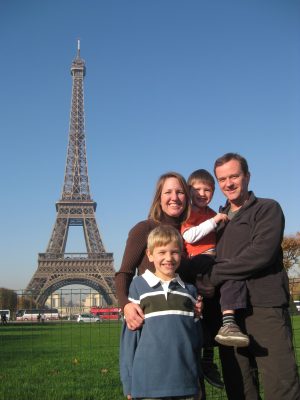
Quite the opposite. He’d sit up front in the van when his dad drove. Coach Kelley recalled that Chris went out of his way to give his son space on the trips.
“He told Ryan, ‘Go be with your friends. If you want to go in a different van, that’s fine,’” she said. “And Ryan said, ‘No, I am going to sit shotgun in your van. Where else would I rather be?”
“I would tell him, ‘Ryan, you don’t have to sit up front with me. You can go in the back of the van where the music is loud and so obnoxious. Don’t feel like you have to hold my hand,’” Chris recalled. “And he said, ‘Well, why would I do that? I get to sit up here with you. I get to run the music. I get the best seat in the van.’ So we’re lucky that he liked being around us.”
Last summer, after he broke his arm, Ryan started organizing weekly poker games at the James house for his friends.
It was all these senior boys who were all heading different directions in a couple months and just really spending some quality time together,” Chris said. “Ryan just loved to organize it. So there were anywhere from 12 to 18 boys over, playing poker in our house.”
His older brother was at home for one of these poker nights, and was aghast that his parents would come hang out with the crew.
“Will you guys go upstairs?” Nancy recalled Aidan instructing them. “It’s not cool for mom and dad to be downstairs while he’s having a party. But Ryan said, ‘It’s fine. It’s okay.”
Aidan said that was part of his role in the dynamic, the big brother looking out for his little brother.
“I was always kind of the pushback, like, ‘Let the kid live.’ But they understood where I was coming from, and they allowed him to walk that balance,” Aidan said. “But I remember that night. It was funny.”

Aidan also said that Ryan had become a high-level poker player — he studied it, of course, always seeking mastery — and in addition to the fun of hanging out with friends, poker nights allowed him to make some extra cash.
“He got sharp at poker, because he was a genius,” Aidan said. “So might as well count cards on the side and make some money.”
That whole summer, in fact, Aidan saw his brother was on a roll, not just in poker, but life.
“He had such grand athletic plans for the summer,” Aidan said. “He said that on one day he had played five sports. He had played volleyball, pickleball, basketball, did something else that I’m blanking on, and then rock climbed — all within one day. And then, sure enough, he falls from the rock climbing wall and breaks his arm. But he lived every day to the fullest, and then spent the summer doing things that he wanted.”
Colin Freelin said that Ryan looked up to Aidan so much that part of the reason he was planning on studying business economics at UCLA was to follow in his brother’s footsteps. Aidan is double majoring at UC Berkeley, where Freelin is a freshman, in business and biology.
“Ryan did really look up to his brother,” Freelin said. “He was always listening to his brother’s advice.”
 But Aidan said this was a two-way street. He likewise deeply admired his little brother.
“There are few people who want to see you do better than they want to do [for themselves],” he said. “He wanted the best for me. That was super important for him. In a lot of ways, he acted kind of like a big brother, too, which was nice, and unusual.”
Freelin, who had a somewhat brother-like relationship with Ryan, experienced the same thing. The two friends had always competed academically, but when Freelin won the National Merit Scholar award his senior year — an exalted academic achievement — Ryan got more excited than if he’d won it himself.
“He was super hyped,” Freelin said. “He was loud a lot of the time, but [when the award was announced] he was extra loud, like ‘Yeah! Let’s go!’ But in that case, I remember him being a little smug. ‘Yeah, of course you got it. I knew you’d get it.’”
Ryan and Aidan, only three years apart, were always extremely close. But as they got older their bond kept growing. One of Aidan’s favorite memories was at their cousin’s wedding last year, at Stanly Ranch in Napa Valley.
“We stayed up literally all night together, dancing and drinking, just all over the place,” Aidan said. “We didn’t go to bed the entire night, just him and me. In the morning, my parents were coming for my throat, they were so angry. But that was probably the most fun I ever had with my brother, so I did not feel bad one little bit.”
“I mean, the kid could dance, too,” Aidan said. “I hate dancing. But he’s doing ‘The Worm’ in a three piece suit on the floor at my cousin’s wedding at three in the morning, so I can at least do a little move here….The Worm was his thing.”
Ryan had a lot of unexpected moves, and quirks.
“I would be remiss to let you go without letting you know he had some of the strangest eating habits I’ve ever seen…” Freelin said at the closing of his interview for this story. “Three things stick out.”
“One, he was the slowest eater you’ve ever seen. He’d take forever to finish his food. We’d always be waiting for him. He said it was because he spent the ages of one to four in Switzerland, but I don’t know. The second thing is, he ate his donuts like a pottery wheel, like he’d go around, taking bites around the center. He would eat his way around, so eventually it’d be bites all the way around the donut, inside out from the hole … .The third thing is he really liked a plain burger. I remember going to Tomboys and he was like, ‘Can I just get a plain burger, just a patty and a bun?’ And he was upset because they put ketchup or cheese on his burger.’”
Another of Aidan’s favorite memories is of a family trip to Switzerland last year. The brothers sat together on the flight.
“We talked for six hours straight while our parents slept over in the middle row,” Aidan said. “You know, college, prepping him for that…girls…music…plans for the summer. Whatever? Mom was like, ‘How are they still talking?’ We had so much good bonding the last months.
“In the last year, we had a lot of really good memories together I am just going to be forever very grateful for,” Aidan said. “In the last month and a half, we talked quite a bit. And I don’t know why, maybe it was some horrible…like I knew something was coming. But I just laid it all out and told him how much I cared about him.”
To lose a brother is to lose a part of yourself, especially since Ryan and Aidan were only three years apart. What Aidan marvels at now is how he’ll be learning from Ryan’s approach to life as long as he lives.
“It was just his pursuit of excellence, with not ever wanting to be seen for it,” he said. “The only person he wanted to prove anything to was himself. And he did, I think. He accomplished a lot in 18 years, a lot of things people wouldn’t have been able to do in a lifetime. But I was really eager to see what he accomplished in 100 years.”

Beyond concerns about Ryan’s independence, what struck Aidan was the lengths his parents went to give his brother a normal childhood, in spite of his epilepsy. As Ryan himself said, his condition in some ways affected his parents more than it did him. But he couldn’t have quite known the extent of it.
“For 18 years, if I heard an ambulance, I checked Ryan’s location,” Chris said. “It is weird now. The fear has been replaced with grief. I would trade the grief back for fear if I could, in a minute.”
Aidan said his mom rarely slept soundly, but never once let Ryan know it.
“They suffered in silence,” Aidan said. “They just didn’t let him see how much things stressed them out, because they knew they needed to let it happen…My mom barely got any sleep at night, but she made sure Ryan never knew that, and he never felt any guilt about it.”
“Whenever he wanted to go on a trip, like going to hike mountains, as much as they hated it, they bit their tongue,” Aidan said. “They recognized that a life of just being sheltered is not a life worth living.”
Both Bruce Greenberg, who knew Ryan since he was born, and Rebecca Kelley, one of his Cross Country coaches, expressed awe at the balance the James family achieved in raising Ryan.
“Strong and free versus safe and secure…they figured it out, and balanced it all,” Greenberg said.
“That,” said Kelley, “is the hardest balancing act.”

The Mountain
Last summer, Ryan and his parents had their biggest disagreement. He wanted to go on a three day backcountry hiking trip into the High Sierra with his friend Eric Albelda.
His parents thought it was a terrible idea. They’d been teaching him all his life about making the right decisions in terms of balancing the risks of his epilepsy with the other needs in his life, and he accepted the tradeoffs he had to make. Ryan was also never so rebellious that if they’d said no, he’d have gone anyway. They talked it through, agreed to disagree about the wisdom of the trip, and made preparations to make the trip as safe as possible. Albelda was trained in how to help should a seizure occur, and Ryan was equipped with a satellite phone.
Albelda and Ryan had become close friends over the last year. Albelda knew Ryan as an acquaintance — they’d been in the same prom photo shoot their junior year, and had said hellos — but had never really hung out. In June 2024, Albelda heard Ryan was struggling after a breakup with a girlfriend and called him and asked if he wanted to join him and his friends on a trip to Malibu.
“That night was his,” Albelda said. “We all just listened, and I later learned he needed that trip more than I could have ever imagined.”
A month later, Ryan showed up at Albelda’s family house unannounced. His father woke Albelda from a nap, and he groggily thought, “Ryan? I don’t know a Ryan.” He walked into the living room to find Ryan petting the family dog. They went to Baskin Robbins for an ice cream and a talk, in what would become a tradition in their friendship.
“He would hear me out when I would talk, and together, we would solve our problems,” Albelda said. “Eventually it became obvious that this breakup was really weighing on him…One night, he read a passage he had written to himself a few nights prior, speaking on his fear of epilepsy striking in the middle of the night, fearing that nobody would remember him, or nobody would care.”
They talked through this fear. Things got better, and they continued their ice cream talk tradition. Their senior year at Costa was interrupted by tragedy. Albelda’s best friend, Ford Savela, was killed in a hit and run accident last January. Ryan helped him through those dark days, and began to occupy a central place in his life.
Albelda is an experienced mountain climber, and wanted to take Ryan rock climbing, but that idea was scuttled when Ryan fell from a climbing wall and broke his arm. So they hatched the idea of a backpacking trip.
The trip took place in mid-July, just the two of them. They drove up the 395 to the Onion Valley Campground, and took off into the backcountry from a trailhead. Albelda’s gear included emergency nasal spray for seizures, which he kept on his hip belt for easy access, and extra medicine for Ryan in his pack. “To make sure every T was crossed and I was dotted to make sure I could take care of him if something happened,” he said. “I was definitely aware of it the entire trip.”
That first day Albelda received a shock of a different kind. He was the experienced backcountry guy, but Ryan was the one flying up the mountain. The trail started at 9,000 ft. elevation, and quickly climbed to 11,000.
“That felt super casual. It was great,” Albelda said. “Ryan’s running endurance translated excellently. He was a machine up there. Even though I was supposed to be the mountain man who knew how to deal with altitude and long days, I was working quite hard, and that became even more obvious as we continued.”
They reached Kearsarge Pass, at 11,700 ft., and descended towards Bub’s Creek in Kings Canyon National Park
“We’re weaving around all these lakes, and eventually, at Bullfrog Lake, we make a left turn and start heading south, and connect onto the historic John Muir Trail,” Albelda said. “That was when the altitude was really starting to get to me. It’s really hot. I’m getting dehydrated, and I’m just feeling awful. And Ryan is still moving along, pushing and pushing.”
They got to Bub’s Creek, at about 9,000 ft., when Albelda needed to rest.
“Dude, I need to take a nap,” he told Ryan. So they found a nice, shaded spot, and Albelda slept for a half hour, but woke up feeling worse.
“Ryan gives me this pep talk I can’t even try to re-create,” he said. “But essentially he tells me, ‘Let’s just go one more mile, see how it looks.’ So I roll off this rock that I was sleeping on…and I just keep hiking…This time I’m following him. It’s nice to be able to just stay on his heels and have a single point to focus on and just put my head down and go.”
They pitched camp at 11,000 feet on the way up the trail to Forrester Pass, which, at 13,200 ft., is the highest point on the John Muir Trail. Albelda still felt awful, he couldn’t think straight. As they were boiling water on a little camp stove to pour on a packet of dehydrated food, Ryan shared something with Albelda.
“He says, in his funny way of talking, ‘You know what, Eric, I’ll tell you something. You are the first person to be there for me,’” Albelda recalled. “And I am like, ‘What do you mean, dude?’ And this is paraphrased, but he said I was the first person who really made him feel understood and listened to him endlessly and really just wanted to see him become the best person he could be.”
Albelda said it was the proudest moment of his life. Even in his near-deliriousness, the message moved him deeply.
“By the end of the night, Ryan was like, ‘Eric, you need to finish your dinner, and you need to drink water, or else you’re going to feel horrible in the morning,’” Albelda said. “So slowly but surely I finish everything, and by the end of following his advice, I feel great.”
The next day was epic. They covered 17 miles. Ryan utilized his gift for data analysis, taking mileage and altitude points and calculating destination arrival times with startling accuracy.
“He was like Google Maps, but better,” Albelda said.
The first leg was 2.5 hours up to Forester Pass, where they stopped and took in the grandness of the vantage point, and the total wilderness.
“Up at the top, we had our fair share of getting off trail a little bit, and I got to show Ryan how the miles can get a little gnarly,” Albelda said. “I could tell it was a huge change of pace for him, because he was used to living in the city where most safety is guaranteed. It’s going to be flat and solid versus we were on the side of the mountain walking through snow fields.”
The real gnarliness awaited them further down the trail. Albelda had plotted their hike to hit another big rise, Shepherd’s Pass, and then eventually loop back to the way they’d come.
“We get to the top of Shepherd’s Pass, and we have to go down the backside of it,” Albelda said. “As we’re walking up to the edge of what I think is going to be a pleasant descent, it just shows itself to be a cliff…My heart sank. I was like, ‘What am I getting this kid into?’”
Ryan was still recovering from his broken arm. The trip was not designed for climbing, or crawling.
“This whole trip is done under the notion that he cannot trip or even use his hand for support. Everything has to be upright and super easy,” Albelda said. “And then I’m looking at this cliff that we have to go down. We have to cross this massive snow field that’s at a 50 degree angle. It’s like 50 feet across, but if you slip at any point, you would be taking a 1,000 foot ride down to some boulders at the base of the cliff. And that would be it.”
Albelda described it as a “no fall zone, which meant, don’t f*** up.” They didn’t have ice clamps, but improvised. Ryan had two hiking poles and shared one with Albelda, who also had a little “poop shovel.” Albelda led the way, using his shovel and feet to dig deep prints into the snow field that Ryan could use for grip.
“And eventually, I realize we are half way across, and I am like, ‘Oh my god, we are going to do this,’” Albelda said. “And then we get to this little saddle between the main slope and this little pillar, probably the size of a few picnic tables put together. We’re still perched on the side of a cliff but not facing immediate danger. I stepped down off the snow slope, and I’m on this thing, and I’m like, ‘Okay, sick. We made it through.’ And then 15 seconds later, Ryan steps down after following me, and I go to give him a fist bump, and I’m like, ‘Good shit, dude.’ And he just puts one finger up, like, ‘Hold on a second,’ and he drops down to his hands and knees and has this emotional release. He’s sitting there for like five minutes, and eventually he comes up, and I’m like, ‘Yo, dude. you alright?’ He’s like, ‘I’ve never really looked death in the eye like that before.’”
“I think it was maybe freeing for him to know that his life was, for once, in his hands. Every step he made, every way he balanced, every place he put that trekking pole — that was his life. And I think feeling that control was really huge for him. We definitely had a little bit of a trauma bond after that. We were fired up because we just stared death in the eye and made it through. For the rest of the trip, we were just super focused and super appreciative of where we were.”
The rest of the hike didn’t go as planned. The loop route they’d intended to take proved impassable, so they would not be able to return to their car. Albelda found one moment of improbable phone reception and his dad agreed to meet them at a different point. They charted a different way down, with some sense of relief. It would still be a 39 mile three day trip, but with one less big pass. As they descended back into the treeline, below 9,000 feet, they shared one of those moments of utter peace and happiness that only a mountain can give.
“We stop at this point, this beautiful outlook, it’s this mountain that’s made of like every single different rock type that you can imagine,” Albelda said. “It’s like a mosaic. It looked like stained glass. At that moment, Ryan brings out his bear can, and it’s full of chocolate. I’ve been giving him a hard time the entire trip for bringing so much chocolate … .I think we must have eaten like two pounds of chocolate. We just devoured it.”
The next morning, as they were hiking out, they were tired, sore, and a bit mindblown. Throughout the trip, they had developed a system of checking on each other’s wellness. One would ask the other how he was doing, and the answer would be on a scale of 1 to 10. Resting with a full belly at camp? Probably a 10. Delirious with altitude sickness? More like a 1.
 “We were beat up, our feet covered in blisters, and we were super dirty from the previous two days of hiking. We were hiking uphill on the side of this cliff. It was like 80 degrees, and it was only like 7 a.m. In any other context, it would have been the most unpleasant situation possible. But as I’m going up this hill, I turn around and I’m like, ‘You know, Ryan, I think I’m feeling a 15 out of 10.”
“Oh my god, dude,” Ryan replied. “I feel the same way, 15 out of 10. We are just so lucky to be here.”
The day Albelda heard about Ryan’s passing, he went running up a mountain. He’s now a freshman at Cal Poly San Luis Obispo. Ryan turned him into a runner.
“I laced up in the shoes that Ryan helped me break in and ran to the summit of a nearby peak, Bishop’s Peak,” he said. “Remembering everything that he told me, remembering not to heel strike, remembering to emphasize stepping on my toes instead. Remembering to hold my arms above my head to fix a side stitch, remembering to drive my knees high when hills got steeper. Remembering Ryan James.”
He could easily have never known Ryan, and that was the biggest thing his friend had taught him.
“I learned that we need to be there for others,” he said. “Because without randomly calling him that one night, without listening to him over ice cream every month, without taking him backpacking deep into the mountains, without letting him into my life for no reason at all, I would not have had the grace of knowing that. In only one year, Ryan completely changed my life. I learned that you need to let people into your lives, spread nothing but kindness and love, and leap out of bed every morning to seize the day because you don’t know how long you have to be alive. So don’t you dare take a moment for granted. You’re so lucky to be breathing. So chase your dreams, be there for your friends, and even for strangers, and change lives, like Ryan, while you’re at it.”
Additional reporting for this story was done by Laura Garber. A memorial for Ryan James will take place at the Mira Costa High School Auditorium on November 29.






One Response
Wow, what an amazing story, thank you ❤️