by Jefferson Graham
When Mark Sonnenblick was five years old, his mom bought a piano for their Manhattan Beach home, believing that music was an important element for families, just as it was for her growing up in Colorado.
Mark, along with sister Sara and later, brother Matt, got piano lessons. Mark showed exceptional interest in everything from classical music and jazz to the Great American Songbook.
Some 30 years later, look at what that Baldwin piano produced.
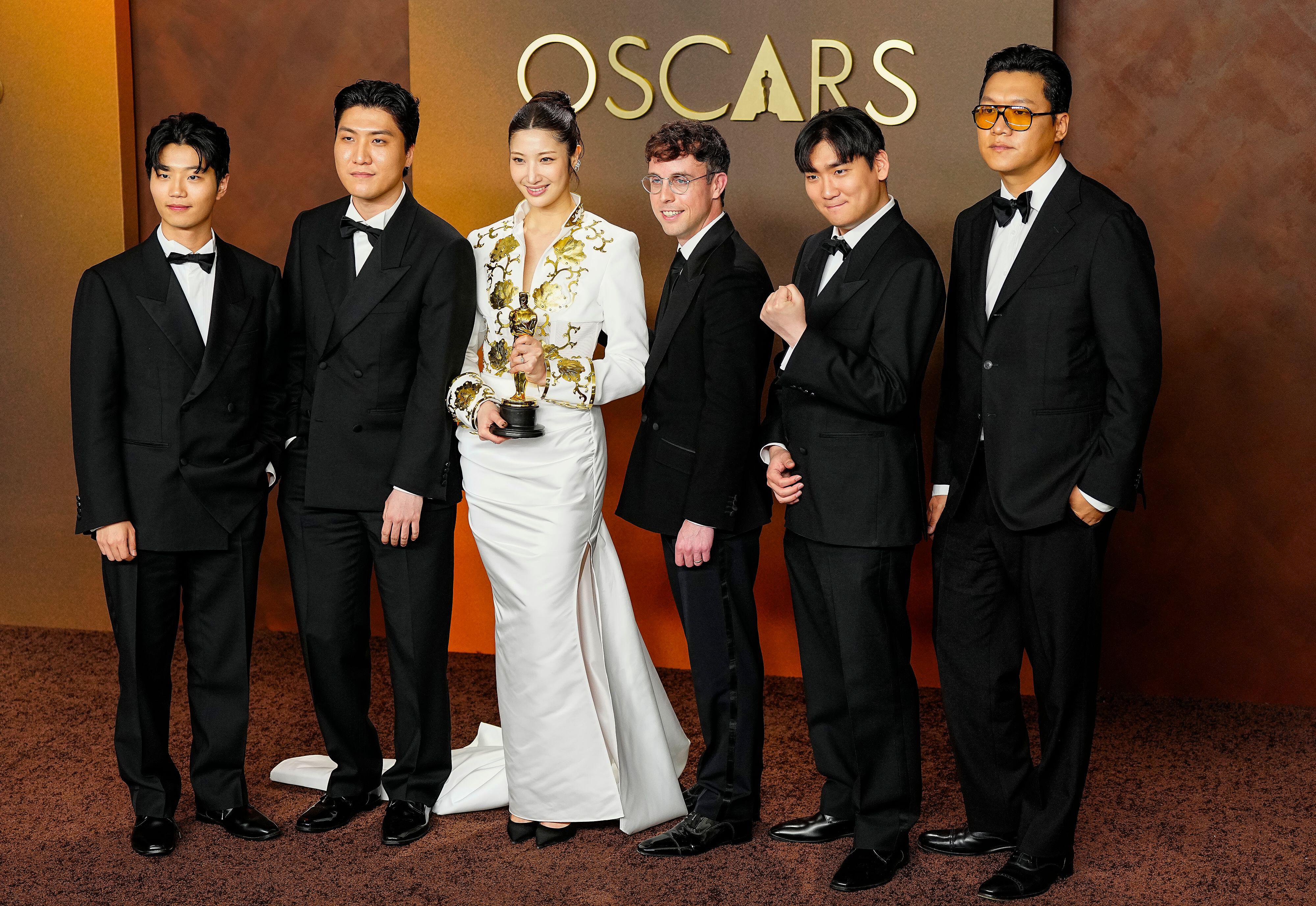
At the 98th Academy Awards in March, at the Dolby Theater in Hollywood, Sonnenblick received an Oscar for co-writing the song “Golden” from the smash hit “KPOP Demon Hunters.” The song was Number 1 for eight weeks on the Billboard Top 100 chart and the movie was Netflix’s most streamed film ever.
“If you told me that I would be nominated for an Oscar before I’d be nominated for a Tony, I never would have expected it,” Sonneblick told American Songwriter. “Because 10 years ago, theater was such a part of my world.”
When the Oscar was presented, “Golden” co-writer and vocalist EJAE (Kim Eun‑jae) spoke first, and then, as the Oscar band played the song, its other writers came on stage.
“I loved seeing him up there bouncing, this Chadwick kid,” says his former Chadwick teacher Erin Nordlund.
Sonnenblick, 36 attended Pacific Elementary in Manhattan Beach and then Chadwick School, in Palos Verdes, where he performed in the band and wrote original songs for school productions.
In a phone interview from his home in New York City, Sonneblick said part of the reason he was so animated when he appeared on stage was that “there was not like a slow warning that this was gonna be over. So it was surprising to us.”
After the Oscar was presented, during a talk to the press backstage, Sonnenblick thanked his family and husband Isaac and then partied through the night, accompanied by his parents Kim and David, and his 84-year-old grandmother.
“Part of the movie is about looking at someone you had been taught to hate and to fear, and starting to trust, and maybe love them,” he said that night.
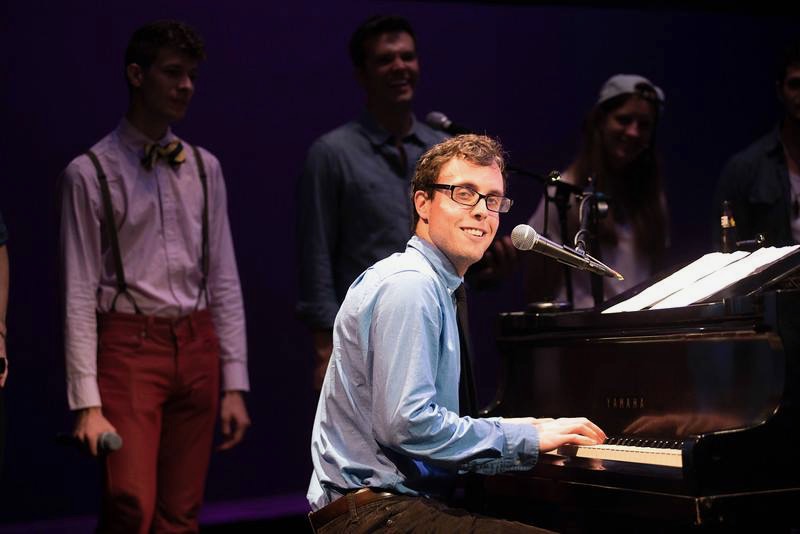
Manhattan Beach is home to many celebrities, but most are sports or business stars. The list of Hollywood winners from the South Bay is small–director Quentin Tarantino, who has won two Oscars, lived in Torrance and worked at the since closed Video Archives on Sepulveda Boulevard, while actress Rachel Bloom, who attended Mira Costa High School, is an Emmy and Golden Globe recipient for her work on her TV series Crazy Ex-Girlfriend.
Sonnenblick also won a Golden Globe and a Grammy for “Golden.” And he received an Emmy nomination this year for his song “Beautiful Things Can Grow,” from the soundtrack of “Song of Parkland,” which aired on HBO.
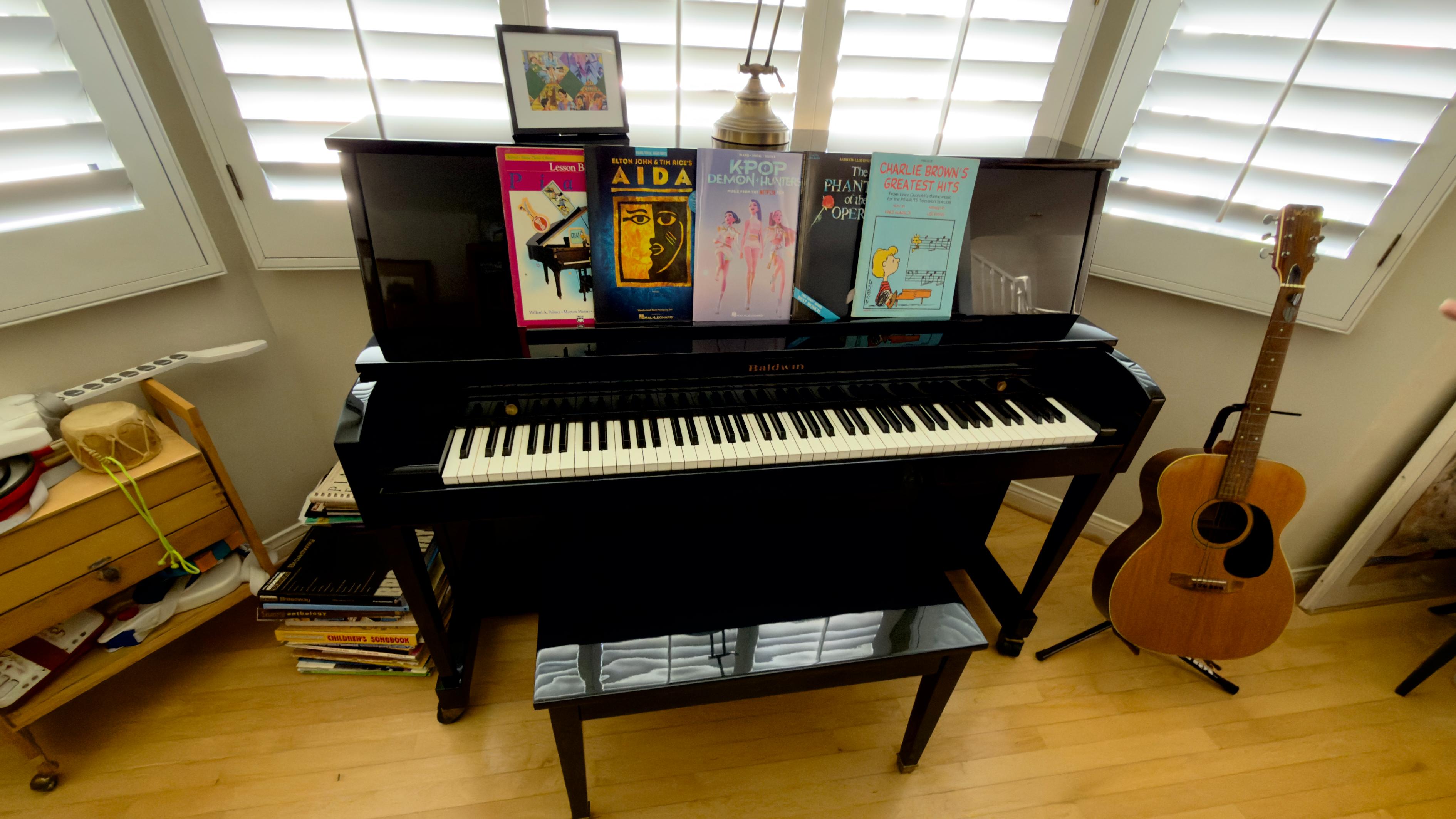
Which brings us back to the piano his mom has adorned with the music songbook from Demon Hunters, as well as songbooks he used to play from growing up, including Phantom of the Opera, a Doors compilation and Aida, which was co-written by Tim Rice and Elton John.
And speaking of John, yes, there’s a connection. More on that in a minute.
Donna Rogers recalls teaching Sonnenblick starting at age 5, working with the Alfred Piano Method, and then expanding to classical, show tunes and jazz, as she continued teaching him through high school. Rogers also taught Bloom from when she was five.
“I could tell by the third year this kid was going somewhere,” said Rogers, who has since retired.
“This is going to sound corny, but I thought he’s the next Paul McCartney. He’s going to write music and have a great career,” she said.
Sonnenblick credits his love of musical theater from his time at Chadwick, where teacher Richard Babcock told him he was destined for Broadway.
Babcock recalls the young student in 4th grade volunteering to play the viola in the band, even though he was a pianist, because the band didn’t have keyboards. “That might tell you something about the nine-year-old Mark,” Babcock said.
“My big takeaway is that Mark always said yes to musical challenges we threw at him and went further than we would expect. He kept to himself during high school. He didn’t seem influenced by his peers or popular trends. He was confident and comfortable in his own mind/heart. He was on a mission. We are not surprised by his amazing achievements.”
At Chadwick, Sonnenblick did theater improv, performed in plays and even wrote the senior musical, “Apples,” with teacher Nordlund.
“He said that since I was an English teacher, I could write the story, while he did the songs,” she says.
This was unusual, but she says Chadwick believes in supporting students when they want to go the extra mile, so even though she didn’t know about playwriting, she was happy to learn along with him.
“Apples” was based on Zeus and the Trojan War, and what would have happened if the God had made a different choice.
At Chadwick, Sonnenblick also performed in plays, leading a production of “Angels in America,” had a band, “Virgins with Rifles,” that played often on campus, and served as president of the student association.
From Chadwick, Sonnenblick went to Yale, where he majored in physics, before realizing that academics weren’t his bag, and that it was indeed theater. He worked on Yake theater productions there, and upon graduation, moved to New York. But it was tough going, so he went to Denver, where he had family on his mom’s side, and eked out a living as a tutor, while continuing to compose music.
His big break came in 2014, when a friend from Yale called to say he needed an assistant on a musical for six weeks, in New York.
“The way so much of this goes is finding the people you click with, and who inspire you, and whom you also like being around, and they like being around you too, and they might ask you to keep hanging out,” he said.
By the time he reached 30 years old, he was able to ditch the tutoring and make a living in music and theater.
One connection was Shaina Taub, who was working with Elton John on a musical adaptation of the “Devil Wears Prada.” He joined as co-lyricist.
Sonnenblick would hand the lyrics to John, he would do a version, and they would go over them again. “It was a pretty incredible process.”
He admits to often “pinching” himself that he was actually working with a boyhood idol.
On collabs, Sonnenblick says they usually start with music first, and then add the lyrics.
Next, he was hired by the songwriter/producers Pasek and Paul (“Dear Evan Hanson,” “The Greatest Showman”) to help develop projects for them and out of that association came the Apple TV + film “Spirited” with Will Ferrell, and Ryan Reynolds; and then on “Lyle, Lyle Crocodile.”
Several writers worked on “Golden.” EJAE (Kim Eun‑jae) and Sonnenblick did the melody and lyrics, while Joong Gyu Kwak, Yu‑Han Lee (Yuhan), Hee Dong Nam, Jeong Hoon Seo, and Teddy Park did the beats and chords.
Sonnenblick co-wrote seven of the songs on “Demon Hunters.”
“The response is beyond my wildest dreams,” he said.
His dream project, a musical he wrote about a 1965 gay romance, “Midnight at the Never Get,” is getting a West End revival in London in July, starring Ben Platt.
“This is really like my love letter to the Golden Age of musical theater and jazz,” he said. He’s also developing a musical based on the Babysitters Club series of books.
“What I love about writing for movies and theater is that every project can sound different,” he said. “I get to write songs and step into a lot of different shoes, and find new collaborators. After living in K-pop for a couple of years, this summer I’m moving to the American songbook, and then Babysitters Club, which is a totally different genre. That’s part of what I look for.”
Nordlund said she tells her students to dream big, and uses Sonnenblick as an example.
“His story inspires them,” she said. “Of course, it didn’t happen overnight. He worked really hard to make it happen. But anybody who knows him isn’t surprised.” ER