
King Tides: A Glimpse Into Our Coastal Future
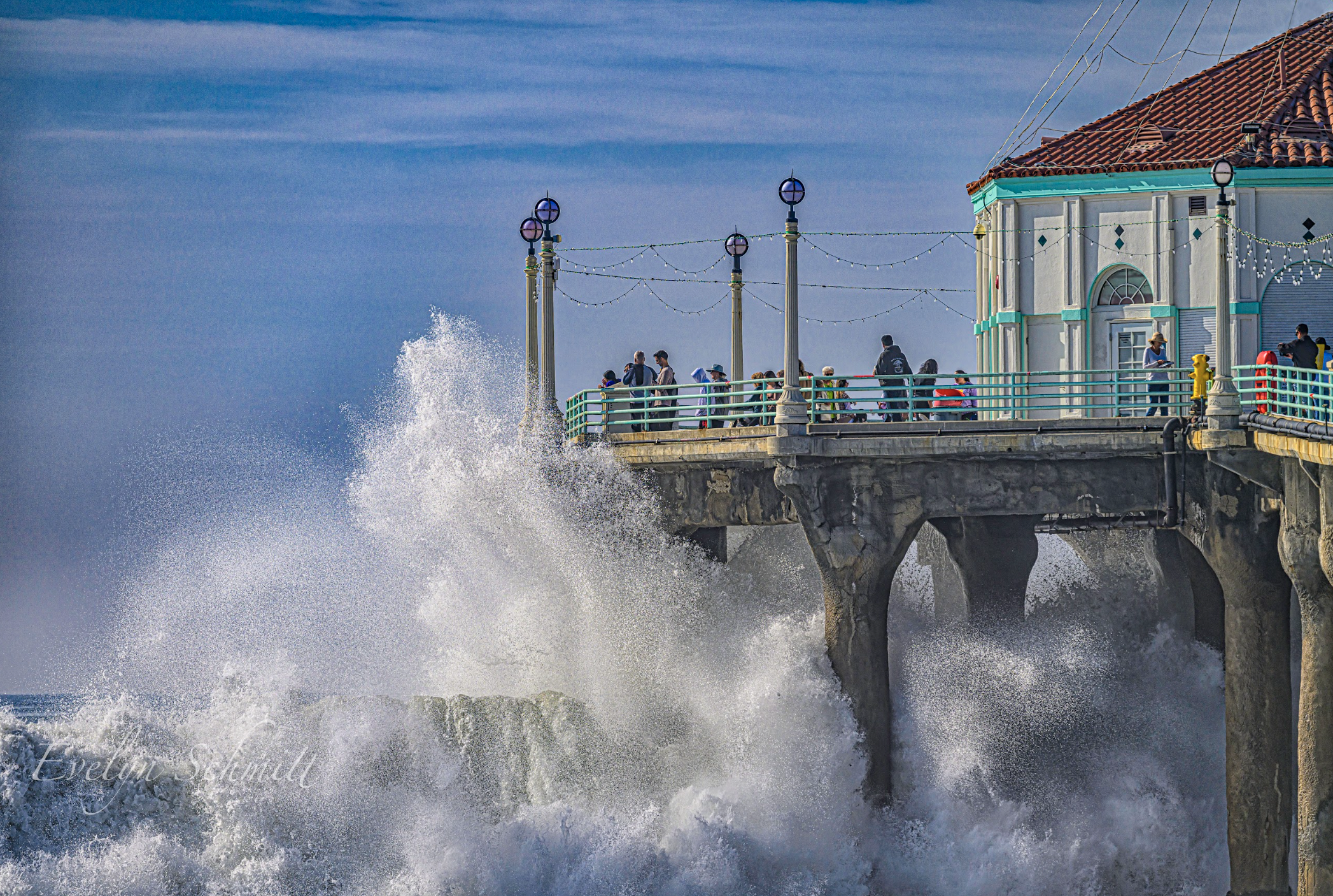
by Grace Adams and Marissa Wu, Roundhouse Aquarium
King Tides offer us a striking snapshot of what our future coastlines may look like as sea levels continue to rise. Tides are caused by the gravitational pull of the moon and sun on the Earth’s oceans. King Tides represent the highest tides of the year, typically occurring during the winter months — often in January — when the Earth reaches perihelion, the point in its orbit closest to the sun. During this time, the gravitational pull of the sun is at its strongest. When the sun, moon, and Earth align, their combined gravitational forces produce the most dramatic tidal events — the King Tides.
Recently, in Manhattan Beach, we experienced notably high King Tides reaching 6.94 feet at 8:46 a.m. on November 6, 2025, and 6.82 feet at 9:28 a.m. on November 7, 2025 according to tidetime.org. These extraordinary water levels are vivid reminders of the dynamic nature of our coastline — and how vulnerable it may become as sea levels continue to rise.
To continue observing and documenting these powerful events, the Roundhouse Aquarium will host a King Tide Watch on Saturday, December 6, 2025, from 9:00 to 10:30 a.m., when the predicted high tide of 6.88 feet is expected to peak at 9:17 a.m., according to tidetime.org. We invite the community to join us at the Manhattan Beach Pier to witness this remarkable phenomenon, learn from our marine educators, and capture what our coastline might look like in the future.
King Tides serve a vital role for climate scientists, educators, and coastal planners, offering a real-time preview of how higher sea levels could affect our beaches, infrastructure, and communities in the coming decades. By observing and recording these events, we can better understand the potential impacts of long-term sea level rise — and prepare to protect both our environment and our way of life.
If today’s King Tides become tomorrow’s “regular” tides, the implications could be serious. Higher sea levels would cause ocean water to reach terrestrial areas that were never intended to come into contact with saltwater. This encroachment can lead to increased runoff of pollutants — including oil, sediment, and toxins — into marine habitats, harming coastal wildlife. Rising seas can also cause saltwater intrusion into freshwater wetlands and even groundwater supplies, threatening native species and potentially contaminating drinking water reserves, particularly during droughts.
For coastal wildlife, these changes can be devastating. Many species depend on a delicate balance of tidal zones for survival. As water levels rise, habitat areas such as tidepools, beaches, and wetlands shrink and shift closer to human development — homes, roads, refineries, and treatment plants — leaving fewer safe spaces for native plants and animals. Unfortunately, these environmental shifts are happening far faster than most species can adapt.
Yet, while King Tides highlight the challenges of a changing climate, they also present an opportunity. They are brief but beautiful natural events that invite us to witness the power of the ocean firsthand. By studying and documenting them, we can educate our communities, encourage coastal restoration, and strengthen collective efforts to protect our marine ecosystems.
Together, through awareness, science, and stewardship, we can ensure that our beautiful coastal communities — like Manhattan Beach — continue to thrive for generations to come. ER
Comments
Loading comments…