by Chelsea Sektnan
“Is that real ice?”
That’s the first question most people ask Ice-America vice president Craig MacDonald when they see one of his ice rinks in unlikely places.
Adults reach down to touch the surface, while kids hover at the edge, unsure whether to trust what they’re seeing.
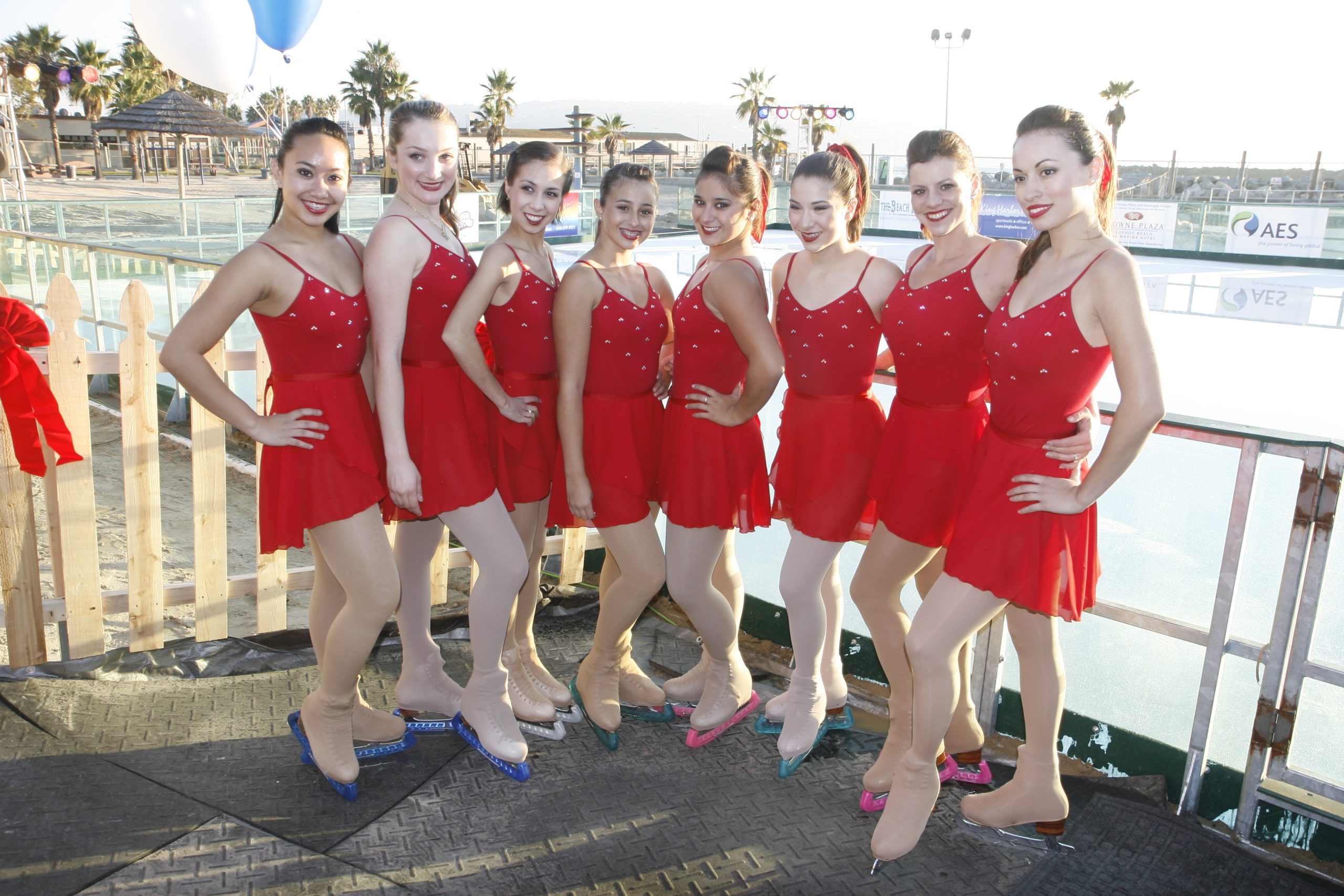
That reaction is exactly what greeted Azumi Williams and her husband, Scott Williams, when they built one of their earliest rinks over the holidays in 2008 at Redondo Beach’s Seaside Lagoon. Ice, frozen solid, sat just steps from the ocean.
“We were told not to do it,” Scott said. “So we did it.”
That willingness to attempt what others considered impossible has shaped the company the Williamses founded in 2008. “It still surprises people every time,” Azumi said. “They walk up, touch it, and ask if it’s real.”
Ice-America has grown from that early experiment in Seaside Lagoon into a company that has installed hundreds of skating rinks across North America and Canada. Their rinks can be found at theme parks, private residences, and public plazas, as well as resorts, ballparks, and broadcast productions, including Olympic season commercials that demand precision ice under global scrutiny.
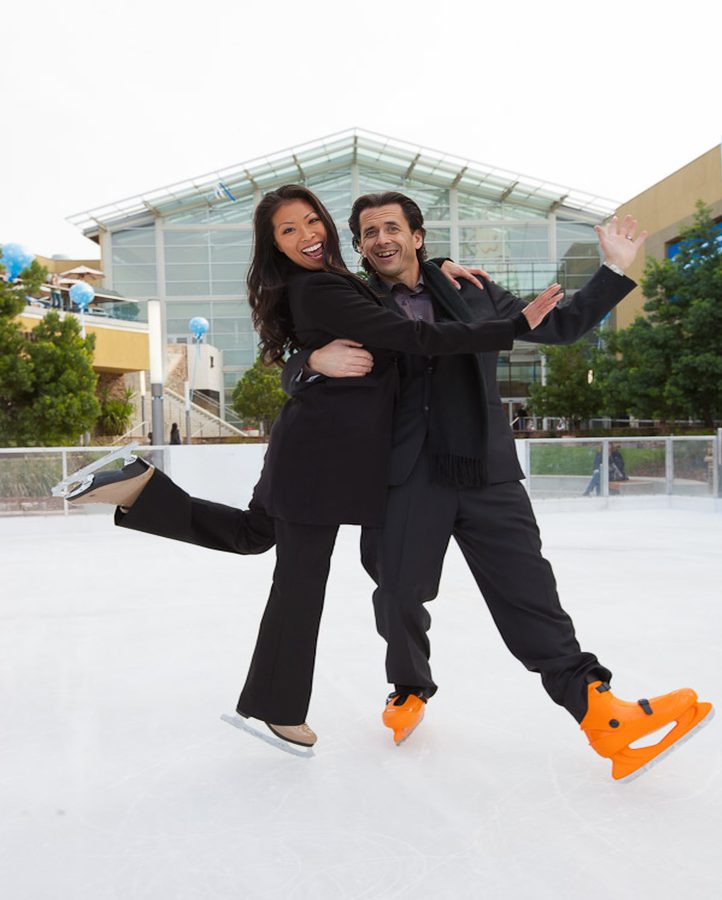
Azumi and Scott Williams both come from competitive figure skating backgrounds. Scott moved into television production, working on skating shows and live broadcasts. Azumi continued performing and coaching. Between them, they developed a deep understanding not only of how ice should skate but also how it behaves.
“Ice is a living thing,” Scott said. “You have to read it. You have to respect it.”
Outdoor installations bring challenges indoor rinks don’ t face: wind stripping away cold air, heat radiating from pavement, and sun reflecting off surrounding surfaces.
“Heat actually isn’t the biggest problem,” MacDonald said. “Wind is.”
MacDonald described working on installations where gusts made it difficult to keep ice stable, requiring crews to adjust conditions hour by hour. “We take on the jobs people say can’t be done,” Scott said.
The company’s modular, aluminum-based rink system allows ice surfaces to be scaled and adapted to spaces never designed for skating, from parking lots and pool decks to salt flats and soundstages.
Ice-America uses fast-cooling aluminum panels rather than conventional plastic tubing, allowing ice to freeze more quickly and remain stable in outdoor conditions that reach into the 80s and 90s. The modular design allows rinks to be scaled to fit a wide range of environments, from compact city plazas to full-sized hockey rinks that can be installed and removed in a matter of days.
“A lot of people think you just freeze water and you’re done,” said J.D. Uhls, an ice technician and certified arena operator with Ice-America. “But ice behaves differently, depending on heat, wind, sun, and what’s underneath it. You have to understand all of that.”
Much of that work happens before crews ever arrive, said Nina Nguyen, Ice-America’s director of sales and marketing, who helps plan rink installations. “Every site is different.”
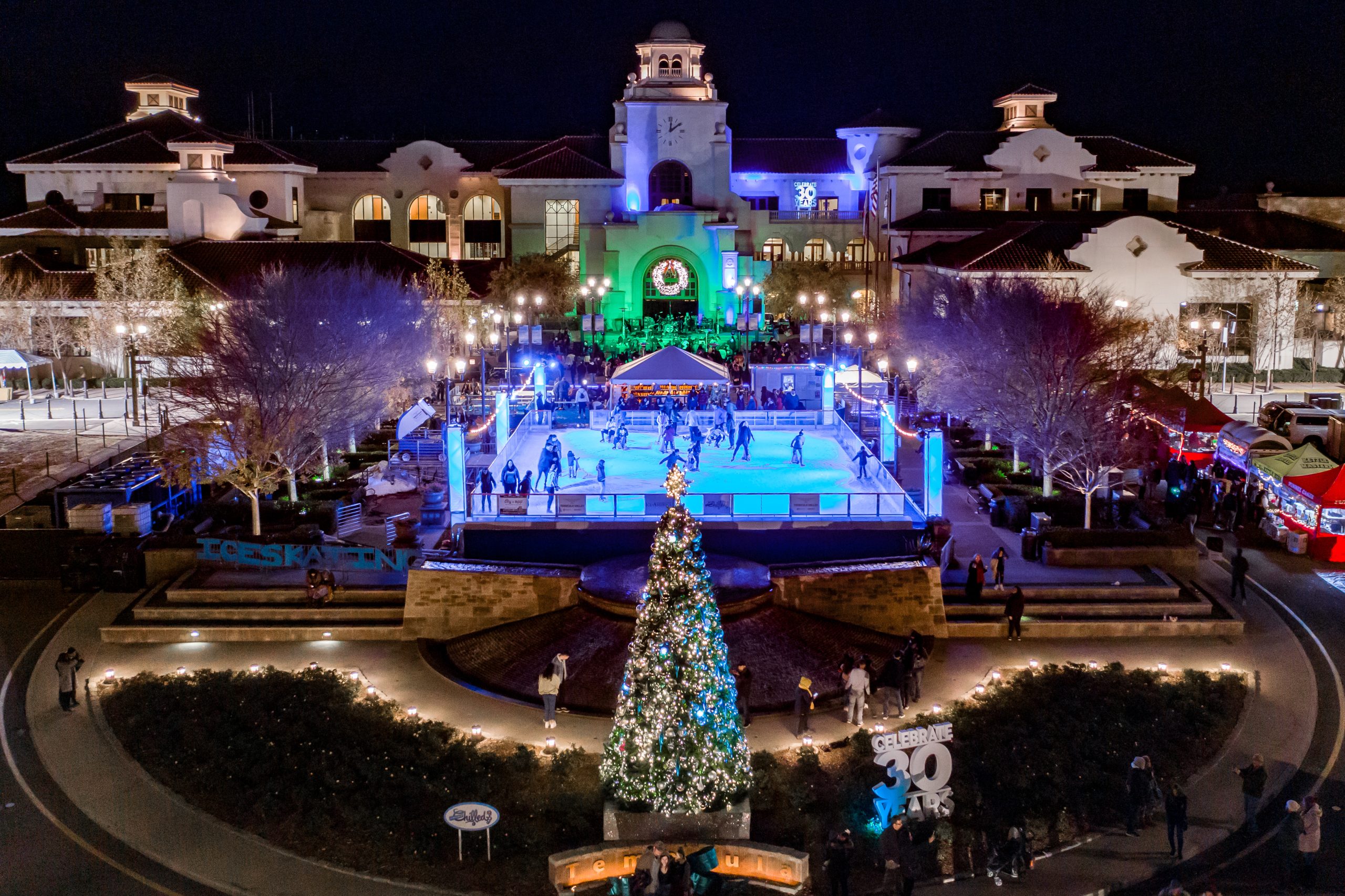
That understanding has allowed the company to take on installations in places most rink operators avoid. Crews have built ice on beach sand, inside convention halls, and atop buildings.
The sense of disbelief isn’t limited to the beach. During a recent teardown in Homestead, Florida, one onlooker described an outdoor link in Homestead Florida as the eighth wonder of the world.
“What we’re really trying to do is bring joy and play into people’s lives — good, clean, family fun,” said Lisa Enochs, executive director of event production and training at Ice-America.
The company has expanded into commercial production and live broadcast environments, where consistency and appearance are as important as performance. During the 2018 Winter Games, Ice-America built an ice rink at Universal Studios for a Toyota commercial featuring Olympic medalist Ashley Wagner that aired nationally on NBC.
“There’s no margin for error on those jobs,” Scott said. “It has to skate perfectly, and it has to look perfect.”
As preparations begin for the upcoming Winter Olympics in Milan, that kind of expertise has taken on renewed relevance. Olympic-era broadcasts demand high-performance skating surfaces that can be built quickly, operate reliably under studio lighting, and meet the expectations of elite athletes and global audiences.
Yet even as the company’s work reaches an international stage, she said the goal remains unchanged.
“It’s still about that moment,” she said. “When someone realizes it’s real.”
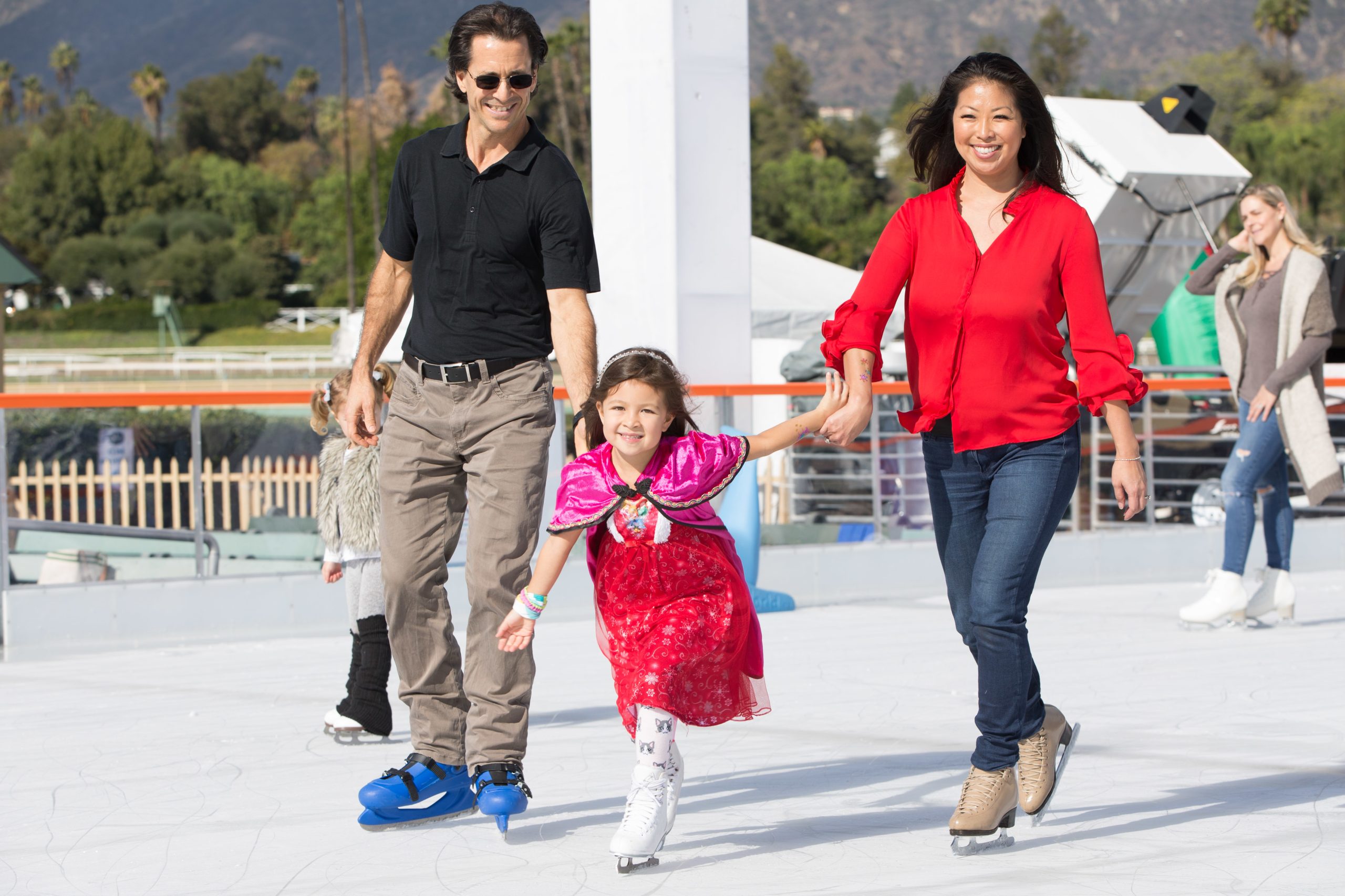
“We see a lot of first-time skaters,” Uhls said. “People who never would have stepped onto ice otherwise.”
At community rinks, he said, hesitation gives way to curiosity, then confidence. Parents lace skates beside their children. Teenagers test the surface cautiously. Someone always reaches down to touch the ice, just to be sure.
“That moment when they realize it’s real,” Uhls said, “that’s what sticks with you.”
In cities and towns where snow is rare or nonexistent, seasonal rinks become gathering places, drawing people together around an experience they don’t expect to find in their own neighborhoods.
“It’s not just ice,” MacDonald said. “It’s creating something memorable.”
On the beach, where Ice-America’s story first took shape, that question feels especially fitting. Ice appears where it does not belong, shimmering against a backdrop of sand and sea. Skates carve temporary lines into the surface. Laughter carries across the rink.
Then, just as unexpectedly as it arrived, the ice is gone. PEN