by Garth Meyer
Next Tuesday, July 12, NASA will share with the world the first images from the $10 billion, 19-years-in-the making James Webb Space Telescope.
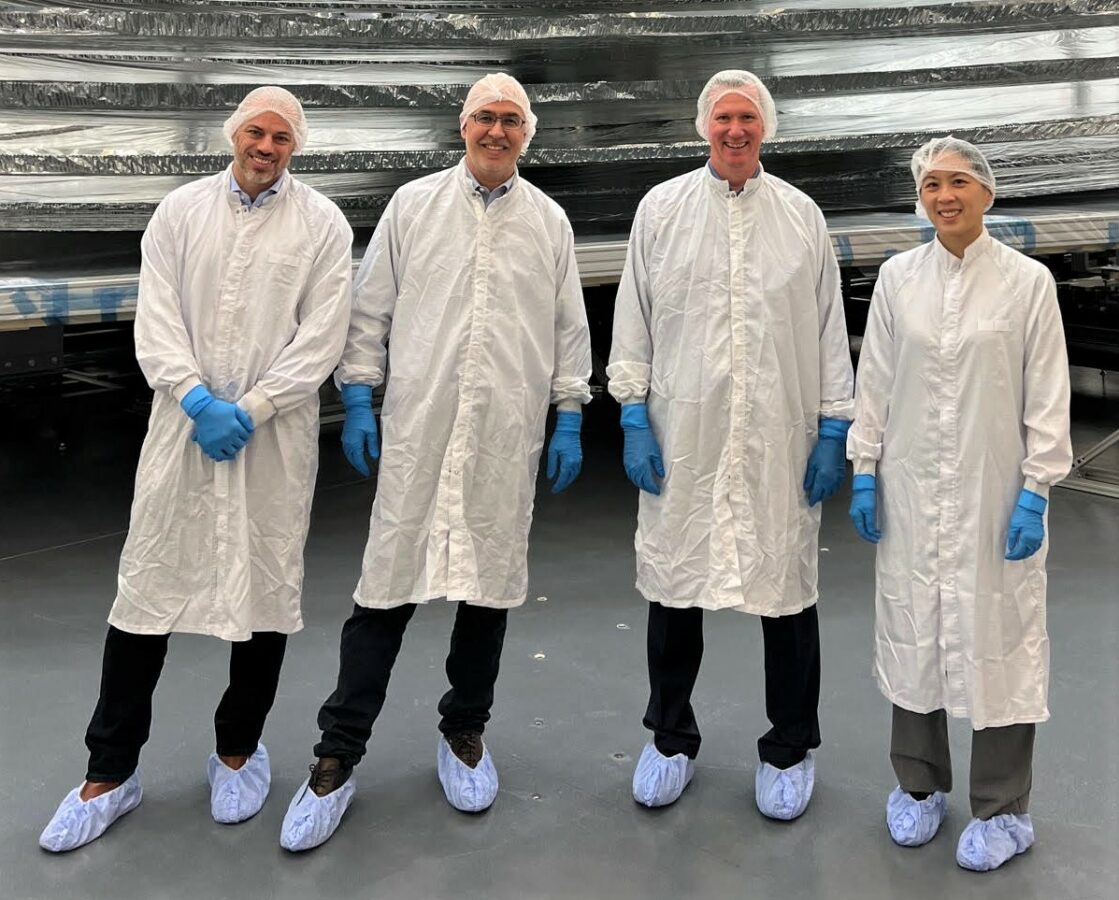
Last month, Northrop Grumman officials invited reporters to their Clean Room in Redondo Beach, where much of the telescope was built.
“Webb was 19 years old when it left here,” Webb Program Manager Scott Willoughby told reporters.
He began working on the project in 2009.
“It’s like your middle child… As soon as it left, I missed it. My kids, they do say, it’s their third sibling.”
Willoughby helped lead a group of more than 700 local engineers and staff, completing the main phase of their work last September, when the telescope and its shields were bolted into a trailer, to be taken by ship to French Guiana, on the North Atlantic coast of South America for launch.
After five months in space – part of the time spent unfolding the telescope – and a hit from a micrometeoroid, NASA hinted at what we will see next Tuesday.
“One of those images on July 12th is the deepest image of our universe that has ever been taken,” said NASA Administrator Bill Nelson. “This is farther than humanity has ever looked before.”
The local crew
Charlie Atkinson, Northrop Grumman’s chief engineer for the Webb, has worked on the project since 1998, and Amy Lo, Webb deputy director for vehicle engineering, since 2012.
Josh Levi started on it in 2001, left five times, was reassigned and brought back.
“Like Godfather III, or whatever,” said Willoughby.
Today, the number of Northrop Grumman workers on Webb is down to 50, mostly at the flight control center in Greenbelt, Maryland.
Others are on call.
“We’re the Maytag repair people. We’re there if you need us and hopefully you don’t need us,” Willoughby said.
The Webb Telescope is the first piece of equipment larger than a rocket’s cargo bay to be deployed successfully in space.
“We have proven we can do something bigger than the rocket,” Willoughby said. “Now that we have, we want to go bigger.”
Micrometeoroid hit
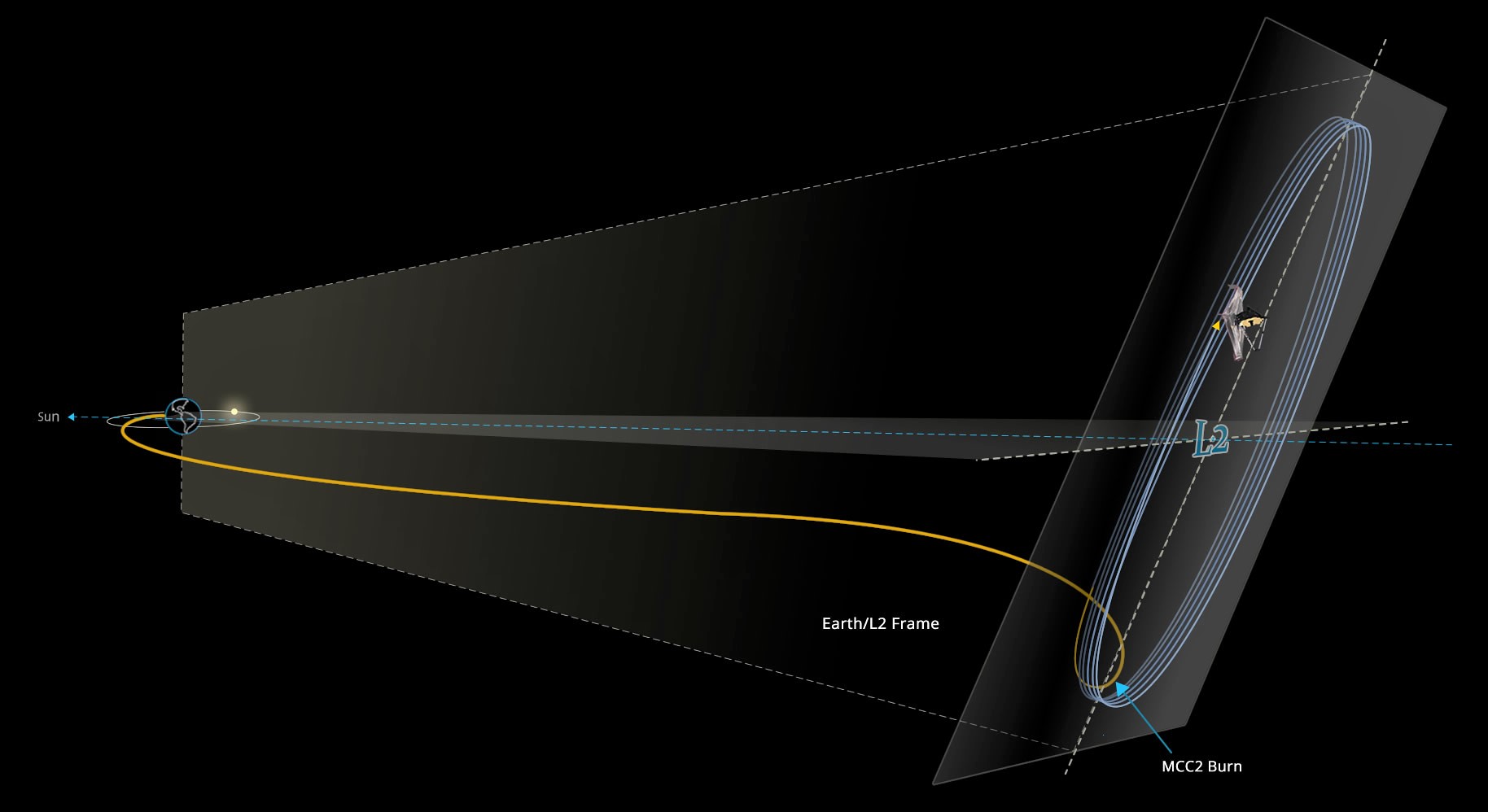
Between May 23 and May 25, a micrometeoroid, traveling at an orbit speed of 20 kilometers per second, hit one of the Webb’s primary mirrors.
NASA determined the telescope suffered a “marginally detectable” effect.
The size of the micrometeoroid that hit has not been determined, though the possibilities are limited.
“Less than a tenth of the size of a typical sand pebble,” said Mike Menzel, NASA Webb Missions Systems engineer, from a conference in Pasadena the day of the press tour.
The space dust comes from comets’ tails.
“It did leave a little mark,” Menzel said.
He noted the bottom line.
“The telescope is working twice as good as it was designed to,” he said.
Menzel explained further about the speeding micrometeoroid, and why it moves so fast — a rate he compared to that of the Earth’s orbit, though with a disclaimer.
“I’m told never to do math in public,” he said.
Nonetheless, earlier (private) calculations established Webb’s ability to adjust mirror positions, to cancel out an area of distortion — to a degree. A first attunement of this kind was done soon after the micrometeoroid hit. More mirror work followed, fine tuning the correction.
Before launch last Christmas, engineers kept the Webb’s optics cleaner than required. That “pristine cleanliness” is credited with improved overall reflectivity and total sensitivity.
World supplies
Webb’s first images, to come from a subject area not yet disclosed, lead a list of 6,000 hours booked by various scientific organizations for the telescope.
“If a brilliant elementary school came through with a proposal, they could get time. There’s no bias in the process,” Willoughby said.
Getting the Webb into position for a given assignment is partially the work of the spacecraft bus. In its construction, Webb’s builders used a certain type of epoxy, for which Northrop Grumman bought out the entire world supply in 2019 – ES 9309.2.
If you were trying to find some at Woods Ace Hardware, this is why you couldn’t.
The epoxy, like everything on the Webb, was chosen with weight and (space) temperatures in mind.
“You guys throw around this term, cryogenic, what does that really mean?” said a man from Reuters on the press tour. “Super-cold?”
“Yes,” said Willoughby.
“That’s exactly what it means,” said Levi.
Their full answer followed.

Middle of the night
The Webb weighed 14,400 pounds at launch, including fuel.
It had been heavier. In 2011, engineers realized it needed to be a couple hundred pounds lighter, so they started making things thinner.
This included the “tripod” – a thin, beam structure to connect the small primary mirror 24 feet out in front of the honeycomb.
The breakthrough on its alignment came in the middle of the night.
It was 2013, and engineer Josh Levi, woke up between 2 and 3 a.m., in the dark, next to his sleeping wife. By the light from a window, he wrote the draft of the tripod’s function. How to set it up and coordinate the systems – which needed to align to within 20 thousandths of an inch.
Levi sketched his idea on a notepad kept on the night table.
“A huge team of people worked on it to make it come to fruition,” he said.
A particular challenge was that the tripod arms had to be so light they sagged.
The secondary mirror receives light by way of the primary mirrors, then compresses the light and sends it back to the focal plane behind the honeycomb.
Philadelphia flyer
Levi, 43, is a Northrop Grumman Fellow, representing the company’s highest level of technical expertise.
He knew he wanted to get into aerospace since he was in second grade, in Philadelphia. He went to the University of Michigan for a B.A. in aerospace and Masters in space systems.
“Penn State told me to go to Michigan,” Levi said, referring to the advice that the program in Ann Arbor was better for what he wanted to do.
What was his title on the Webb project?
“I don’t know even know what it was at the end,” he said of the list that included various test managers, and integration-testing monikers, followed by a focus on launch-release devices.
Levi started in Redondo Beach right after finishing his Master’s – at TRW, which became part of Northrop Grumman.
“One day I was reading about this program and the next day I was going to be working on it,” he said.
Webb’s mirrors and camera were made by Ball Aerospace, of Westminster, Colo. (the same company that started out with the canning jars), while Northrop Grumman built the sunshields and the spacecraft bus.
History-making
NASA looks at next Tuesday as a significant moment in its history, if not world history.
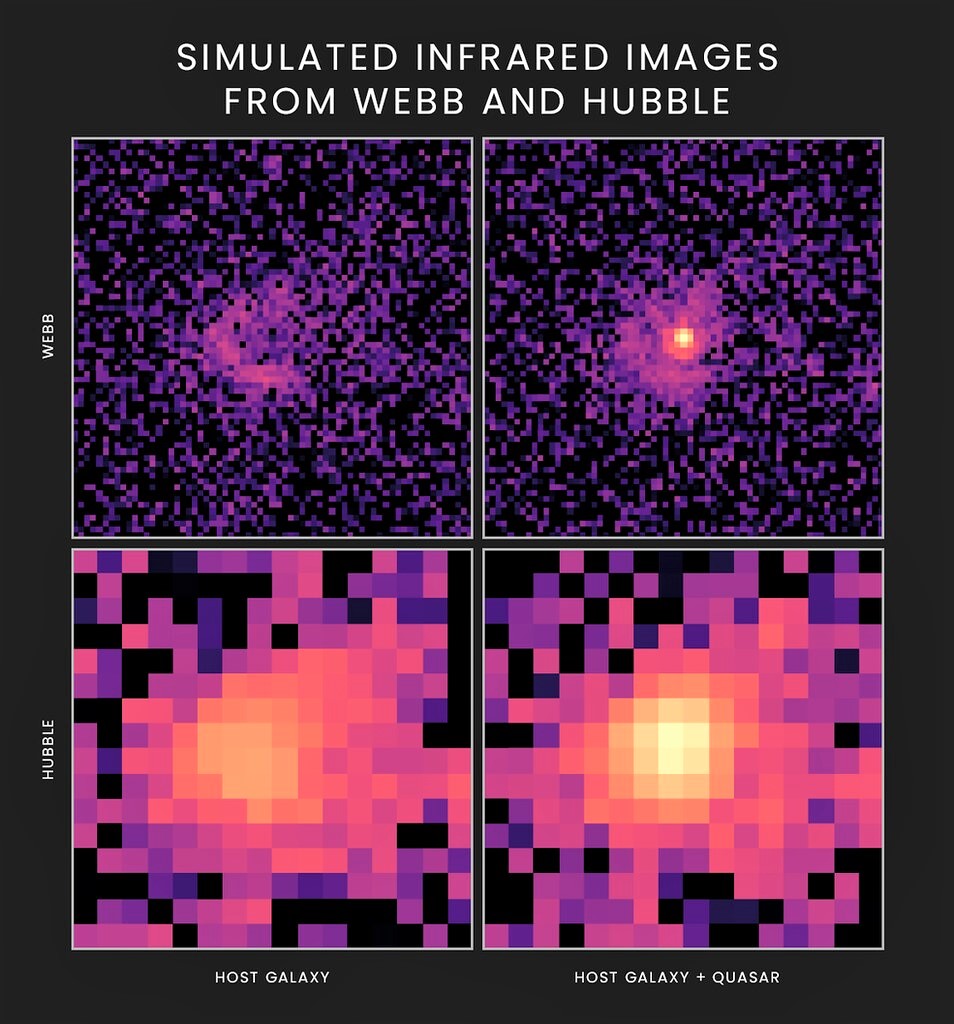
“We’re going to give humanity a new view of the cosmos,” said Nelson, NASA’s administrator, at a briefing last week. “It’s a view we’ve never seen before. Webb is nothing short of a real scientific feat.”
Dr. Thomas Zurbuchen, NASA associate administrator for science mission directorate, concurred.
“No, it’s not an image that you’re going to see. It’s a new worldview. Nature giving up secrets that have been there for many, many decades, centuries, millennia. Forever, for where we are as humans.”
An estimated 20,000 people from around the world have worked on the Webb telescope. This includes a legion of subcontractors, and personnel at NASA, the European Space Agency and Canadian Space Agency.
Charlie Atkinson, the Northrop Grumman Webb chief engineer, began working on the Webb Telescope in its planning stages, 22 years ago, when it was known simply as NASA’s “Next Generation Space Telescope.”
Atkinson likes what he has seen so far in the test pictures.
“The incredible performance of the line-of-sight stability,” he said. “It’s like you go to the moon and paint a circle 10 feet in diameter and you’re hitting it nine times out of 10. Like sticking a silver dollar on a luggage bag at LAX, and hitting it better than nine times out of 10 from here.”
He said that in Baltimore.
NASA also announced last week that the spacecraft’s fuel-efficiency has been confirmed for 20 years “of science data capability.”
Original estimates for the tank were 10 to 13 years.
“I cannot wait for the science that is going to be coming out on the 12th,” Atkinson said. “I can’t wait for the science that’s going to be coming out for the decades to come.” ER