
Arriving on the scene unannounced in 1942, Albert Camus’ first novel, “L’etranger” (“The Stranger”) was the embodiment of existentialism, a philosophy first expressed by Kierkegaard then Nietzsche and fully embraced by French philosophers Jean Paul Sartre, Simone de Beauvoir and Albert Camus. For most people, life has a preordained purpose, a thought process that is at the heart of most religions. We were put on this earth to do good, to look for good, to promote goodness—and acting to the contrary is a reaction to that original purpose.
Existentialism has no such purpose-defined existence. Existence in itself is a void to be filled or left empty through choice or lack thereof. Life only has the meaning an individual gives it. To understand “The Stranger” and the actions of its main character, Meursault, it is essential to grasp the basic tenets of this philosophy.
The new adaptation of this classic novel is difficult. Made for a French audience, well versed since middle school on the meaning of the book, it is also the kind of slow moving, almost ponderous film that they, as well as lovers of independent art films, embrace. This is, at the outset, a caveat emptor for something many will find monotonous but I found deeply moving and faithful to the book in ways that made it recognizable and understandable.

Meursault is, like Camus himself, a pied noir, a Frenchman born in Algeria during the colonial period of French rule. The Arab majority is viewed as an inconvenience if they are viewed at all. Meursault lives in a separate society under separate rules that gift him a kind of existence denied to the indigenous population. They are present but invisible.
Meursault is the very embodiment of an Existentialist. His refusal to be defined by the actions or desires of others is part of his world view that life is absurd. In and of itself, there is no meaning in life, only that which others give it and he refuses to indulge. He goes about his day to day routine working in a non-descript office, smoking interminable cigarettes and drinking bottomless cups of coffee, returning home to eat and read and whatever else will numb the boredom. His neighbor Sintès will engage him in conversation, possibly offering a drink, recounting his latest travails or troubles with his Arab girlfriend who, by virtue of her lack of status, deserves his fists.
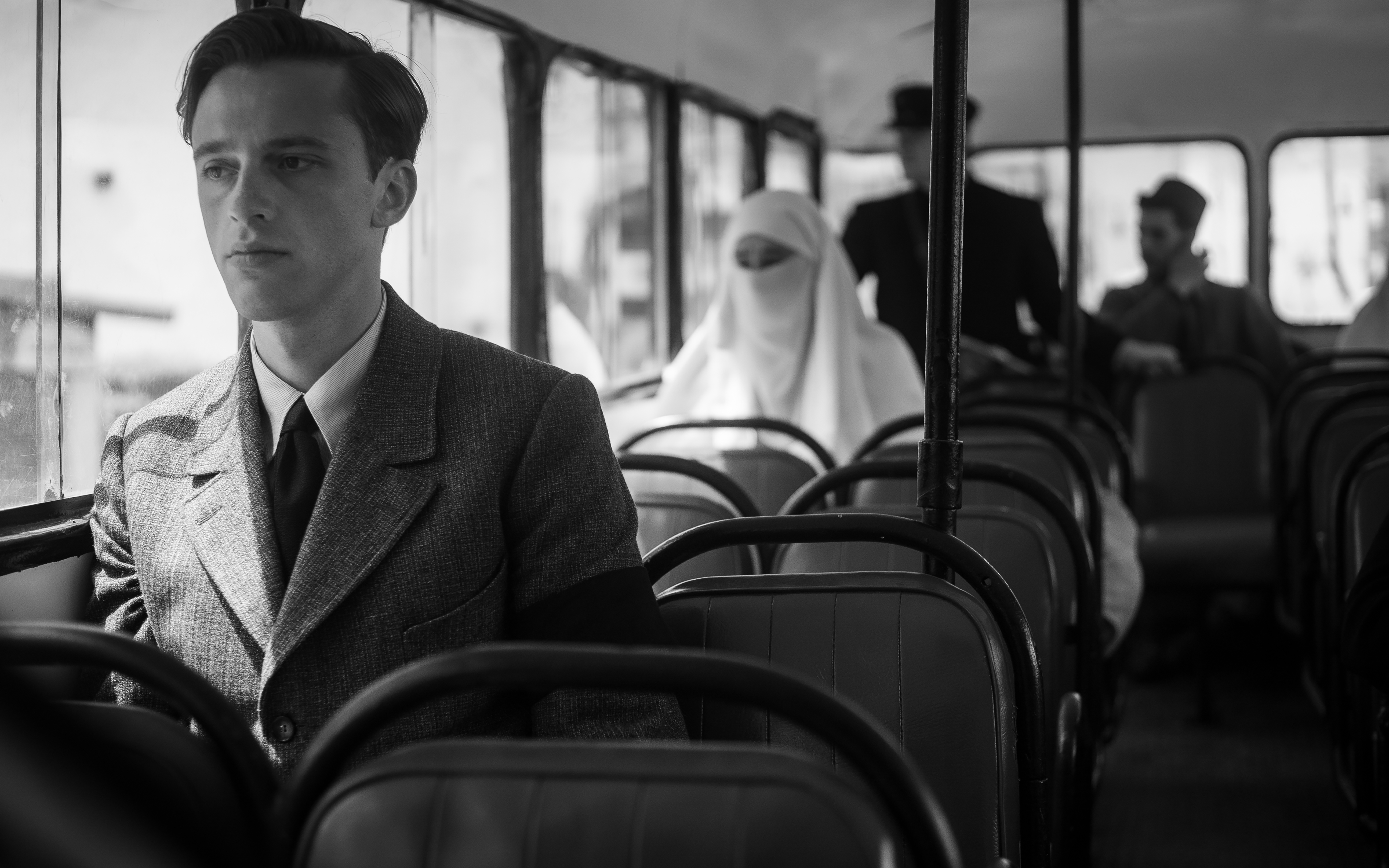
A telegram has arrived announcing the death of his mother in a retirement home. Given a couple of days leave, he begins his long day’s journey through the desert to the facility where he sent her when he could no longer afford her upkeep. His lack of emotion and distance is jarring to those he meets. He sits his mourning perfunctorily and makes the long return trip home to Algiers. His black arm band reveals his grieving status but there are no outward signs, no crying, no moaning, no grimaced or slowed demeanor. Instead, upon return, he heads to the beach where he connects with a former colleague, the beautiful Marie. She is intrigued and easily falls in love with this handsome, seemingly passive man who never lies and is accepting of all around him, especially her. It is this seeming passivity that will be his undoing.

Back at his apartment, Sintès enlists his aid against the brother of his mistress who has sworn vengeance for her last beating. It is not that Meursault cares about the mistress or the brother, but he will help a friend, no questions asked. This is what leads Meursault into the dilemma on which the story is based and an explanation for the first scene, jarringly set outside the chronology of the tale. Led into a prison, he is asked by one of the inmates what he had done. Looking around the space filled primarily with the indigenous, he replies, “I killed an Arab.”
It is the trial that will occupy the second half of the film, a trial where he has readily acknowledged his guilt, saying only that it was not his intention to kill the Arab. Meursault is a man fully without intentions. What happens, happens. The wheels of justice are fully trained on freeing him if he can show some emotion or remorse. But like the death of his mother, the act occurred without explanation. No, he didn’t cry when she died; no, he can’t explain why he killed the Arab. It is the lack of empathy and grief that will be his undoing because they run counter to society’s norms. A man who doesn’t grieve must be guilty of something.The universe is as indifferent to him as he is to it. At trial, he is an actor in someone else’s film; a bystander in his own life.
The inherent difficulty in a film like this is the translation from interior dialogue to dramatic structure. Director François Ozon has chosen to make the atmosphere and locations stars alongside his lead, Benjamin Voisin, whose silence throughout most of the film expresses his interior and exterior passivity. The heat of Algiers in the summer is visibly suffocating and Voisin’s Meursault is stoic in his acceptance of the temperature, both the weather and the emotions of others. His outsider status is better communicated with silence, something that Ozon uses to claustrophobic and taut effect. The silence throughout most of this film is deafening. You scream for action, for motion, for sound to no avail. It is this silence and Meursault/Voisin’s enigmatic expression that urges you to shout for him to do something, anything. But that is the point of Meursault’s existence. He exerts no active effort; what happens happens.
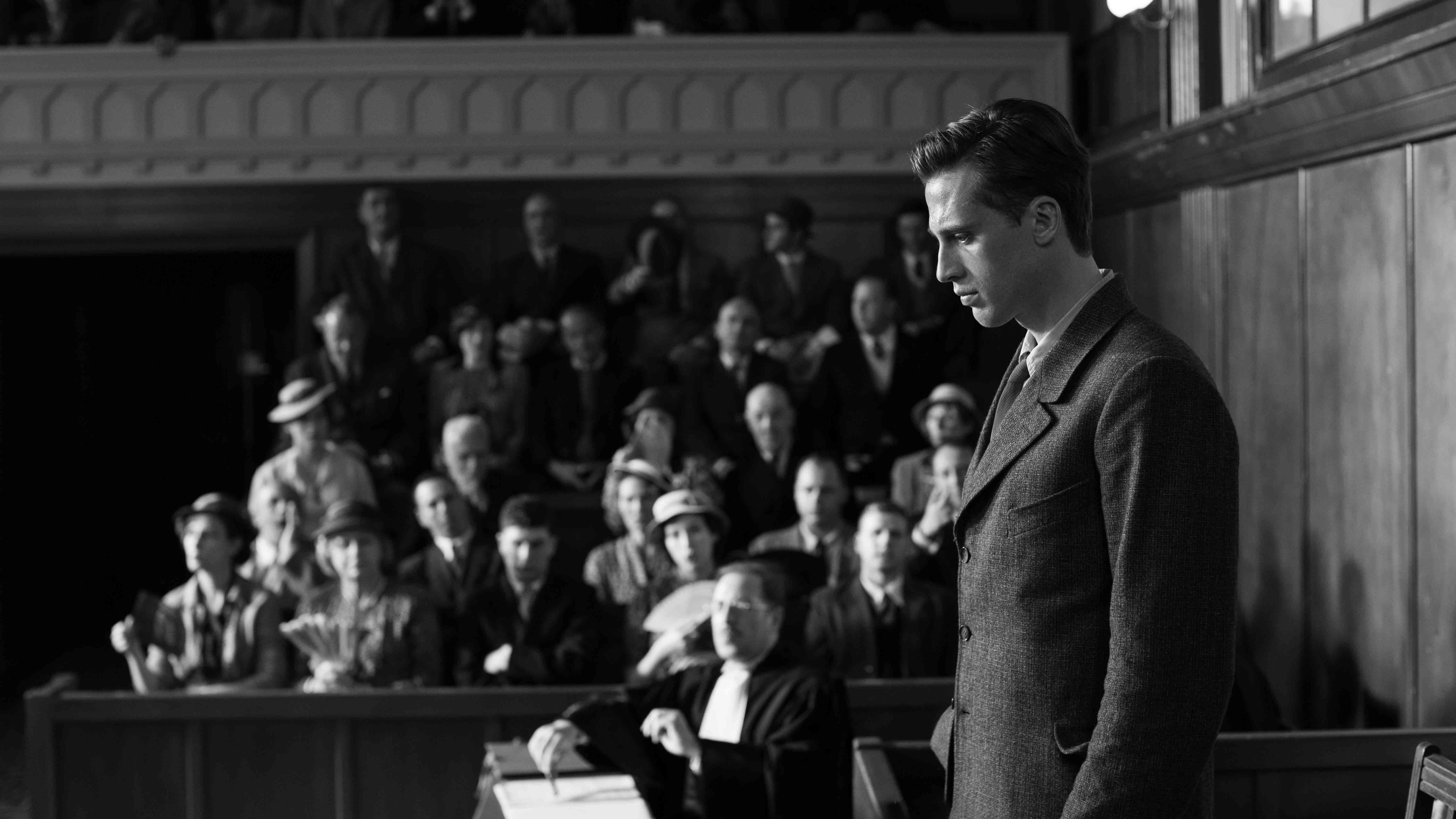
Filmed in exquisitely nuanced black and white, the lack of color underscores the missing depth to our anti-hero’s life. But never is it monochromatic; it brings with it a feeling for the undefined era of the late 40s and early 50s. Although Ozon confesses that the choice of black and white photography was all he could afford, it also placed the focus firmly on the beautifully passive face of Voisin. Casting an enigmatic character like Meursault was key. The great Italian director Luchino Visconti made a film based on “The Stranger” in 1967. As he recounted to Ozon, he was never happy with it because he was forced by his producers to cast Marcello Mastroianni as the lead, someone they felt would attract a larger audience. Mastroianni was an international star but physically and emotionally wrong for the role. Visconti’s original choice, Alain Delon, would have been perfect. He had the same almost androgynous sexuality, moral ambiguity and beauty exhibited by Voisin.
Benjamin Voisin burst onto the scene in a brilliantly evocative film adapted from Balzac’s novel “Lost Illusions,” winning the 2022 César for Best Newcomer and Best Actor. His physical beauty is enhanced by his ability to communicate with his eyes while all movement is suppressed. In every scene, rarely talking but always speaking volumes with minute body movements and facial inflections, his presence speaks to the development of a character who, seemingly, is only a vessel for the thoughts of others. Marie is played by Rebecca Marder. She leads with her emotions and acceptance that her lover does reciprocate her emotions even though his honesty is in overt contrast to her wishes. He does not love but willingly accepts hers. Marder’s portrayal of hope and wishful thinking is one of the engines of this movie.
This slow moving but intensely deep film is also one of today. Never far from the surface is the message that French lives are valuable and those of the Arabs worthless. One must ask how much of this sentiment subconsciously influenced Meursault when he pulled the trigger?
In French with English subtitles.
Now playing at the Laemmle Royal.