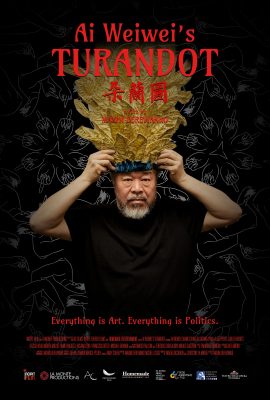
“Ai Weiwei’s Turandot”
A filmic documentary on an opera that survived the pandemic, now playing through Oct. 2 at Laemmle’s Monica Film Center
by Bondo Wyszpolski
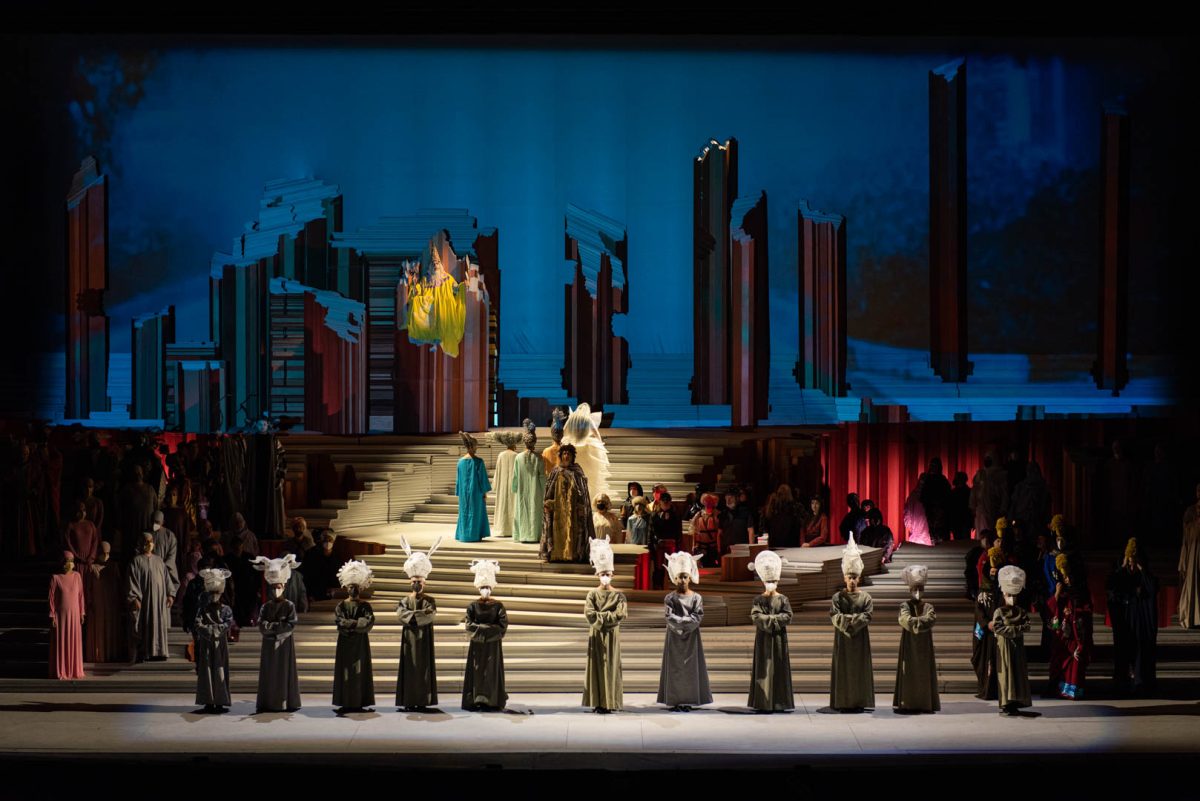
In the nearly 100 years since its premiere, “Turandot” has been presented by opera houses the world over, and in many different styles. However, because the opera is set in ancient China, it’s one of those productions, like “Aida” (set in ancient Egypt), that opens the door to creative sets and costumes. Most companies go heavy on the Oriental look.
However, back in early 2020, if not before, the Teatro dell’ Opera in Rome not only decided to present Puccini’s classic, but commissioned renowned Chinese artist Ai Weiwei to design it.
Fully aware of the historic moment, Maxim Derevianko (director, writer, and cinematographer) brought his camera crew to document the occasion, beginning with the rehearsals and continuing through at least opening night.
That he succeeded is undeniable, but before long there arose a problem that threatened to shut down the entire production. I’ll get to that in a moment.
Ai Weiwei, who was born in 1957, is among China’s best known contemporary artists, but his reputation as an activist is right up there with his fame for his art. In fact, at the very beginning of “Ai Weiwei’s Turandot” there’s this quote of his: “Everything is art. Everything is politics.”
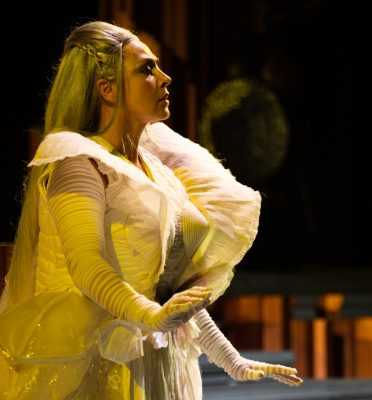
The Turandot of the title (Turandot means “the daughter of Turan” in Persian) is a princess who will only marry someone who can answer her riddles. But it’s not like you get three tries and then can go back home. If you accept her challenge, but fail, then your head is on the chopping block. So, yes, heads roll, but then young Calaf rises to the occasion… and we have a story.
One doesn’t mess around with the libretto and the music, but that still leaves a lot of wiggle room for choreography, costumes and stage design. With a creative talent like Weiwei the result will not mimic anyone else’s, and so in this opera “Nothing is the way it usually looks.”
A subtext here, told through projections onto the rear wall or screen of the stage, concerns the absence of free speech, and so this is a critique of modern-day China, all the more apparent because we see 20th century weapons and soldiers, etc, and not just 12th century warlords in butterfly outfits. And then the costumes… They would not be out of place in “Blade Runner,” “Star Wars,” or “Star Trek.”
One has to be careful about recontextualizing an operatic classic, because it can come across as silly or pretentious or simply self-serving and little else. While we don’t see the full opera here, it seems that the piece is enhanced and even given some relevancy to what is happening today in the world, and especially in Trump’s America. It’s also made me think that LA Opera’s 2025-26 season opener, “West Side Story,” was a mediocre choice for these troubling times, which seem to demand works that stand up against censorship, real or impending.
Well, the rehearsals were moving along, and then, wham, COVID hit and there’s a touching scene where everyone’s told that the production is being shut down. It’s the first time in 140 years that the opera house has to close, and suddenly 650 people involved with this production are out of work.
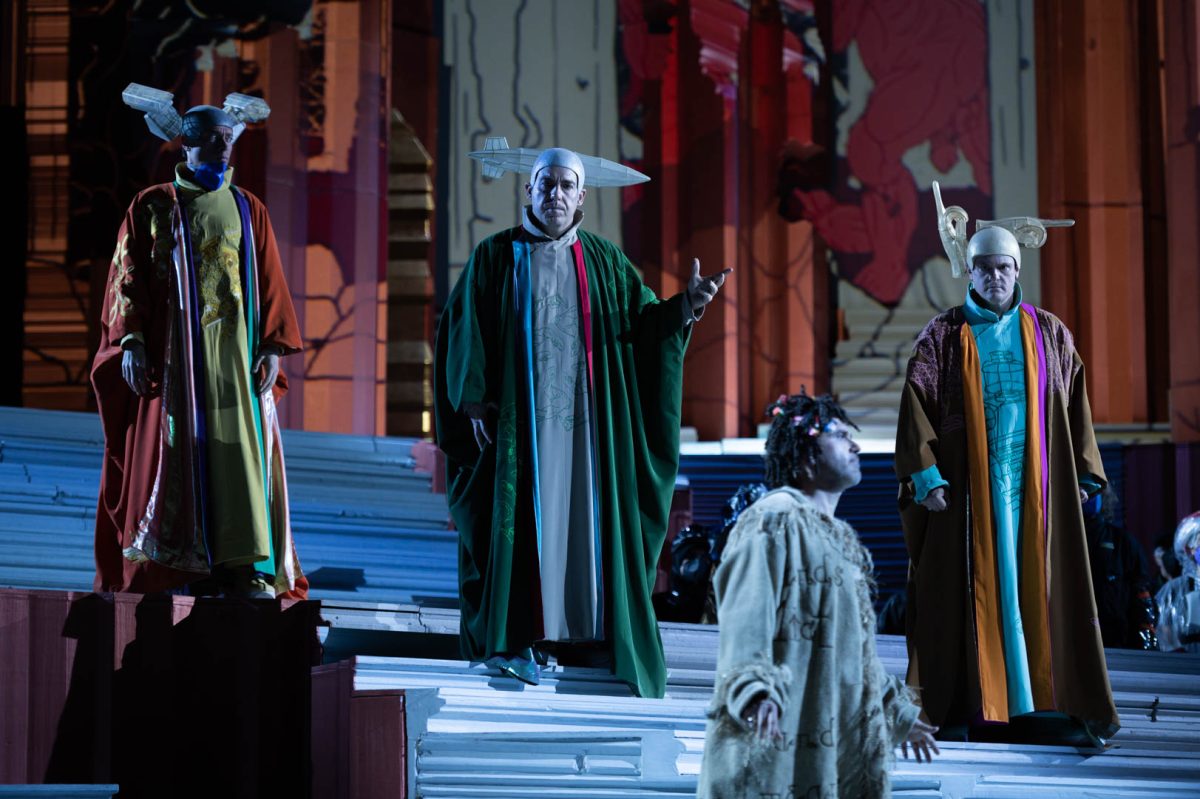
And that’s what happens. We see enough of that magic moment when all the pieces at last fell into place and all the hard work paid off.
The documentary veers between rehearsals and discussions, scenes from the opera itself, and interviews with the principals, Al Weiwei and Chiang Ching most notably. We also get some of Weiwei’s backstory, in particular when he was arrested in 2011 and detained for 81 days, during which time no one knew his whereabouts. We also listen to several of those involved with the opera as they comment on the importance of art in our world. At the end, Weiwei himself states that “Art competes with reality, and Art will have the last word.”
Well, it does in “Ai Weiwei’s Turandot,” which is being screened for one week, tonight through Thursday, Oct. 2, at Laemmle’s Monica Film Center. ER